Back Conditions & Radiculopathy
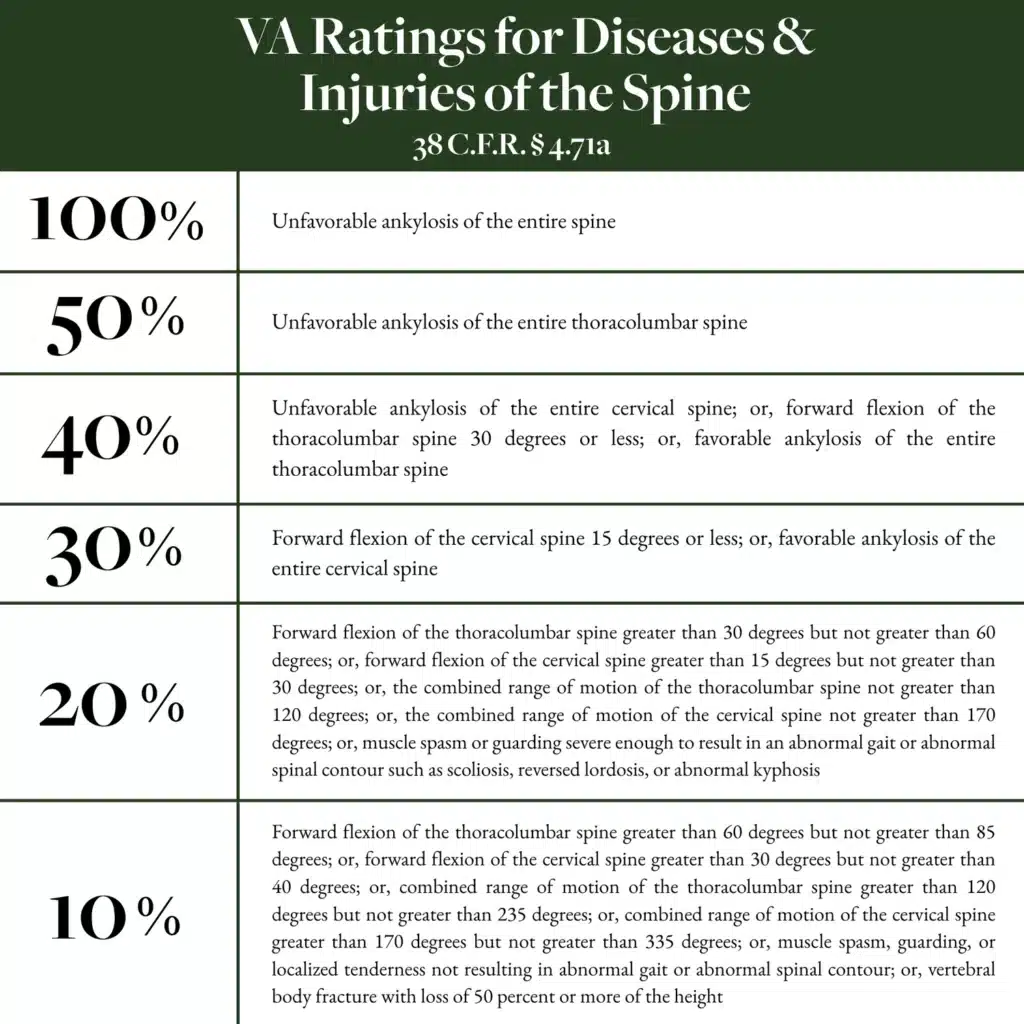
When VA grants service connection for a back condition (such as a lumbar or cervical spine disability), it assigns a disability rating based on range of motion, functional loss, and the presence of associated symptoms, including neurological impairments like radiculopathy. These ratings determine a veteran’s monthly compensation and eligibility for additional benefits. Because spine conditions frequently cause nerve involvement affecting the extremities, VA is required to consider and separately evaluate associated neurological abnormalities as part of the claim.
Bottom Line Up Front:
VA rates spine conditions under 38 C.F.R. § 4.71a using the General Rating Formula for Diseases and Injuries of the Spine, based primarily on range of motion and functional loss.
VA must consider pain, flare-ups, and functional limitations when assigning a rating.
“Functional Loss” refers to limitations in motion due to weakness, fatigue, incoordination, and/or pain during movement.
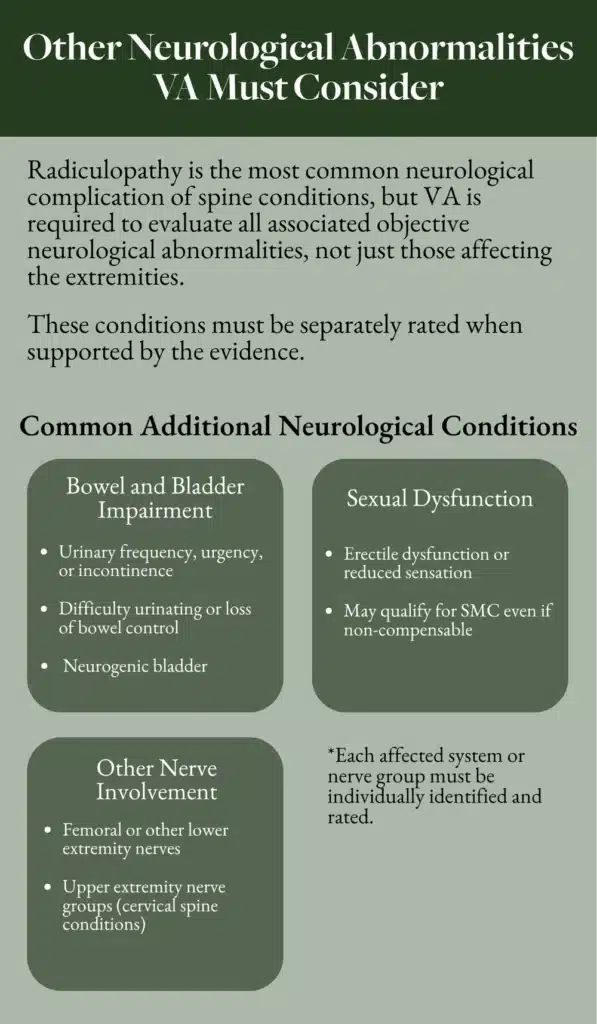
Radiculopathy and other neurological abnormalities must be separately rated when present, under the appropriate nerve diagnostic codes.
Failure to assign or properly evaluate radiculopathy is one of the most common VA errors in spine claims.
Veterans with severe spine conditions and radiculopathy may qualify for Total Disability Based on Individual Unemployability (TDIU) or Special Monthly Compensation (SMC).
How Does VA Assign Ratings for Back Conditions?
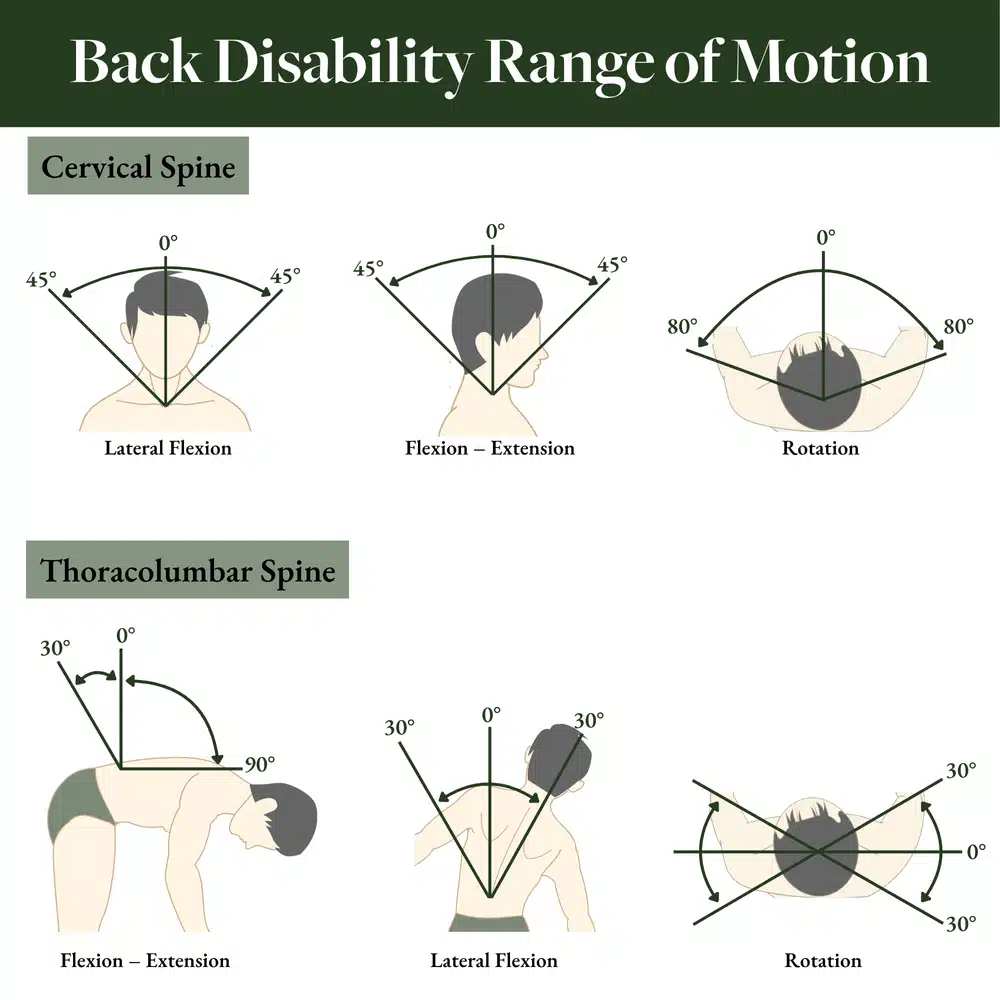
VA evaluates spine conditions based on measurable limitation of motion, but also must consider how pain and functional loss affect real-world movement and ability to work.
The most common evidence sources include:
How VA Rates Spine Conditions (38 C.F.R. § 4.71a)
Alternative Rating: Intervertebral Disc Syndrome (IVDS)
VA may alternatively rate spine conditions based on incapacitating episodes under IVDS:
- 60% – Incapacitating episodes totaling at least 6 weeks in the past 12 months
- 40% – At least 4 weeks
- 20% – At least 2 weeks
- 10% – At least 1 week
Important: An “incapacitating episode” requires physician-prescribed bed rest, which is rarely documented. As a result, this method is often less favorable.
Separately Ratable Neurological Conditions
VA is required to evaluate and assign separate ratings for neurological abnormalities associated with spine conditions, including radiculopathy. The most common type is radiculopathy.
Back Conditions, Radiculopathy, TDIU, and SMC
How to Appeal or Increase a VA Back or Radiculopathy Rating
Veterans may want to appeal or request an increase if:
VA underrated limitation of motion or functional loss
VA failed to properly consider flare-ups
VA did not assign or underrated radiculopathy
Symptoms worsened over time
VA relied on an inadequate C&P exam
Appeals can be filed through:
Because spine claims often involve both orthopedic and neurological components, proper development and argument are critical.
Denied or Underrated for a Back Condition or Radiculopathy? Call Greene & Marusak LLC
Back and radiculopathy claims are frequently underrated due to failure to properly evaluate functional loss and neurological involvement. If VA denied or underrated your condition, Greene and Marusak LLC can help identify errors, develop supporting evidence, and pursue the benefits you deserve.
Contact us for a free case evaluation today to speak with an experienced VA-accredited claims agent or attorney!