
The United States Court of Appeals for Veterans Claims (CAVC) was established by Congress in 1988 and is located in Washington D.C. It is an appellate court of seven judges appointed by the President of the United States. The Court is an independent federal court, separate from the VA, that reviews final decisions made by the Board of Veterans’ Appeals (BVA).
The CAVC reviews decisions made by the BVA to determine whether any legal or procedural errors occurred. Veterans, dependents, or survivors can appeal to the CAVC if they believe the Board made the wrong decision, didn’t consider important evidence, or didn’t follow the law correctly. The CAVC does not review new evidence — it focuses solely on whether the VA followed the law and applied it correctly.
The CAVC can make three primary types of decisions:
In most cases, CAVC appeals result in a remand which is generally considered a favorable outcome for a veteran. A remand sends the case back to the Board of Veterans’ Appeals for re-adjudication because the Court has identified an error in the Board’s decision. The Board must then take further action consistent with the Court’s instructions.
In rare occurrences, the Court may reverse a Board decision and grant the veteran the benefit that was previously denied.
A denial means the Court does not find a legal error that warrants changing the Board’s decision. The Board’s decision will generally remain in effect.
If a veteran disagrees with a decision from the CAVC, there may be options to seek further review.
A veteran may request the CAVC to reconsider its decision by filing a Motion for Reconsideration. Generally, this motion must be filed within 21 days after the Court’s decision.
If a case was decided by a single judge, the veteran may be able to request another review by a panel of at least three judges.
A veteran who continues to disagree with the CAVC’s decision may be able to appeal to the U.S. Court of Appeals for the Federal Circuit, the next level in the federal system. Generally, this must be filed within 60 days after a CAVC decision and a legal error must have occurred during the Court’s decision-making process.
Navigating an appeal to the CAVC can be complex, involving strict deadlines, legal arguments, and interpretation of veterans law. A VA-accredited attorney or representative:
Veterans are not required to have representation, but having an experienced advocate at this stage can make a significant difference in the success of the appeal.
We have attorneys and representatives here at Greene & Marusak who may be able to represent you before the CAVC and help you fight for the benefits you deserve.
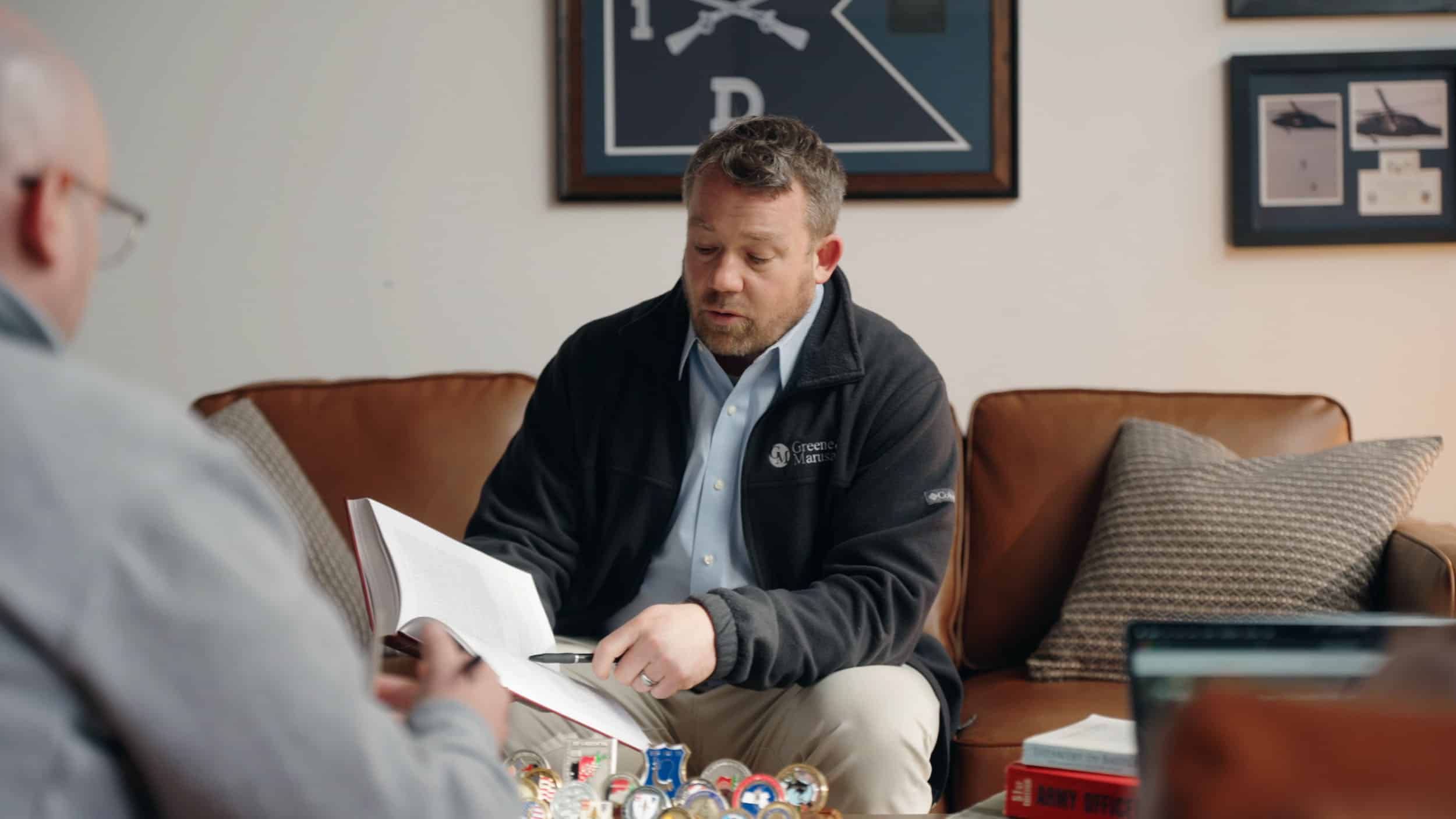
Greene & Marusak’s objective is to get veterans the maximum benefits they are entitled to.