Greene & Marusak Veteran Resources

VA Disability Rating Criteria

Not sure how the VA decides disability ratings for common service-connected conditions? This resource breaks down the rating criteria in plain language, explains what VA looks for at each level, and shows how different types of evidence—medical records, VA exams, lay statements, and work history—can strengthen a veteran’s claim. Click on each tab to view a detailed breakdown of the specific condition.

Knee Disabilities

When VA grants service connection for a knee condition, disability ratings are assigned based on multiple factors, including range of motion, instability, pain, functional loss, and flare-ups. The rating can be assigned based on one or multiple of these factors, and more than one rating may be assigned for the same knee if symptoms are distinct and do not overlap. The rating or ratings assigned determine a veteran’s monthly compensation and eligibility for additional benefits. Because knee conditions can fluctuate due to weather or flare-ups, and often worsen over time, it is important to provide VA with documentation of the true severity of symptoms.

Bottom Line Up Front:
  • VA rates knee disabilities under 38 C.F.R. § 4.71a using diagnostic codes that evaluate limitation of motion, instability, cartilage damage, ankylosis, and functional loss due to pain. Ratings commonly range from 0% to 60%, and separate ratings may be assigned for different knee symptoms.

  • A veteran’s lay statements, treatment records, range of motion testing, and compensation and pension (C&P) examinations are important forms of evidence when seeking higher ratings for knee conditions.

  • Veterans with severe knee disabilities may qualify for Total Disability Based on Individual Unemployability (TDIU).

How VA Rates Knee Disabilities (38 C.F.R. § 4.71a)

VA assigns ratings based on specific diagnostic codes, and multiple ratings may be assigned for the same knee under different diagnostic codes for distinct symptoms.

Ratings may also be assigned under other diagnostic codes based on residual weakness, pain, or limitation of motion.

Rated under diagnostic codes 5260 and 5261. Ratings for limitation of flexion range from 0 to 30 percent, and ratings for limitation of extension range from 0 to 50 percent.


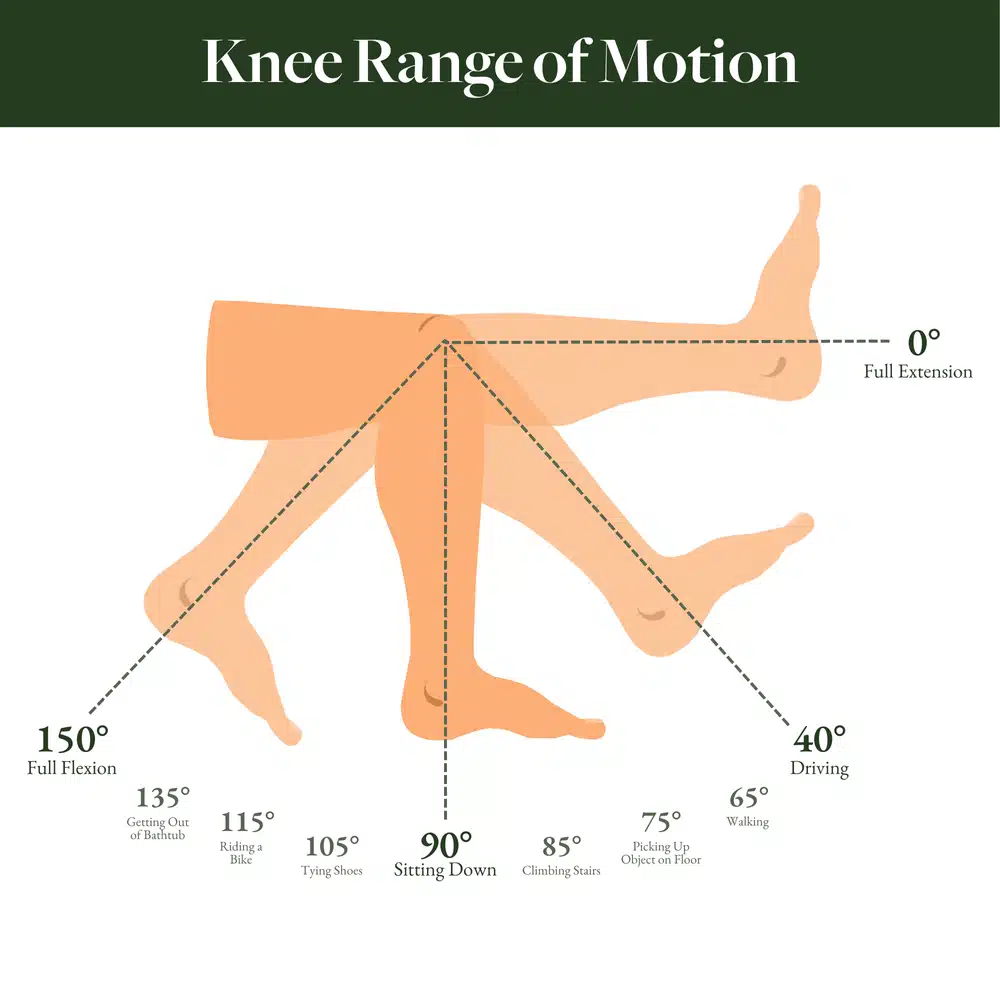
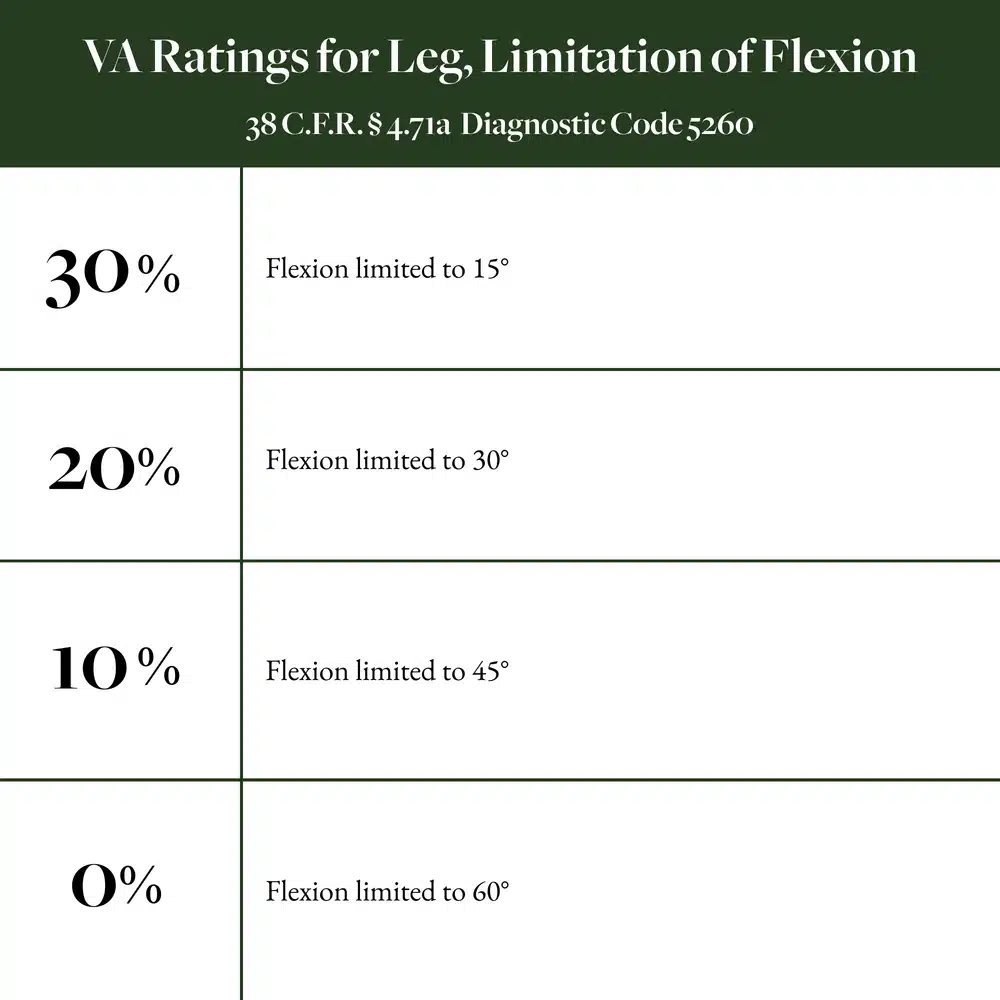
Flexion is the movement of bending of the knee, and limitation of flexion is the inability to fully bend the knee. VA rates limitation of flexion under diagnostic code 5260 based on the degree to which bending of the knee is limited:

  • 30% – Flexion limited to 15 degrees

  • 20% – Flexion limited to 30 degrees

  • 10% – Flexion limited to 45 degrees

  • 0% – Flexion limited to 60 degrees

Extension is the movement of straightening the leg at the knee joint, and limitation of extension is the inability to fully straighten the leg at the knee joint. VA rates limitation of extension under diagnostic code 5261 based on the degree to which straightening of the leg at the knee is limited:

  • 50% – extension limited to 45 degrees

  • 40% – extension limited to 30 degrees

  • 30% – extension limited to 20 degrees

  • 20% – extension limited to 15 degrees

  • 10% – extension limited to 10 degrees

  • 0% – extension limited to 5 degrees

VA may assign separate ratings for flexion and extension if both are compensable.

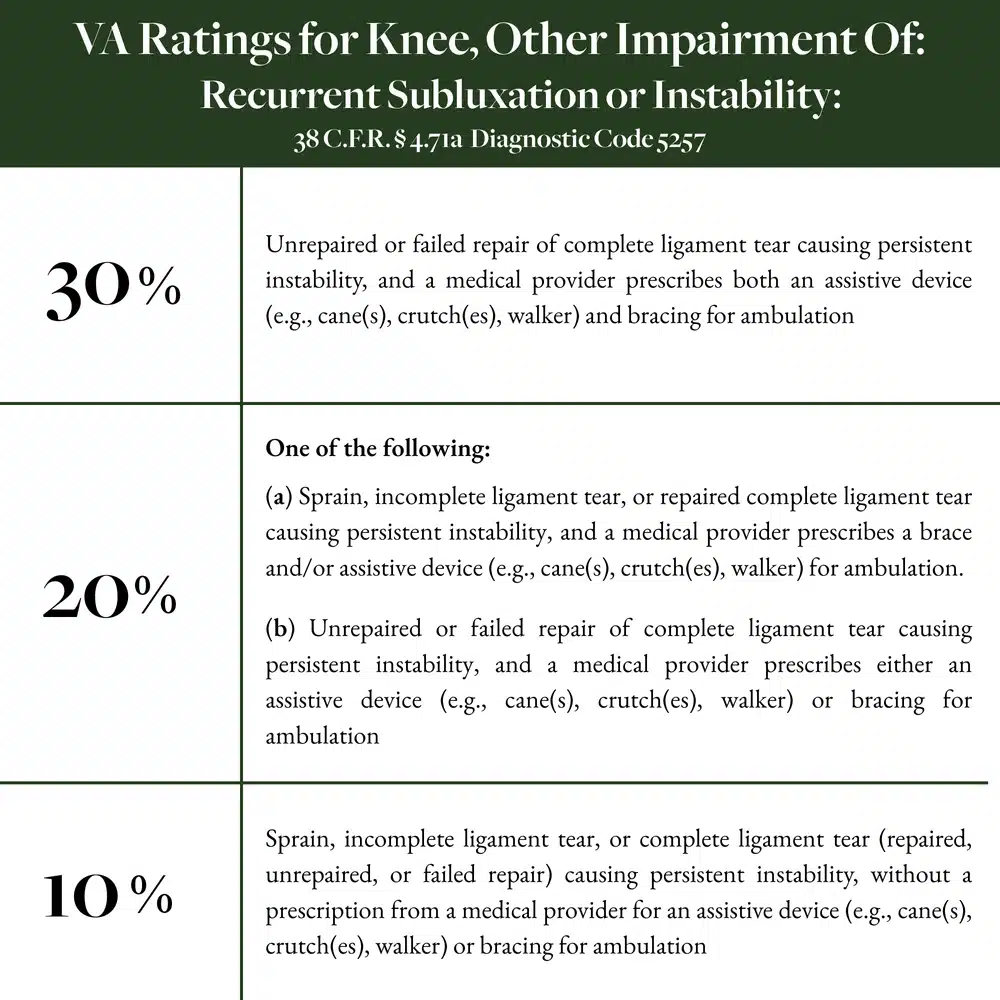
Rated under diagnostic code 5257. Knee instability is the feeling the knee is weak, loose, or might “give out.” Subluxation of the knee is when the kneecap partially slips out of its normal groove on the thigh bone, often popping back in on its own, causing pain, instability, and swelling. Under diagnostic code 5257, ratings assigned for recurrent subluxation or instability are as follows:

  • 30% – Unrepaired or failed repair of complete ligament tear causing persistent instability, and both an assistive device like a cane, crutches, or walker, and bracing for ambulation, have been prescribed by a medical professional.
  • 20% – (a) Sprain, incomplete ligament tear, or repaired complete ligament tear causing persistent instability, and both an assistive device like a cane, crutches, or walker, and bracing for ambulation, have been prescribed by a medical professional, or (b) Unrepaired or failed repair of complete ligament tear causing persistent instability, and a medical provider prescribes either an assistive device like a cane, crutches, or walker, or bracing for ambulation.
  • 10% – Sprain, incomplete ligament tear, or complete ligament tear (repaired, unrepaired, or failed repair) causing persistent instability, without a prescription for an assistive device like a cane, crutches, or walker, or bracing for ambulation.

Ratings for instability and subluxation can be assigned in addition to ratings for limitation and flexion.

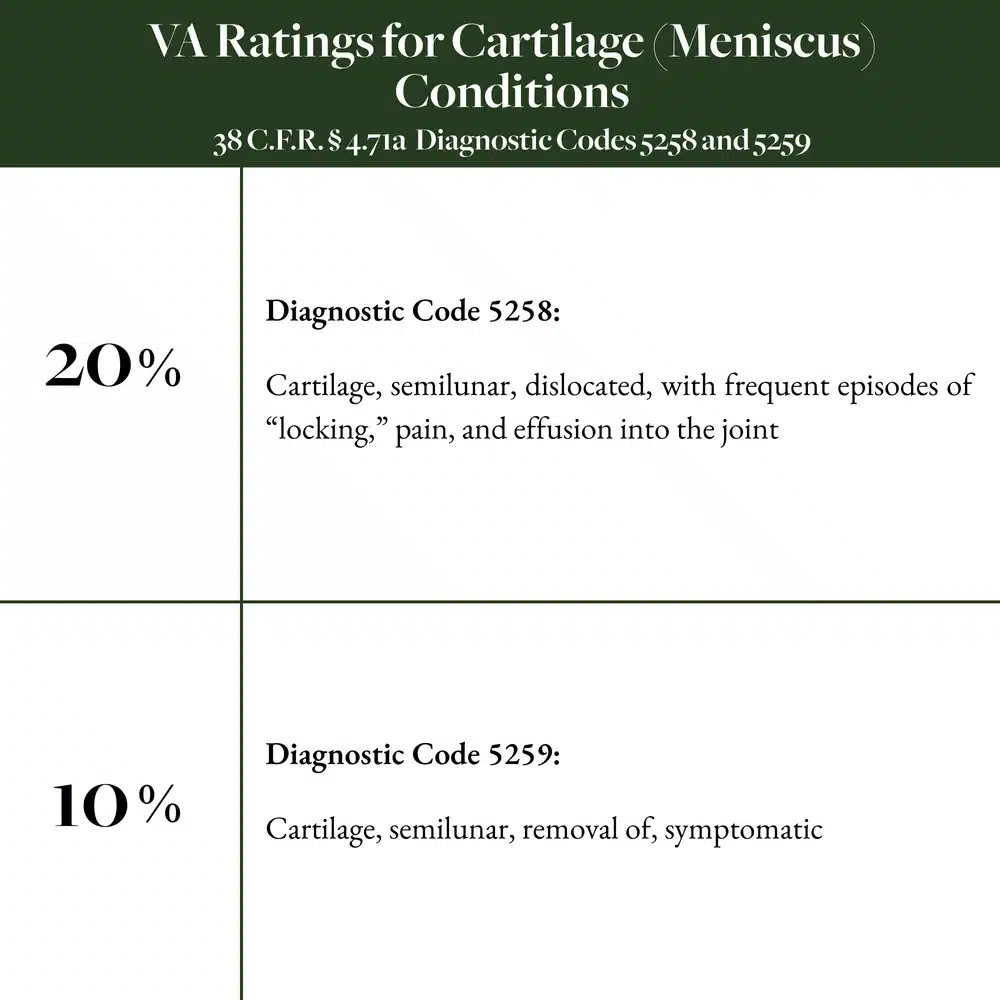
Rated under diagnostic codes 5258 and 5259 based on dislocation of the meniscus or removal of the meniscus.

  • 20% – Cartilage, semilunar, dislocated, with frequent episodes of “locking,” pain, and effusion into the joint

  • 10% – Cartilage, semilunar, removal of, symptomatic

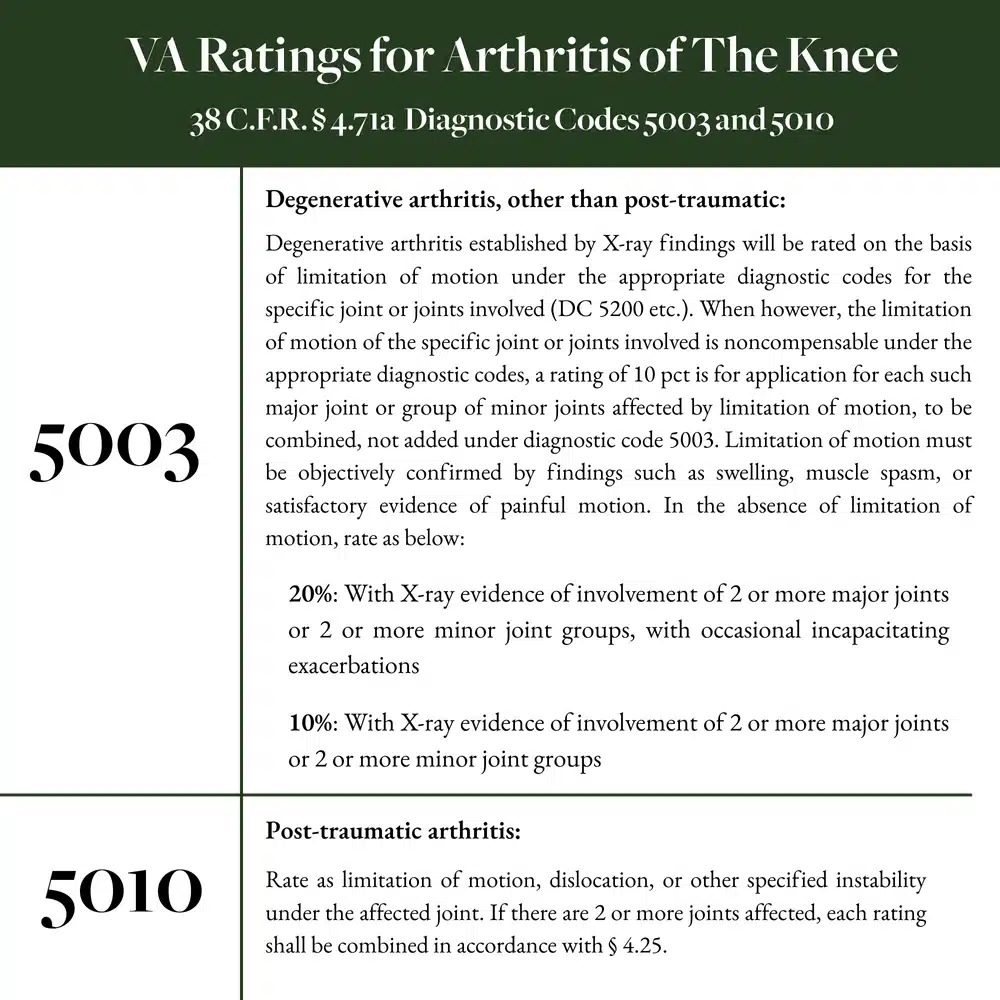
Rated under diagnostic codes 5003 and 5010. Degenerative or traumatic arthritis is rated based on limitation of motion. When limitation is noncompensable, 10% may be assigned for painful motion confirmed by imaging. Painful motion alone can support compensation under 38 C.F.R. § 4.59, even when range-of-motion measurements appear “normal.”

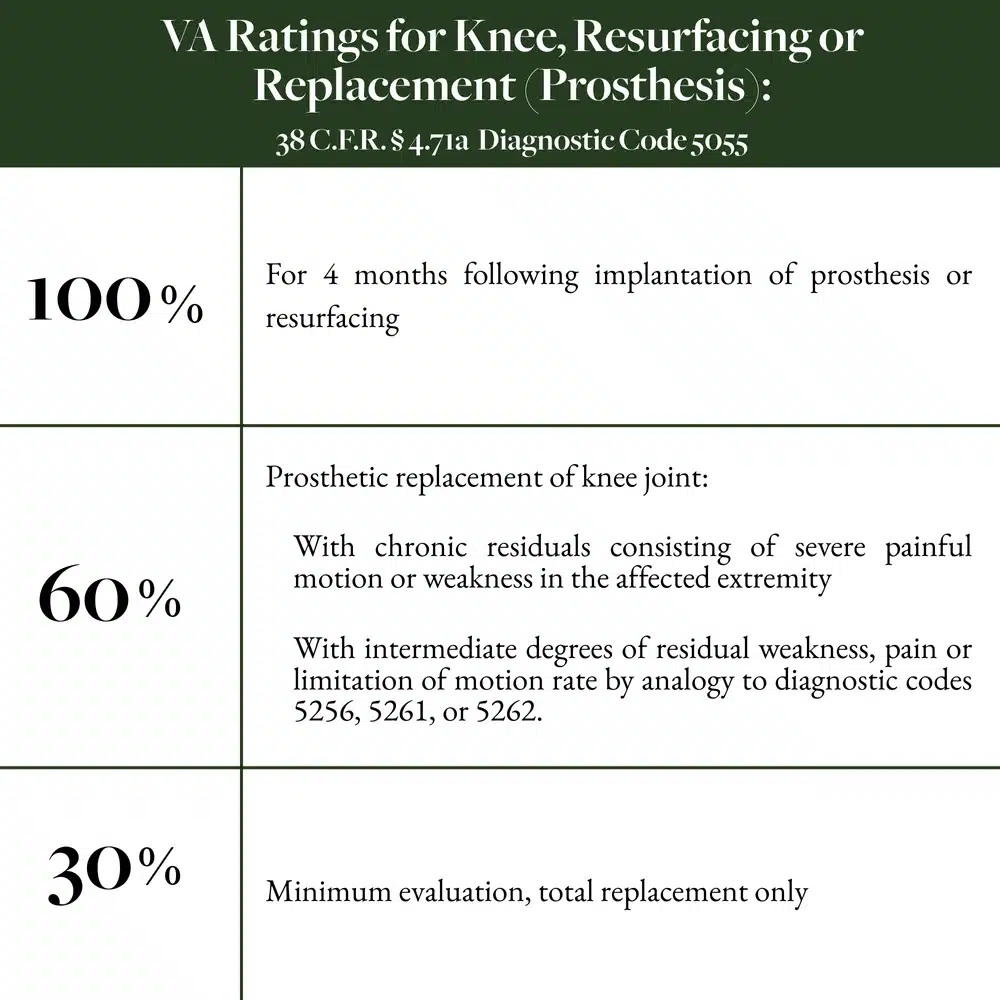
Rated under diagnostic code 5055. A 100% rating is assigned for 1 year following surgery. After the one-year period following surgery, ratings are assigned as follows:

  • 60% – Prosthetic replacement of knee joint with chronic residuals consisting of severe painful motion or weakness in the affected extremity, or with intermediate degrees of residual weakness, pain, or limitation of motion rated by analogy to diagnostic codes 5256, 5261, or 5262.

  • 30% – Minimum evaluation, total replacement only

How to Increase a VA Knee Rating

VA evaluates knee disabilities using a combination of objective medical findings and functional impairment. To obtain a higher rating, the evidence must show that the knee condition has worsened or that VA did not adequately consider all compensable symptoms. The most common evidence sources include:


For knee conditions, the C&P examiner often conducts or reviews:

  • Range-of-motion (ROM) testing for flexion and extension

  • Findings related to pain, weakness, fatigability, or incoordination

  • Functional loss during repetitive use testing

  • Flare-ups and their impact on motion, endurance, and stability

  • Evidence of instability, subluxation, or meniscal conditions

VA examiners use standardized Disability Benefits Questionnaires (DBQs) to document these findings.

Lay statements are often critical in knee claims, especially where pain, flare-ups, or instability are not fully captured during a single examination. Veterans and witnesses can describe:

  • The frequency and severity of knee pain

  • Flare-ups and how they limit standing, walking, bending, or weight-bearing

  • Instability, giving way, locking, swelling, or falls

  • The impact of the knee condition on daily activities and employment

Knee symptoms frequently fluctuate, and an examination performed on a “good day” may not reflect the veteran’s typical level of impairment. Lay testimony helps fill that evidentiary gap.

Private treatment records can provide longitudinal evidence that VA examinations may miss. These records may include:

  • Ongoing orthopedic or primary care treatment notes

  • Imaging studies such as X-rays or MRIs

  • Physical therapy records

  • Surgical records, including arthroscopy or total knee replacement

  • Provider observations regarding functional limitations or worsening symptoms

Providing complete private medical records can significantly strengthen a claim for an increased knee rating.

Appeal and Review Options

If VA issued a decision on the knee disability within the past year, a veteran may pursue review through:

  • Higher-Level Review

  • Supplemental Claim with new and relevant evidence

  • Board Appeal

Because knee ratings involve multiple diagnostic codes, functional loss analysis, and evolving regulations, many veterans benefit from professional representation when seeking an increased rating.

Knee Conditions and TDIU

Severe knee conditions may prevent substantially gainful employment, especially in jobs requiring prolonged standing or walking, physical labor, or repetitive bending, lifting, or squatting.

Veterans rated at 60% for a single disability, or with a rating of 70% combined with one condition rated at 40% or more, may qualify for TDIU.

Denied or Underrated for Migraines? Call Greene & Marusak LLC

VA knee claims are often underestimated, especially when pain, instability, or flare-ups are not fully considered. If VA denied or underrated your knee disability, Greene & Marusak LLC can help.

Contact us for a free case evaluation today to speak with an experienced VA-accredited claims agent or attorney.

Migraines & Headaches

When VA grants service connection for migraines or other headache conditions, it assigns a disability rating based on the frequency, severity, and economic impact of headache episodes—particularly whether they result in prostrating attacks and interfere with a veteran’s ability to work. These ratings determine monthly compensation and eligibility for additional benefits. Because migraines often worsen over time and can significantly impair occupational functioning, it is critical that a veteran’s claim or appeal fully documents both the severity of the headaches and their impact on employment.

Bottom Line Up Front:
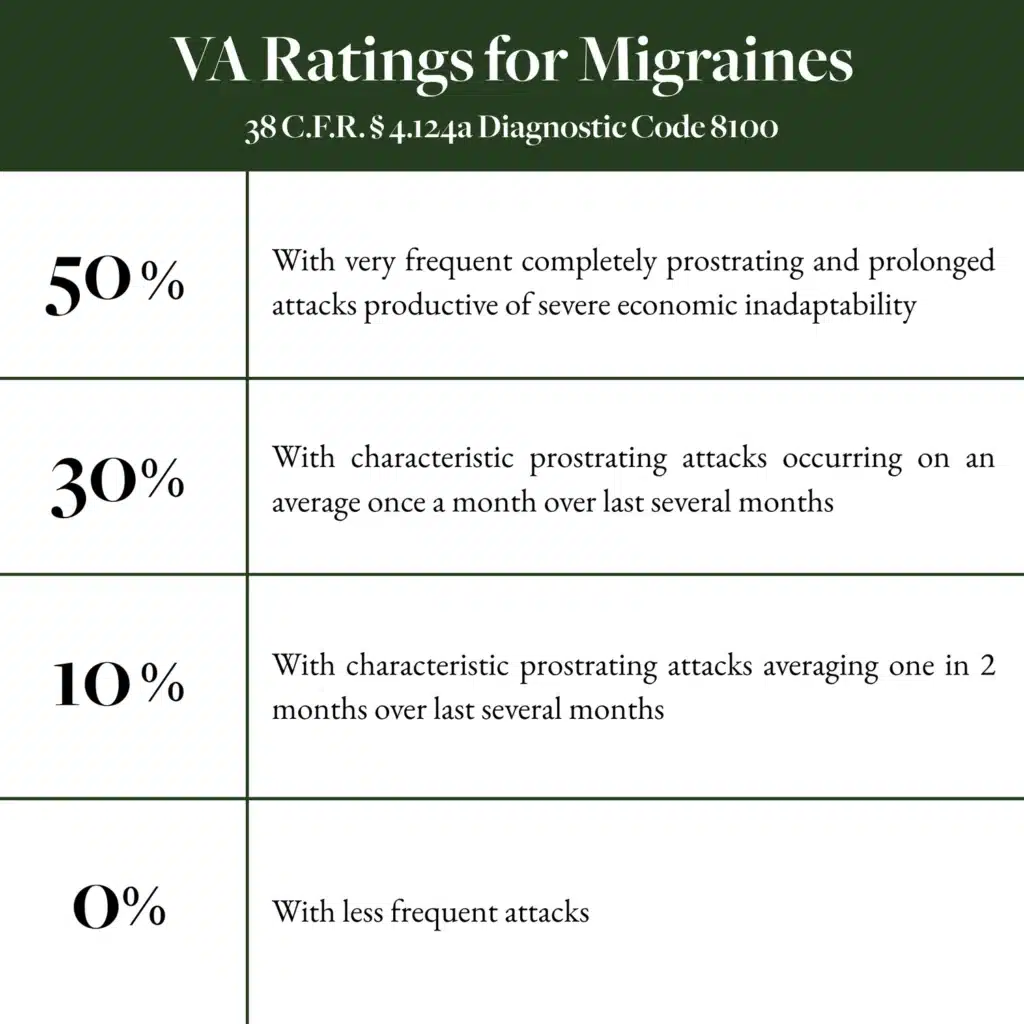
  • VA rates migraines under 38 C.F.R. § 4.124a, Diagnostic Code 8100, based primarily on the frequency and severity of prostrating attacks and whether they produce severe economic inadaptability. Ratings are typically 0%, 10%, 30%, or 50%.

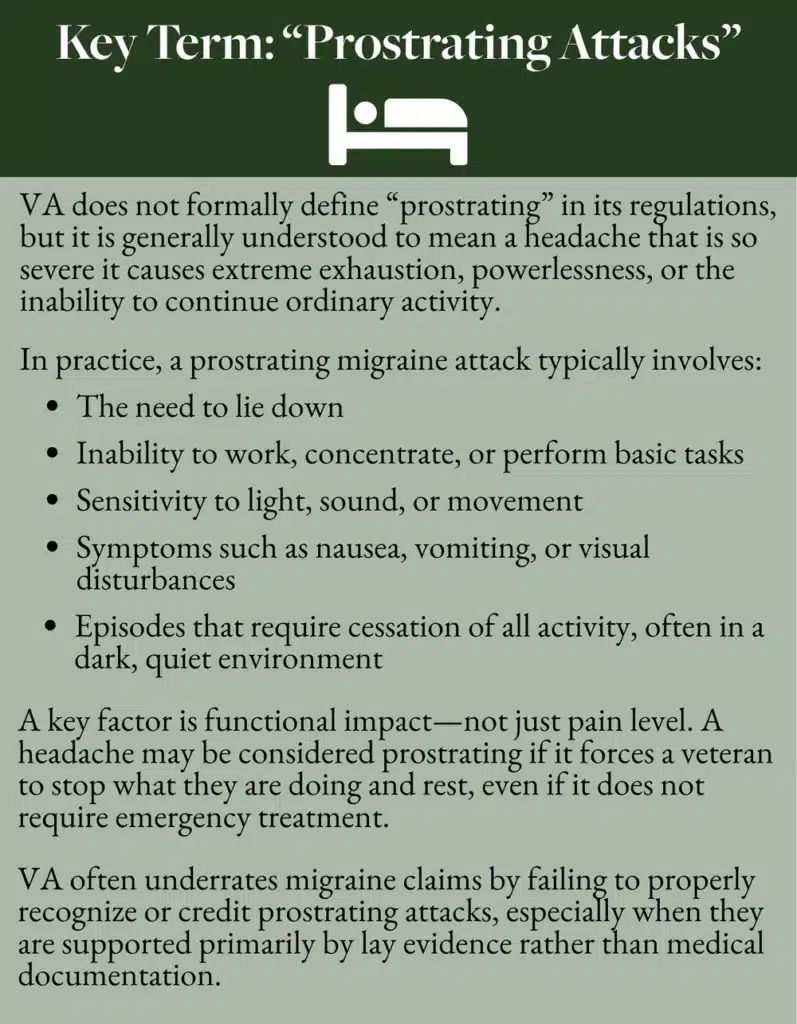
  • The term “prostrating” generally refers to headache attacks that are so severe they require the veteran to lie down or cease all activity.

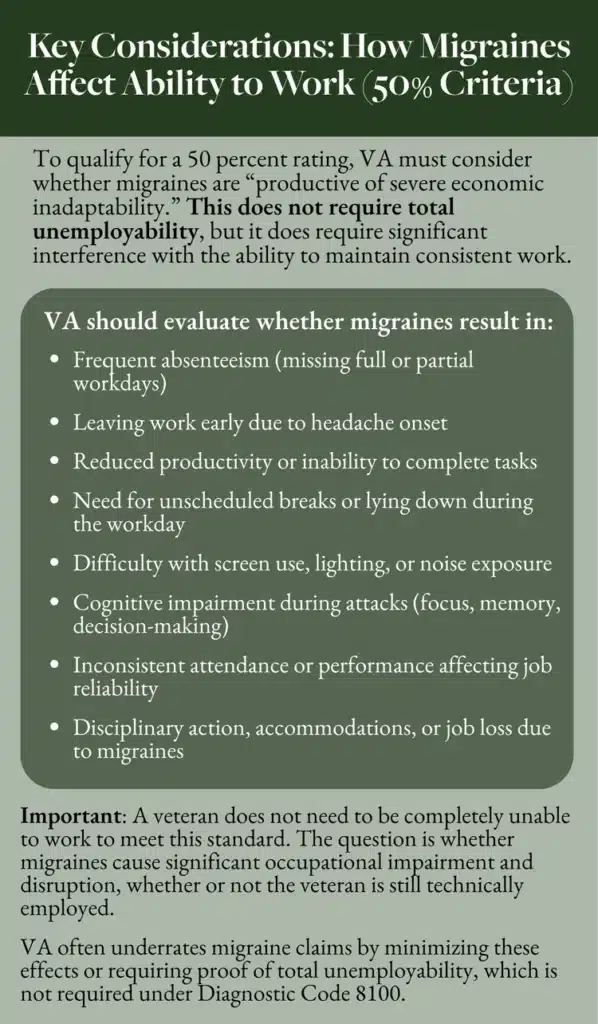
  • The 50% rating—the highest available under DC 8100—depends heavily on whether migraines interfere with occupational ability.

  • Veterans with severe migraines may qualify for Total Disability Based on Individual Unemployability (TDIU) or, in certain circumstances, Special Monthly Compensation (SMC).

Bottom Line Up Front: How Does VA Assign Ratings for Migraines?

VA evaluates migraines based on how often they occur, how severe they are, and how they affect a veteran’s ability to function. Unlike many other conditions, diagnostic imaging or objective testing is often limited, so credibility and consistency of reported symptoms are critical.

The most common evidence sources include:

VA examiners review:

  • Frequency of headache episodes (daily, weekly, monthly)

  • Whether headaches are prostrating and require rest in a dark room or cessation of activity

  • Duration of attacks (hours to days)

  • Associated symptoms such as nausea, vomiting, sensitivity to light or sound, and visual disturbances

  • Impact on ability to work, including missed time or reduced productivity

  • Use of medications and effectiveness of treatment

Examiners complete a Headaches (Including Migraine Headaches) Disability Benefits Questionnaire (DBQ) to document these findings.

Lay statements are often critical in migraine claims. Veterans and witnesses may describe:

  • Having to lie down during headache attacks

  • Missing work or leaving early due to migraines

  • Inability to concentrate, tolerate light, or perform tasks during episodes

  • Frequency and duration of attacks not fully documented in medical records

  • The real-world impact on employment and daily functioning

Because migraines are largely subjective, lay evidence often carries significant weight in establishing severity.

Neurologists and treating physicians often document symptoms VA overlooks. Records may include:

  • Diagnosis of migraine or chronic headache disorder

  • Prescription medications (preventative and abortive treatments)

  • Emergency visits for severe migraine episodes

  • Documentation of work limitations or disability status

  • Medical opinions describing functional impairment or inability to work

Private medical opinions can be especially important when VA minimizes the severity of symptoms.
How VA Rates Migraines (38 C.F.R. § 4.124a, Diagnostic Code 8100)

A 50% rating is warranted when migraines involve:

  • Very frequent completely prostrating and prolonged attacks

  • Attacks that are productive of severe economic inadaptability

This is the highest schedular rating available and reflects migraines that significantly interfere with the ability to maintain employment. VA often underapplies this standard by requiring complete unemployability, which is not required under the law.

A 30% rating is assigned when migraines involve:

  • Characteristic prostrating attacks occurring on average once per month over several months

This rating applies when migraines are severe and recurring, but not at the level of near-continuous or work-preclusive impairment.

A 10% rating is warranted when migraines involve:

  • Characteristic prostrating attacks averaging one in two months over several months

This level reflects less frequent but still disabling episodes.

A 0% rating may be assigned when migraines are diagnosed but:

  • Do not involve prostrating attacks, or

  • Do not significantly impair occupational or daily functioning

Even a non-compensable rating is important because it establishes service connection and allows for future increases if the condition worsens.

Common VA Errors in Migraine Ratings

VA frequently underrates migraine claims by:

  • Failing to properly define or recognize prostrating attacks

  • Ignoring credible lay evidence regarding frequency and severity

  • Requiring objective medical documentation for every episode

  • Misinterpreting “severe economic inadaptability” as total unemployability

  • Overlooking the cumulative impact of migraines on work performance

These errors are common grounds for appeal.

 
Migraines, TDIU, and SMC

Migraines may prevent substantially gainful employment due to:

  • Frequent absenteeism

  • Reduced productivity or inability to complete tasks

  • Need to lie down during work hours

  • Sensitivity to light, sound, or screen exposure

  • Cognitive impairment during or between attacks

Veterans with:

  • A single 60 percent rating, or

  • A 70 percent combined rating, to include a single disability rated at least at 40 percent

Veterans with:

  • A single 60 percent rating, or

  • A 70 percent combined rating, to include a single disability rated at least at 40 percent may qualify for Total Disability Based on Individual Unemployability (TDIU).

While migraines alone rarely trigger SMC, entitlement may arise when:

  • Migraines combine with other disabilities to meet housebound criteria, or

  • The overall disability picture results in the need for aid and attendance

How to Appeal or Increase a VA Migraine Rating

Veterans may want to appeal or request an increase if:

  • VA underrated the frequency or severity of migraines

  • VA failed to recognize prostrating attacks

  • VA denied a 50% rating despite significant work impairment

  • Symptoms worsened over time

  • VA failed to consider the impact on employment

Appeals can be filed through:

  • Higher-Level Review

  • Supplemental Claim with new and relevant evidence

  • Board Appeal

Because migraine ratings often depend heavily on subjective evidence and legal interpretation, experienced representation can make a meaningful difference.

Denied or Underrated for Migraines? Call Greene & Marusak LLC

Migraine claims are often underrated due to misunderstanding of the rating criteria and failure to properly evaluate functional impairment. If VA denied or underrated your migraine condition, Greene and Marusak LLC can help identify errors, develop supporting evidence, and pursue the benefits you deserve.

Contact us for a free case evaluation today to speak with an experienced VA-accredited claims agent or attorney!

PTSD & Mental Disorders

When VA grants service connection for post-traumatic stress disorder (PTSD) or another mental health disability, it assigns a disability rating based on the frequency and severity of a veteran’s occupational and social impairment. These ratings determine a Veteran’s monthly compensation and additional benefits.

Bottom Line Up Front:
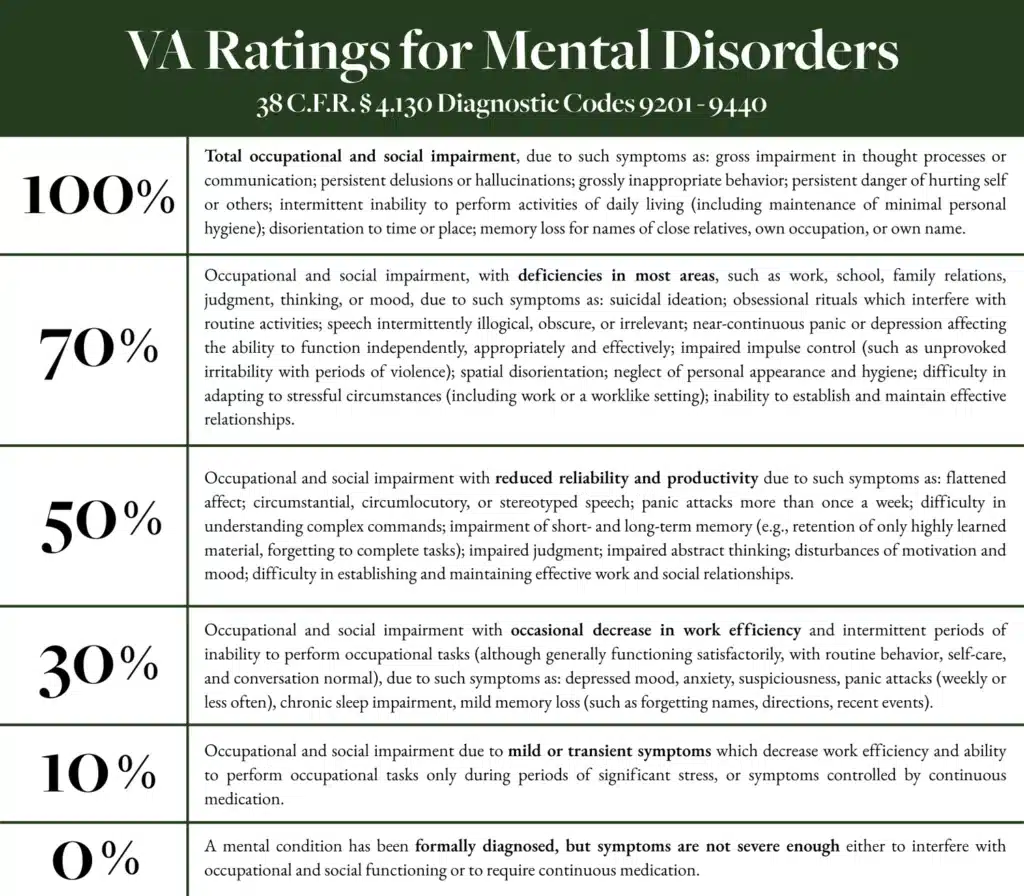
  • VA rates PTSD and other mental disorders under 38 C.F.R. §4.130, covering diagnostic codes 9201-9440. Ratings commonly fall at 10%, 30%, 50%, 70%, or 100%, depending on the occupational and social impairment.

  • A veteran’s C&P exam, treatment records, lay statements, and buddy statements are all critical evidence VA relies on in assigning a rating for PTSD or other mental disorders.

  • Veterans whose PTSD or other mental disorders impact their ability to work may qualify for a Total Disability Based on Individual Unemployability (TDIU)

How Does VA Assign Ratings for PTSD & Mental Disorders?

VA evaluates psychiatric disabilities using a combination of examinations, treatment records, and a veteran’s reports of their symptoms.

The most common evidence sources include:

For PTSD and other mental health conditions, VA relies heavily on Compensation & Pension (C&P) examinations, which are typically completed using standardized Disability Benefits Questionnaires (DBQs). Most psychiatric conditions, including PTSD, are evaluated using the Mental Disorders DBQ, while conditions such as anorexia nervosa or bulimia nervosa may be evaluated using the Eating Disorders DBQ, depending on the diagnosis.

During the exam, the examiner confirms a current diagnosis under DSM criteria, reviews the veteran’s claims file, and evaluates the level of occupational and social impairment consistent with VA’s rating criteria under 38 C.F.R. § 4.130. The examiner documents the veteran’s relevant social, marital, family, occupational, educational, mental health, legal, behavioral, and substance use history, as applicable.

Using the DBQ, the examiner identifies the veteran’s symptoms based on both the evidence of record and the clinical interview, and explains how those symptoms impact daily functioning and the ability to work. If raised by the record, the examiner may also address the veteran’s competency to manage VA funds and include additional remarks to clarify symptom severity or functional limitations.

When assessing the frequency and severity of a veteran’s mental health disability, VA is required to review all pertinent evidence of record, rather than rely solely on a VA examination. VA and private mental health treatment records often provide a more accurate and detailed picture of a veteran’s day-to-day functioning than a one-time C&P exam.

These records can document the progression of symptoms over time, response to treatment, and the real-world impact of the condition on the veteran’s personal, social, and occupational life.

Examples of useful evidence found in treatment records include, but are not limited to:

  • Frequency and consistency of mental health treatment
  • Reports of suicidal or homicidal ideation
  • Ongoing stressors or conflicts involving family, friends, or work
  • Clinical observations that provide a more complete picture of the severity and persistence of the mental health condition

If you are experiencing suicidal thoughts, contact 988 and press 1 for the Veterans Crisis Line

Lay and buddy statements are a powerful form of evidence in the VA disability compensation process, particularly for mental health claims. Lay statements allow the veteran to describe their symptoms and functional limitations based on firsthand experience. These statements are especially important because many veterans unintentionally under-report symptoms during VA examinations, often due to discomfort discussing personal or traumatic experiences with an unfamiliar examiner.

Without a full and accurate description of symptoms, VA may underrate a veteran’s mental health condition. Lay statements help fill this gap by explaining how symptoms affect daily life, relationships, and the ability to function over time—information that may not be fully captured during a single C&P exam.

Buddy statements provide additional supporting evidence from people who know the veteran, such as family members, friends, or fellow service members. These statements can describe observable changes in behavior, mood, and functioning, as well as corroborate in-service stressors or ongoing mental health symptoms when VA has difficulty verifying them through official records.

Together, lay and buddy statements help provide VA with a more complete and accurate picture of the veteran’s mental health disability and its real-world impact.

How VA Rates PTSD & Other Mental Disorders (38 C.F.R. § 4.130)

VA evaluates PTSD under Diagnostic Code 9411, but most mental health conditions—including depression, anxiety disorders, bipolar disorder, and eating disorders—are rated under the General Rating Formula for Mental Disorders, which applies to diagnostic codes 9201–9440.


Rather than focusing on a single symptom, VA assigns ratings based on the overall level of occupational and social impairment caused by the condition. The symptoms listed at each rating level are examples, not requirements. A veteran does not need to show every symptom listed to qualify for a particular rating.

A 100% rating is assigned when the mental health condition results in total occupational and social impairment. This level reflects a veteran who is essentially unable to function in a work or social environment due to the severity of their symptoms.

Examples of symptoms associated with this level include:

  • Gross impairment in thought processes or communication
  • Persistent delusions or hallucinations
  • Grossly inappropriate behavior
  • Persistent danger of hurting self or others
  • Inability to perform activities of daily living, including maintaining basic personal hygiene
  • Disorientation to time or place
  • Severe memory loss, such as forgetting names of close relatives or one’s own occupation

This rating is reserved for the most severe cases and often overlaps with entitlement to TDIU when total impairment is shown.

A 70% rating is warranted when symptoms cause occupational and social impairment with deficiencies in most areas, such as work, school, family relations, judgment, thinking, or mood.

This level often reflects serious, ongoing symptoms that significantly interfere with daily life and employment, such as:

  • Suicidal ideation
  • Obsessional rituals that interfere with routine activities
  • Illogical, obscure, or irrelevant speech
  • Near-continuous panic or depression affecting independent functioning
  • Impaired impulse control, including anger or periods of violence
  • Neglect of personal appearance or hygiene
  • Difficulty adapting to stressful circumstances, including work settings
  • Inability to establish and maintain effective relationships

Veterans rated at 70% frequently struggle to maintain employment and may also qualify for TDIU.

A 50% rating applies when the condition causes occupational and social impairment with reduced reliability and productivity. Veterans at this level are sometimes able to work but experience significant difficulty maintaining consistent performance or stable relationships.

Common symptoms at this level include:

  • Flattened affect
  • Panic attacks more than once per week
  • Difficulty understanding complex commands
  • Memory impairment affecting work tasks
  • Impaired judgment or abstract thinking
  • Disturbances of motivation and mood
  • Difficulty establishing and maintaining effective work and social relationships

This rating often reflects noticeable functional decline compared to pre-service or earlier functioning.

A 30% rating is assigned when symptoms result in occasional decreases in work efficiency with intermittent periods of inability to perform occupational tasks, but overall functioning remains generally satisfactory.

Examples include:

  • Depressed mood or anxiety
  • Suspiciousness
  • Panic attacks occurring weekly or less often
  • Chronic sleep impairment
  • Mild memory loss

Veterans at this level are usually able to maintain employment but experience periodic interference from their symptoms.

A 10% rating applies when symptoms are mild or transient and only interfere with work efficiency during periods of significant stress, or when symptoms are well controlled by continuous medication.

This level reflects minimal functional impairment.

Mental Disorders, TDIU, & SMC

Mental health conditions can significantly impair a veteran’s ability to maintain substantially gainful employment, particularly when symptoms affect:

  • Concentration, memory, and task completion

  • Attendance, reliability, or pace

  • Interactions with supervisors, coworkers, or the public

  • Ability to adapt to stress or changes in a work environment

Veterans with a single mental health rating of 60 percent or higher, or a combined rating of 70 percent with one condition rated at least 40 percent, may be eligible for Total Disability Based on Individual Unemployability (TDIU), which pays compensation at the 100 percent rate even when schedular criteria are not met.

Mental disorders do not often qualify for Special Monthly Compensation (SMC) on their own. However, SMC may be warranted when a mental health condition:

  • Results in the need for regular aid and attendance

  • Causes the Veteran to be substantially confined to the home

  • Combines with other service-connected disabilities to meet SMC criteria

Severe psychiatric symptoms, particularly when accompanied by physical disabilities, may support entitlement to SMC in certain cases.

How to Appeal or Increase a Mental Disorder Rating

Veterans may want to appeal or request an increased rating if:

  • VA denied service connection for a mental health condition

  • VA underrated the severity of PTSD or another mental disorder

  • Symptoms have worsened over time or increased in frequency

  • The condition has begun to interfere more significantly with employment or daily functioning

  • VA failed to properly consider treatment records, lay statements, or favorable medical evidence

  • Higher-Level Review

  • Supplemental Claim with new and relevant evidence

  • Board Appeal 

Appeals can be filed through:

Because mental disorder ratings rely heavily on subjective evidence, many veterans benefit from professional representation during appeals.

Denied or Underrated for PTSD or Mental Disorder Disability? Call Greene & Marusak LLC

PTSD and other mental disorder claims are complex and often require detailed medical evidence, expert opinions, and strategic argument. If VA denied or underrated your PTSD or other mental disorder, Greene & Marusak LLC can help.

Contact us for a free case evaluation today to speak with an experienced VA-accredited claims agent or attorney!

Scars

VA assigns a disability rating for scars based on factors such as location of the scar, size, whether it is painful or unstable, and how it affects function. Scar ratings are governed by specific diagnostic codes, and even small or superficial scars may be compensable for pain, instability, or functional limitation.

Because scars can worsen over time, becoming painful, unstable, or functionally limiting, it is critical a veteran’s claim or appeal fully documents both the scar’s physical characteristics and impact on daily life and employment.

Bottom Line Up Front:
  • VA rates scars under 38 C.F.R. § 4.118, using different diagnostic codes depending on whether the scar is painful, unstable, deep, nonlinear, affects the head/face/neck, or causes limitation of function.

  • Painful or unstable scars are compensable, even if they are small or otherwise appear minimal.

  • Scars that limit motion, strength, dexterity, or use of a body part may be rated based on functional impairment, in addition to or instead of a skin-based rating.

  • Veterans with severe functional limitations or multiple painful scars may qualify for TDIU or, in limited circumstances, Special Monthly Compensation (SMC).

How Does VA Assign Ratings for Scars?

VA does not rate scars based solely on appearance. Instead, VA evaluates:

  • Whether the scar is painful

  • Whether the scar is unstable (frequent loss of skin covering)

  • The size and depth of the scar

  • The location of the scar (head, face, neck vs. other areas)

  • Whether the scar causes functional limitation of the affected body part

A scar that looks minor on examination may still warrant compensation if it causes pain, tenderness, breakdown of skin, or interferes with normal use.

Common Evidence Used in Scar Claims

VA examiners evaluate and document:

  • The number of scars

  • Exact measurements (length, width, and total surface area)

  • Whether scars are painful on examination

  • Whether scars are unstable

  • Whether scars are deep or associated with underlying soft tissue damage

  • Whether scars limit motion, strength, or function

  • Impact on employment and daily activities

VA examiners typically complete a Scars Disability Benefits Questionnaires (DBQ) to record these findings.


Lay statements are often critical in scar claims. Veterans and witnesses may describe:

  • Pain, tenderness, burning, or sensitivity

  • Skin breakdown, cracking, or reopening

  • Difficulty with movement, gripping, standing, or walking

  • Sensitivity to clothing, pressure, or weather

  • How scars interfere with work tasks or daily routines

  • Flare-ups of pain or instability not always present during exams

Lay evidence helps show functional impact that may not be fully captured during a brief VA examination.

Private providers may document issues VA overlooks, including:

  • Chronic pain or nerve involvement related to scars

  • Recurrent infections or skin breakdown

  • Scar tissue adherence or reduced mobility

  • Surgical complications or worsening over time

  • Medical opinions linking scars to service injuries or surgeries

Private opinions can be especially valuable when VA minimizes pain, instability, or functional loss.

How VA Rates Scars Under 38 C.F.R § 4.118

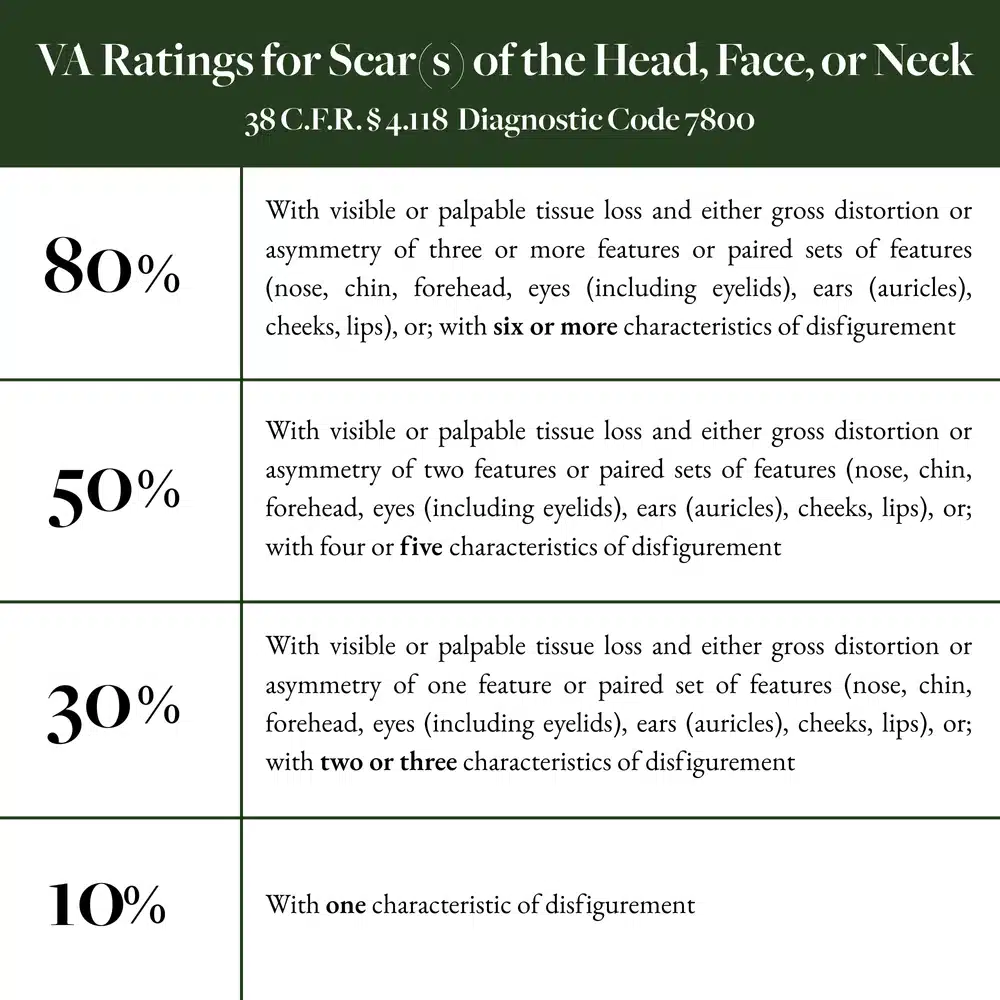
Rated under diagnostic code 7800 based on disfigurement, including characteristics such as:

  • Length and width

  • Elevation or depression of surface contour

  • Adherence to underlying tissue

  • Skin texture abnormalities

  • Pigmentation changes

  • Tissue loss or asymmetry

Ratings range from 10 percent to 80 percent, depending on severity.

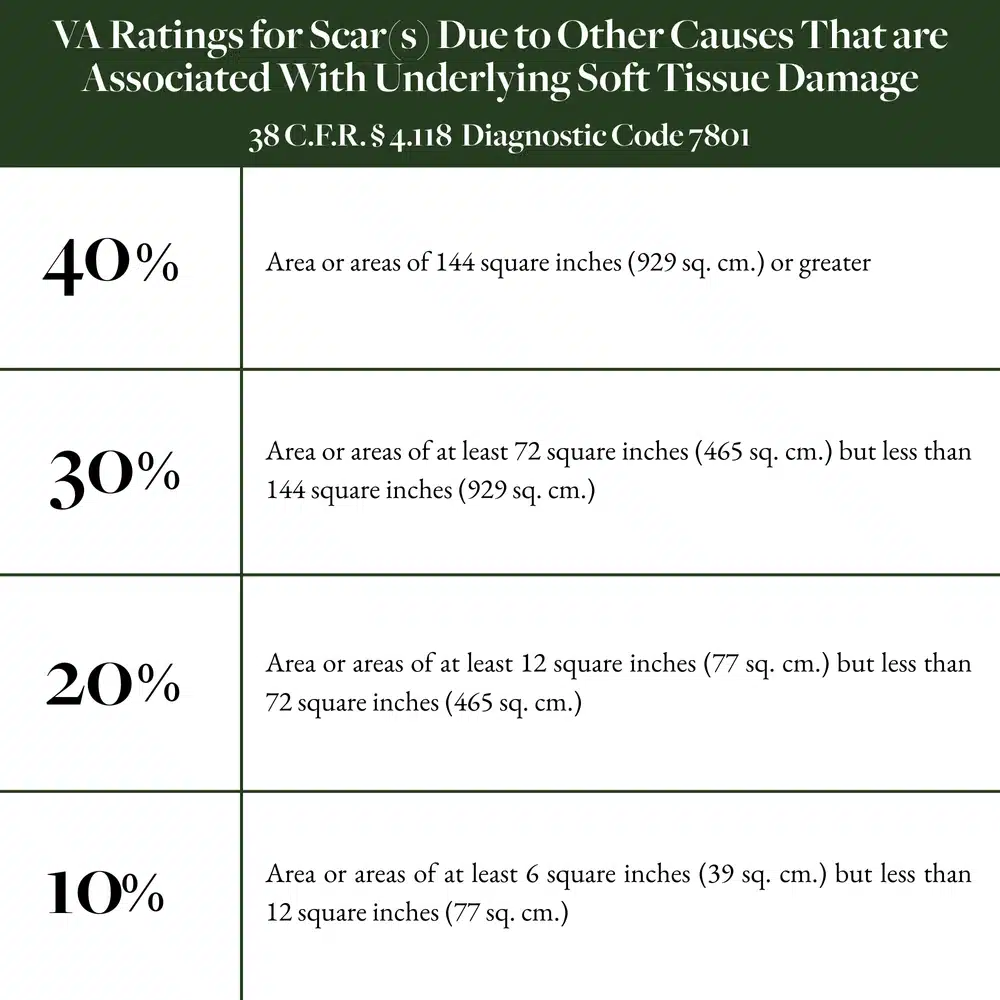
Rated under diagnostic code 7801 depending on the total area of deep scars associated with underlying soft tissue damage.

  • 10% – Area or areas of at least 6 square inches but less than 12 square inches

  • 20% – Area or areas of at least 12 square inches but less than 72 square inches

  • 30% – Area or areas of at least 72 square inches but less than 144 square inches

  • 40% – Area or areas of 144 square inches or greater

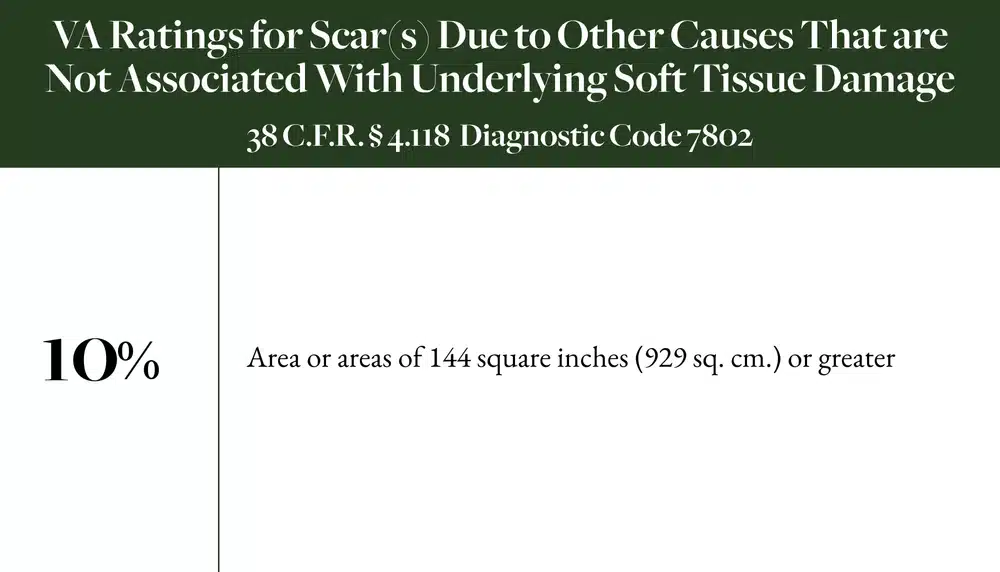
Rated under diagnostic code 7802. Applies to large surface-area scars that are superficial but not painful or unstable.

  • 10% – Area or areas of 144 square inches or greater

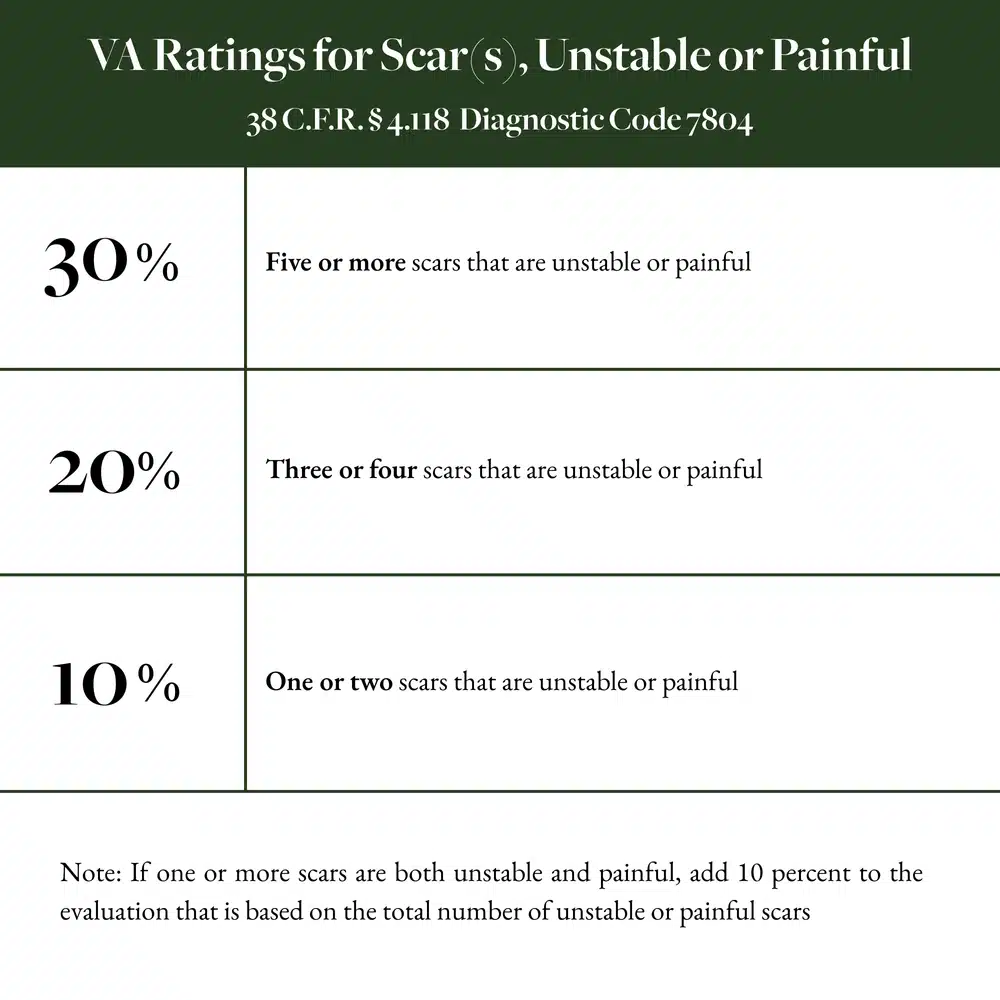
Rated under diagnostic code 7804

  • 10% – One or two scars that are painful or unstable

  • 20% – Three or four scars that are painful or unstable

  • 30% – Five or more scars that are painful or unstable

An additional 10 percent may be added if a scar is both painful and unstable.

Scars may be rated based on limitation of motion or function of the affected body part, such as:

  • Reduced range of motion

  • Pain with use

  • Weakness or stiffness

  • Interference with gripping, walking, bending, or standing

These limitations are rated under the appropriate musculoskeletal or neurological criteria, not just the skin schedule.

Separately Ratable Conditions Related to Scars

(1) Nerve Damage

  • May involve numbness, tingling, burning, or shooting pain
  • Rated under the appropriate peripheral nerve diagnostic codes

(2) Musculoskeletal Impairment

  • Reduced motion or strength caused by scar tissue
  • Rated under joint or muscle group criteria

(3) Chronic Pain Conditions

  • Persistent pain associated with scar tissue
  • May support increased ratings or functional loss findings

(4) Psychological Impact

  • Anxiety, depression, or body-image issues caused by disfiguring or painful scars
  • Rated separately if service connected
Scars, TDIU, and SMC

Scars may support TDIU when they prevent substantially gainful employment due to:

  • Chronic pain

  • Limited use of hands, arms, or legs

  • Difficulty standing, walking, or performing physical tasks

  • Combined effects with other service-connected conditions

Veterans with:

  • A single 60 percent rating, or

  • A 70 percent combined rating with one disability rated at least 40 percent, may qualify for Total Disability Based on Individual Unemployability (TDIU).

Scar-related impairments may trigger SMC in limited situations, such as:

  • Loss of use of a body part due to functional limitation

  • Additional disabilities independently rated at 60 percent (housebound benefits)

How to Appeal or Increase a VA Scar Rating

Veterans may wish to appeal or seek an increased rating if:

  • VA failed to rate scars as painful or unstable
  • VA overlooked functional limitation
  • Scars worsened over time
  • Nerve or musculoskeletal effects were not separately rated
  • VA underestimated the number or severity of scars
  • Appeals may be filed through:

Higher-Level Review

  • Supplemental Claim with new and relevant evidence
  • Board Appeal

Denied or Underrated for PTSD or Mental Disorder Disability? Call Greene & Marusak LLC

Scar claims are frequently underrated or misapplied under VA regulations. If VA denied or underrated your service-connected scars, Greene & Marusak LLC can help identify errors, develop supporting evidence, and pursue the benefits you deserve.

Contact us for a free case evaluation today to speak with an experienced VA-accredited claims agent or attorney.

Sleep Apnea

When VA grants service connection for sleep apnea, it assigns a disability rating based on the severity of symptoms, treatment requirements (such as the use of a CPAP), and the condition’s overall impact on daily functioning. These ratings determine a veteran’s monthly compensation and eligibility for additional benefits. Because sleep apnea can worsen over time and lead to additional health problems, it is critical that a veteran’s claim or appeal fully documents both the sleep apnea itself and any secondary conditions it causes.

Bottom Line Up Front:
  • VA rates sleep apnea under 38 C.F.R. § 4.97, Diagnostic Code 6847, based primarily on the severity of symptoms and the type of treatment required, such as the use of a CPAP or other breathing assistance device. Ratings commonly fall at 0, 30, 50, or 100 percent.

  • Complications and residual conditions associated with sleep apnea—such as hypertension, heart conditions, stroke risk, cognitive impairment, or daytime hypersomnolence—may be rated separately if they are independently compensable and service connected (often on a secondary basis).

  • Veterans with severe sleep apnea or significant functional impairment from related conditions may qualify for Total Disability Based on Individual Unemployability (TDIU) or, in rare cases, Special Monthly Compensation (SMC) when additional statutory criteria are met.

How Does VA Assign Ratings for Sleep Apnea?

VA evaluates sleep apnea based on the severity of the condition and the treatment required. Unlike many other conditions, a diagnosis alone does not determine the rating. Instead, VA focuses on whether the condition causes daytime symptoms, requires breathing assistance such as a CPAP, or has progressed to serious respiratory or cardiac complications that affect daily functioning.

The most common evidence sources include:

VA examiners review:

  • Whether sleep apnea has been formally diagnosed, usually by a sleep study

  • The type of sleep apnea (obstructive, central, or mixed)

  • Whether treatment is required, including a CPAP or other breathing assistance device

  • Presence of persistent daytime hypersomnolence (excessive daytime sleepiness)

  • Whether sleep apnea has caused or contributed to serious complications, such as respiratory failure, heart conditions, or the need for a tracheostomy

  • Functional impact on work performance, alertness, concentration, and daily activities

VA examiners complete a Disability Benefits Questionnaire (DBQ) to document these factors.

Lay statements are often critical in sleep apnea claims. Veterans and witnesses may describe:

  • Loud snoring, gasping, or choking during sleep

  • Observed breathing pauses or episodes of stopped breathing at night

  • Severe daytime fatigue or falling asleep unintentionally

  • Difficulty concentrating, memory problems, or irritability

  • Problems staying awake at work or while driving

  • How sleep apnea affects employment, safety, and daily routines

While medical evidence establishes diagnosis and treatment, lay evidence helps show real-world functional impairment that may not be fully captured in medical records.

Private sleep specialists, pulmonologists, cardiologists, and primary care physicians often document issues VA overlooks. Records may include:

  • Sleep study results confirming obstructive sleep apnea

  • CPAP prescriptions and ongoing treatment

  • Poor tolerance or continued symptoms despite CPAP use

  • Development of secondary conditions such as hypertension or heart disease

  • Medical opinions linking sleep apnea to service or to other service-connected conditions (such as PTSD, sinus conditions, or weight gain)

Private nexus opinions can be especially powerful when VA disputes service connection or secondary relationships.

How VA Rates Sleep Apnea (38 C.F.R. § 4.97)

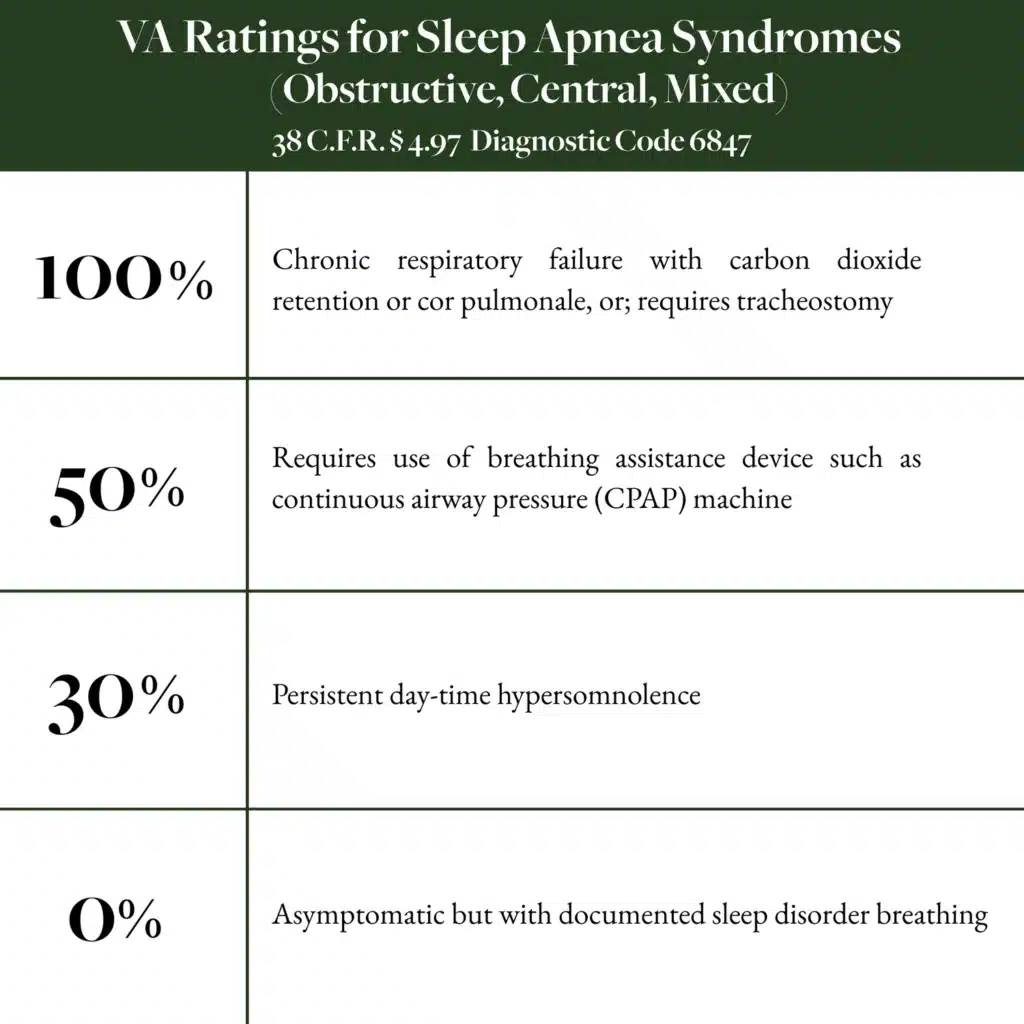
VA uses diagnostic code 6847

A 100% rating is warranted when sleep apnea results in:

  • Chronic respiratory failure with carbon dioxide retention

OR

  • Cor pulmonale (heart condition caused by lung disease)

OR

  • Requirement for a tracheostomy

This level reflects life-threatening sleep apnea with severe respiratory or cardiac complications that profoundly interfere with daily functioning and employment.

A 50% rating is assigned when sleep apnea:

  • Requires use of a CPAP or other breathing assistance device

This is the most common rating for service-connected sleep apnea and is based on the medical necessity of nightly mechanical assistance, not on perfect compliance or symptom resolution.

A 30% rating is warranted when sleep apnea causes:

  • Persistent daytime hypersomnolence

This applies when excessive sleepiness significantly affects alertness, safety, or daily functioning, even if a CPAP is not prescribed.

A 0% rating may be assigned when sleep apnea is diagnosed but:

  • Does not require a CPAP or other breathing assistance

  • Does not cause persistent daytime hypersomnolence

  • Does not currently impair occupational or daily functioning

Even a non-compensable rating is important because it establishes service connection and allows for future increased ratings if the condition worsens or treatment becomes necessary.

Separately Ratable Conditions from Sleep Apnea

(1) Cardiovascular Conditions

Often rated separately under the appropriate cardiovascular diagnostic codes.

  • May include hypertension, heart disease, arrhythmias, cor pulmonale, or stroke residuals

  • Sleep apnea is a well-recognized risk factor for cardiovascular impairment, but VA frequently overlooks the secondary relationship

(2) Respiratory Complications

Rated under pulmonary or respiratory criteria when severe.

  • May include chronic respiratory failure, reduced oxygen levels, or other pulmonary impairments

  • Severe respiratory complications may also support a 100 percent sleep apnea rating 

(3) Cognitive and Neuropsychiatric Impairments

Rated separately when diagnosable and compensable.

  • Symptoms may include memory problems, impaired concentration, slowed thinking, or mood changes

  • These impairments are often documented in neuropsychological testing or mental health records 

(4) Mental Health Conditions Secondary to Sleep Apnea

Rated under the mental health rating schedule if service connected.

  • Depression, anxiety, or worsening PTSD symptoms may be caused or aggravated by chronic sleep deprivation

  • VA often fails to consider aggravation when sleep apnea worsens an existing mental health condition 

(5) Erectile Dysfunction and Hormonal Effects

Typically rated as non-compensable but may qualify for SMC.

  • Erectile dysfunction may be linked to oxygen deprivation and hormonal disruption from sleep apnea

  • If service connected, VA compensates this condition through Special Monthly Compensation (SMC) for loss of use of a creative organ

Sleep Apnea, TDIU, and SMC

Sleep apnea and its residuals may prevent substantially gainful employment due to:

  • Severe daytime hypersomnolence

  • Falling asleep at work or while performing tasks

  • Impaired concentration, judgment, and memory

  • Safety concerns in driving or operating machinery

  • Combined effects of sleep apnea and secondary conditions (cardiac, cognitive, or mental health)

Veterans with:

  • A single 60 percent rating, or a 70 percent combined rating with one disability at least 40 percent, may qualify for Total Disability Based on Individual Unemployability (TDIU).

Severe sleep apnea or related residuals may trigger entitlement to SMC, including:

  • SMC for erectile dysfunction

  • Housebound benefits when a veteran has one service-connected disability rated totally disabling and sleep apnea, alone or in combination with other separate disabilities, is independently rated at a combined 60 percent or more

  • Higher levels of SMC when the combined effects of service-connected disabilities result in the need for regular aid and attendance, loss of use, and/or an advanced level of care.

How to Appeal or Increase a VA Sleep Apnea Rating

Veterans may want to appeal or request an increase if:

  • VA assigned a rating lower than warranted

  • VA denied a 50 percent rating despite a CPAP prescription

  • Secondary conditions were not separately rated

  • Symptoms worsened over time

  • VA failed to recognize sleep apnea as secondary to another service-connected condition

Appeals can be filed through:

  • Higher-Level Review

  • Supplemental Claim with new and relevant evidence

  • Board Appeal

Because sleep apnea claims often involve medical complexity, secondary conditions, and rating misapplication, experienced representation can make a meaningful difference.

Denied or Underrated for Sleep Apnea? Call Greene & Marusak LLC

Sleep Apnea claims are medically and legally complex. If VA denied or underrated your sleep apnea disability, Greene & Marusak LLC can help identify rating errors, develop evidence, and pursue the benefits you deserve.

Contact us for a free case evaluation today to speak with an experienced VA-accredited claims agent or attorney!

TBIs & TBI Residuals

When VA grants service connection for a traumatic brain injury (TBI), it assigns a disability rating based on severity of the residuals that cause impairment of cognitive, emotional/behavioral, and physical functioning. A veteran may receive more than one evaluation for these impairments.

Bottom Line Up Front:
  • VA generally rates TBI residuals under 38 C.F.R. § 4.124a Diagnostic Code 8045. Ratings commonly fall at 0%, 10%, 40%, 70% or 100%, depending on severity.

  • A residual with a distinct diagnosis may be evaluated under another diagnostic code. For example, a diagnosed mental disorder resulting from a TBI will be rated separately under 38 C.F.R. § 4.130 Schedule of Ratings – Mental Disorders.

  • A veteran’s C&P exam, treatment notes, and lay statements are all critical forms of evidence when seeking higher ratings for TBI residuals.

  • Veterans with severe TBIs may qualify for additional benefits, including Total Disability Based on Individual Unemployability (TDIU) or Special Monthly Compensation (SMC).

How VA Rates TBIs (38 C.F.R. § 4.124a)

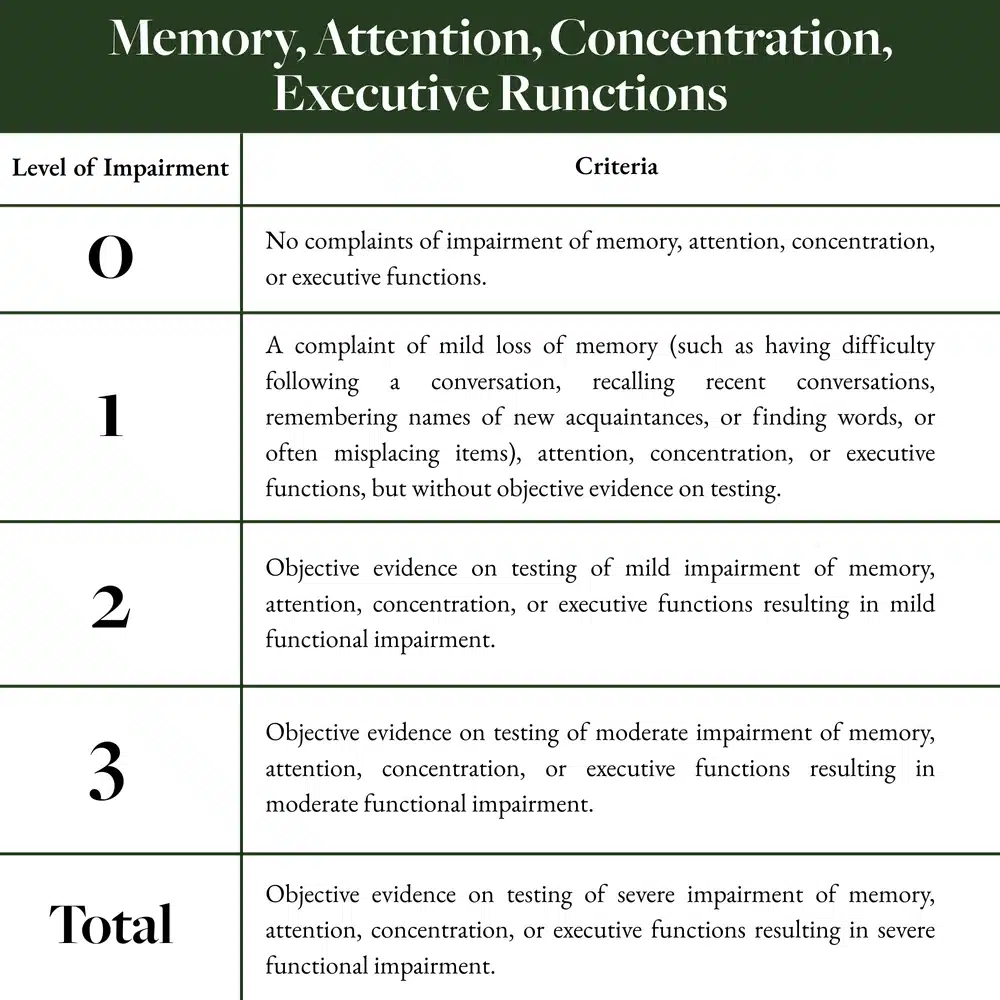
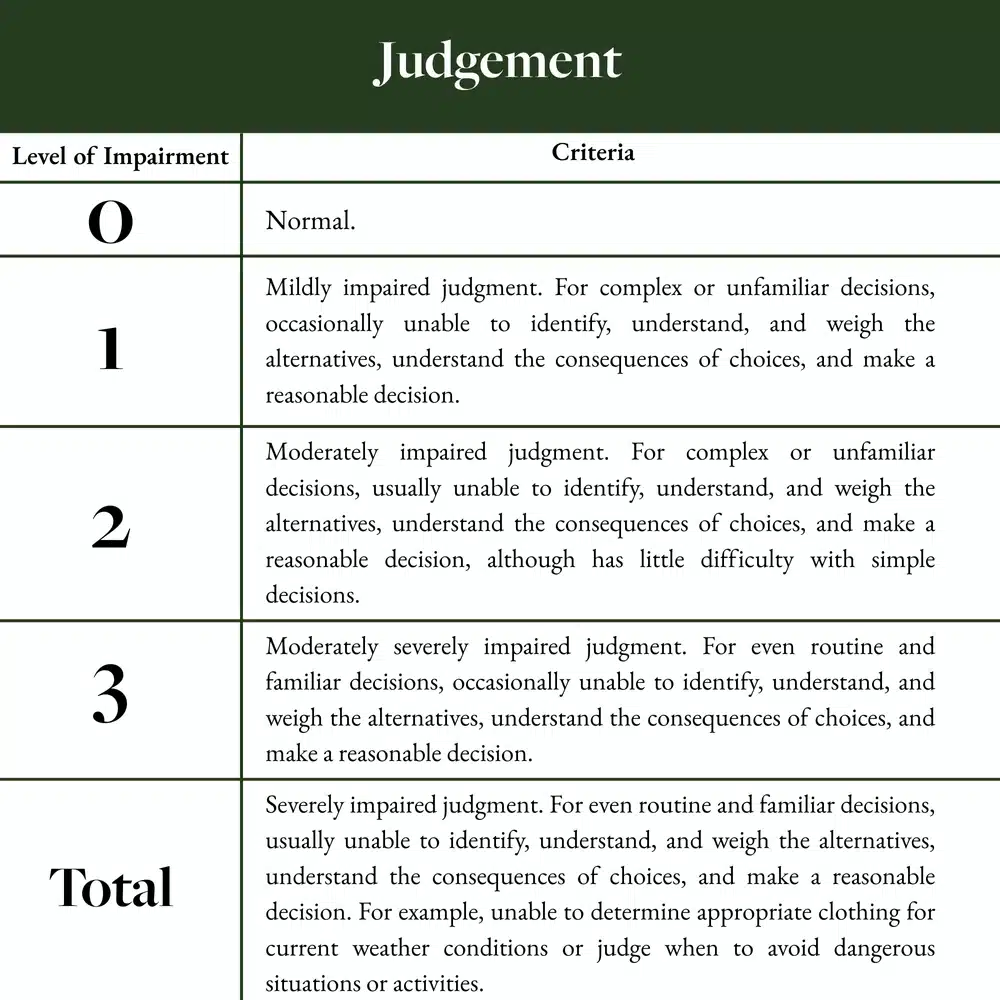
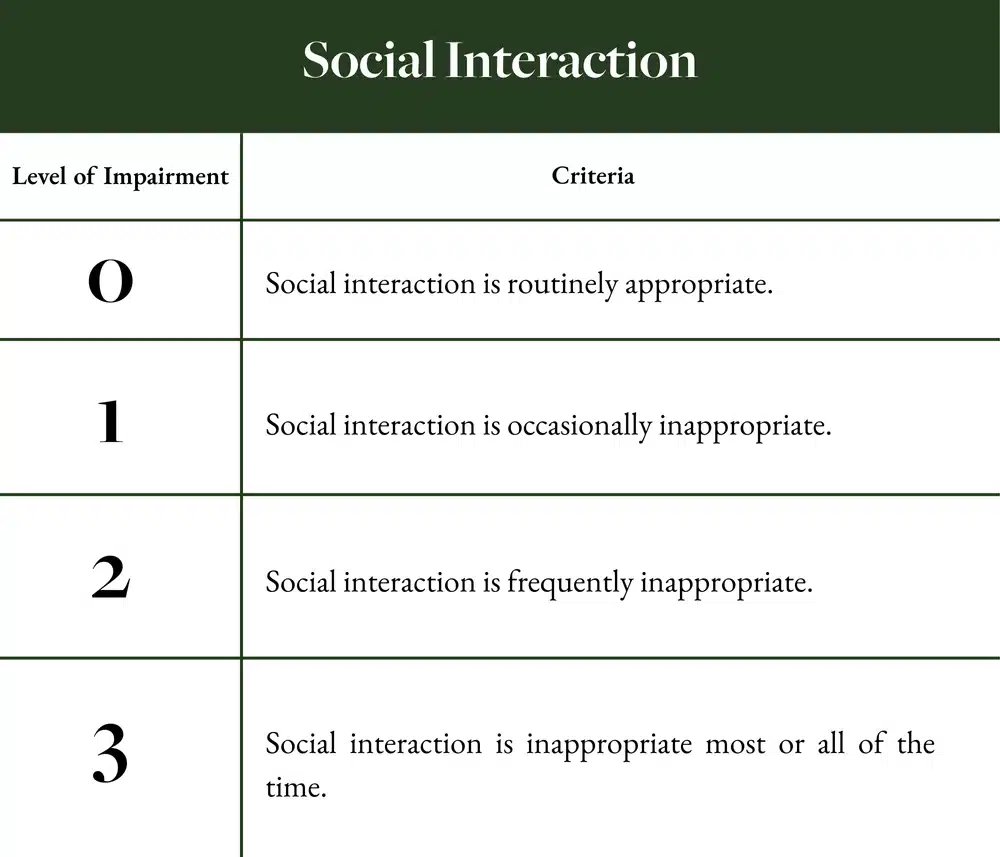
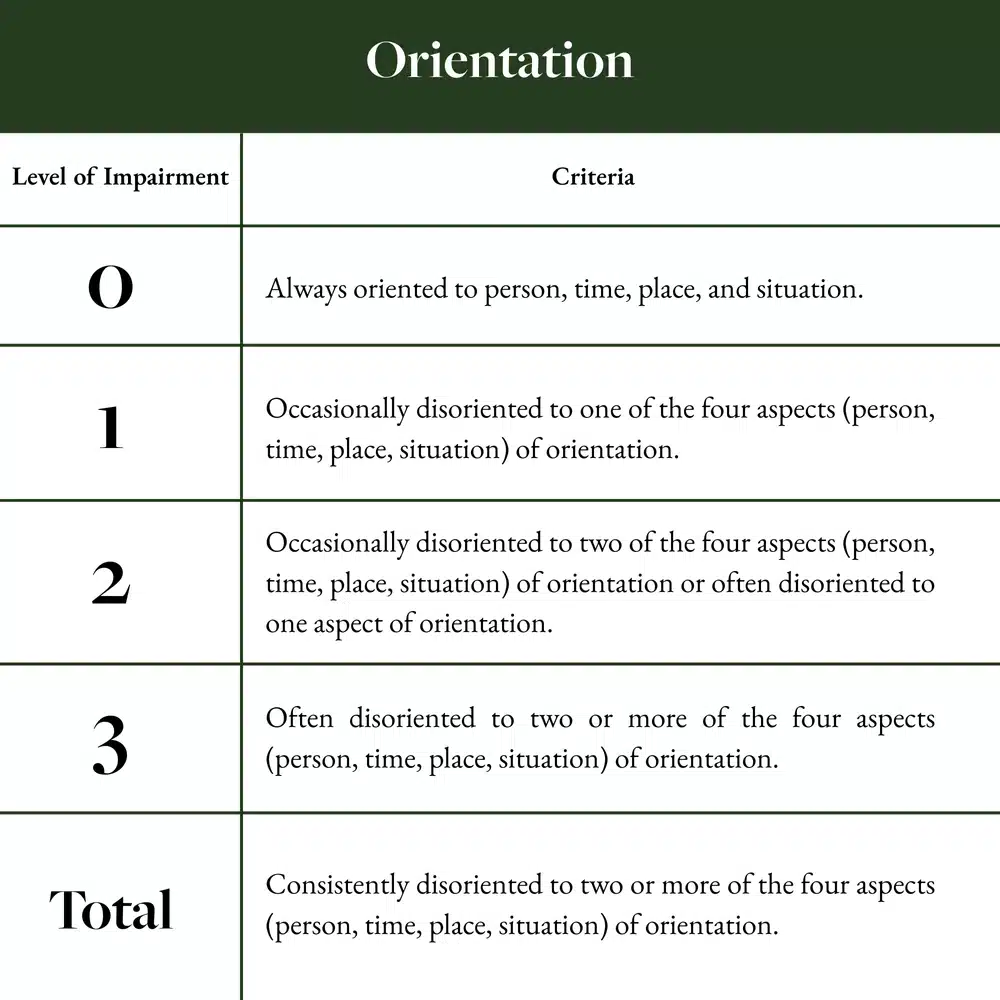
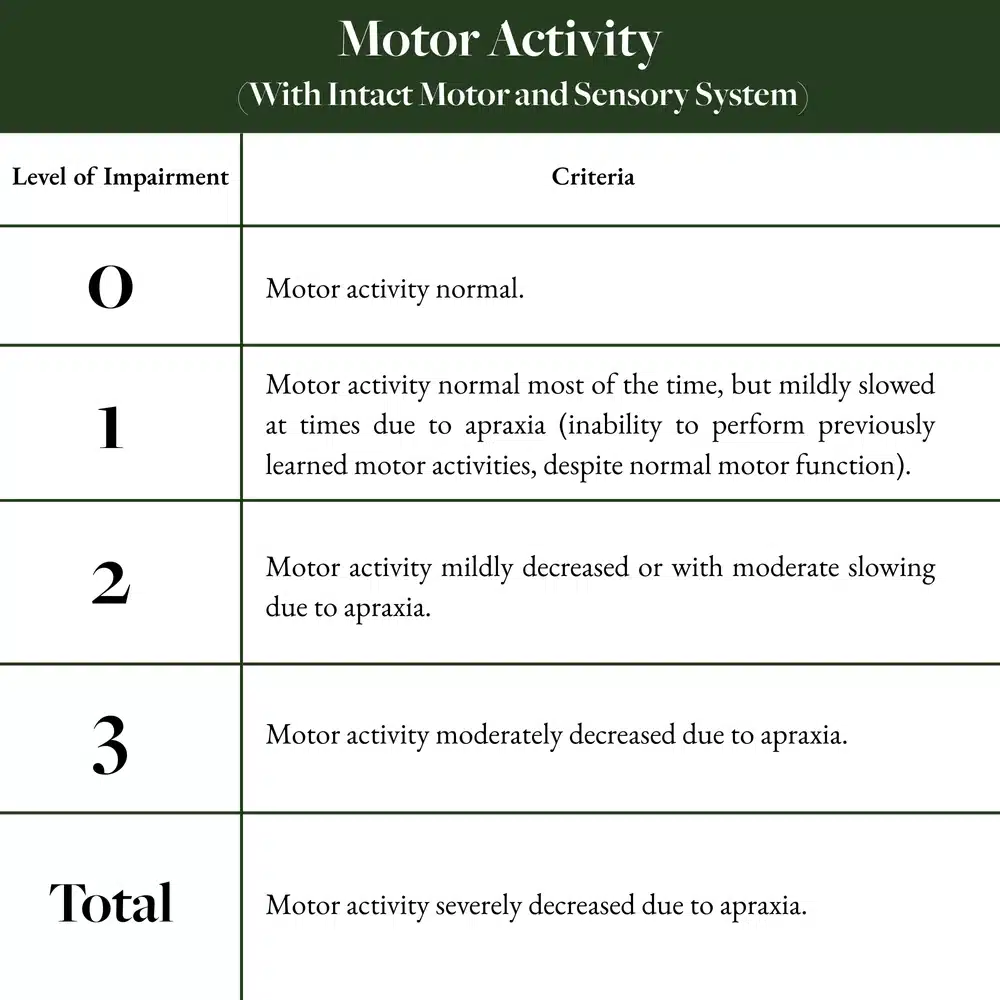
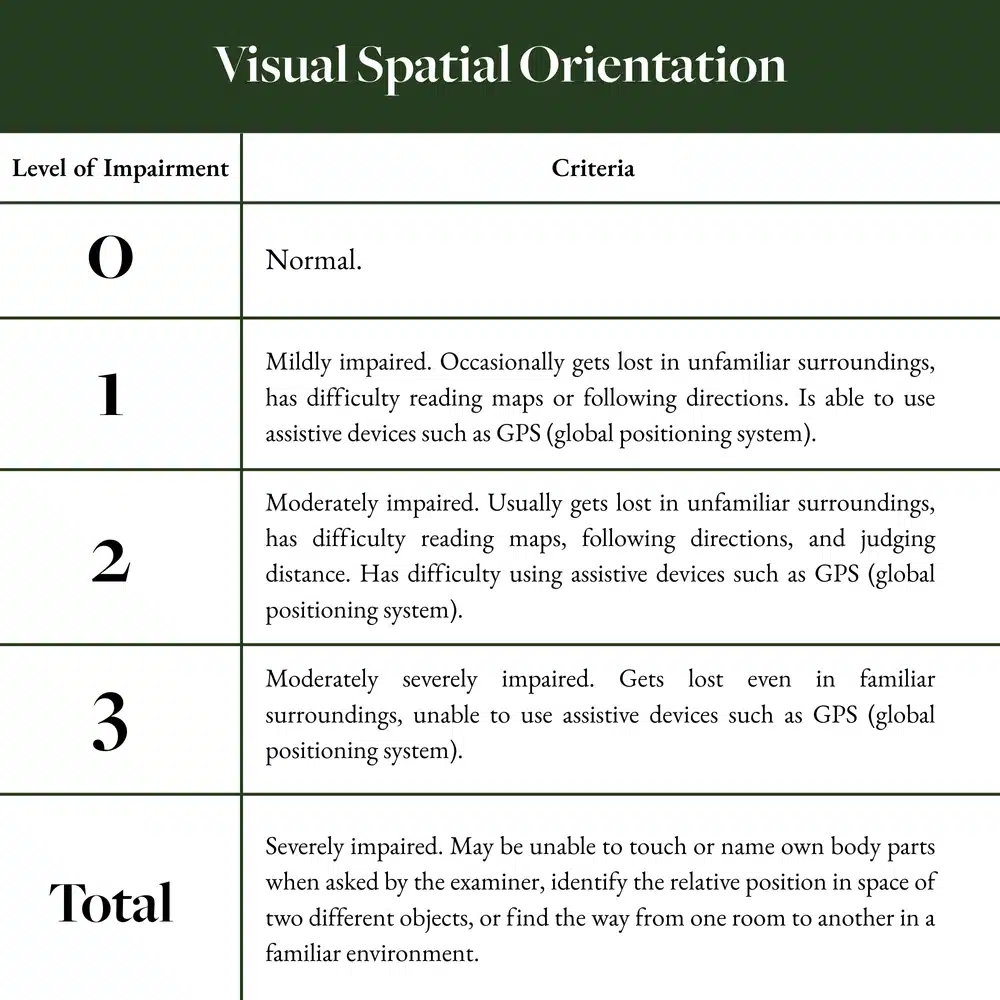
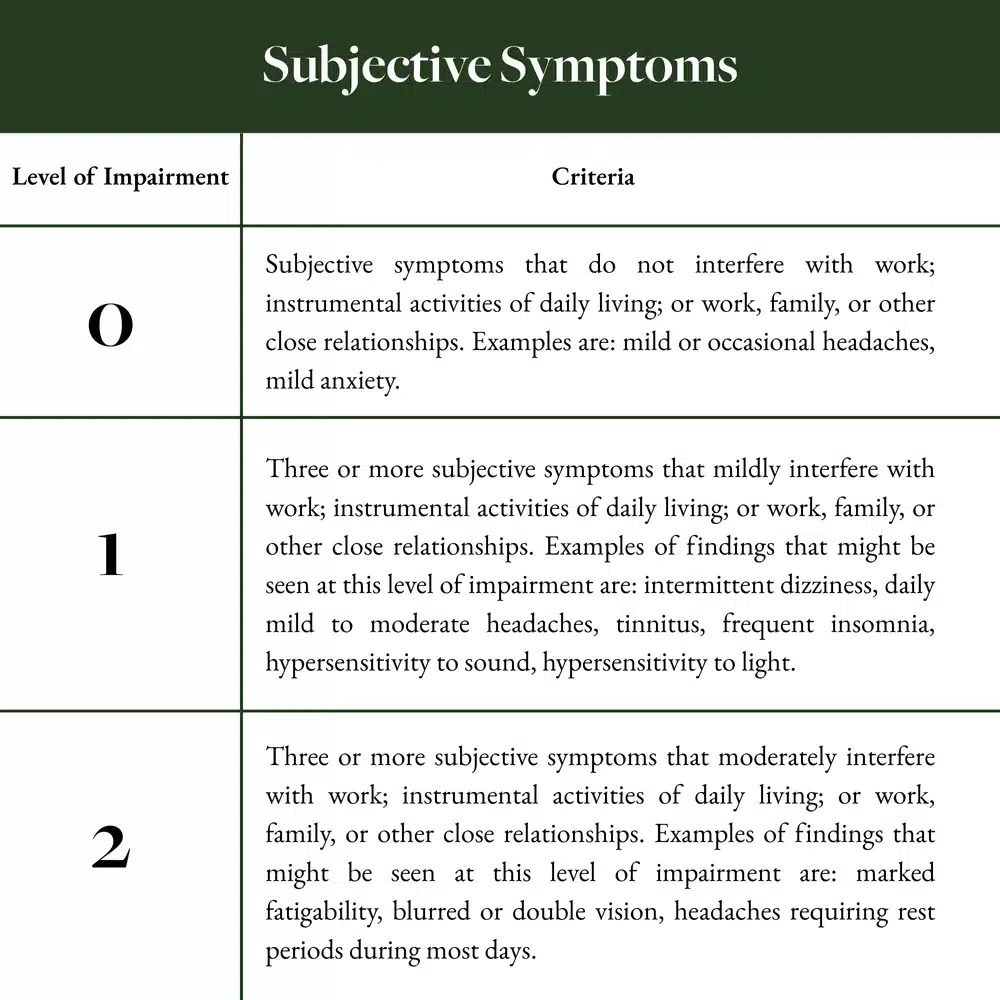
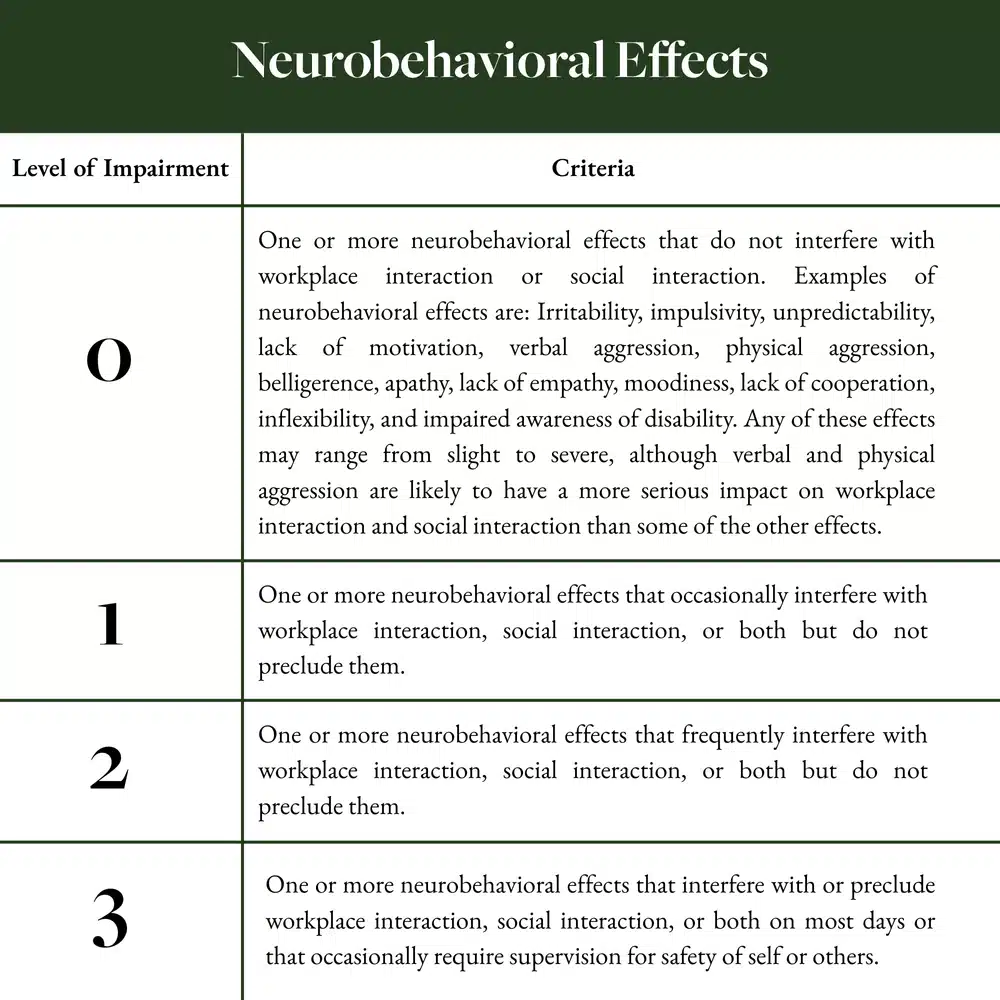
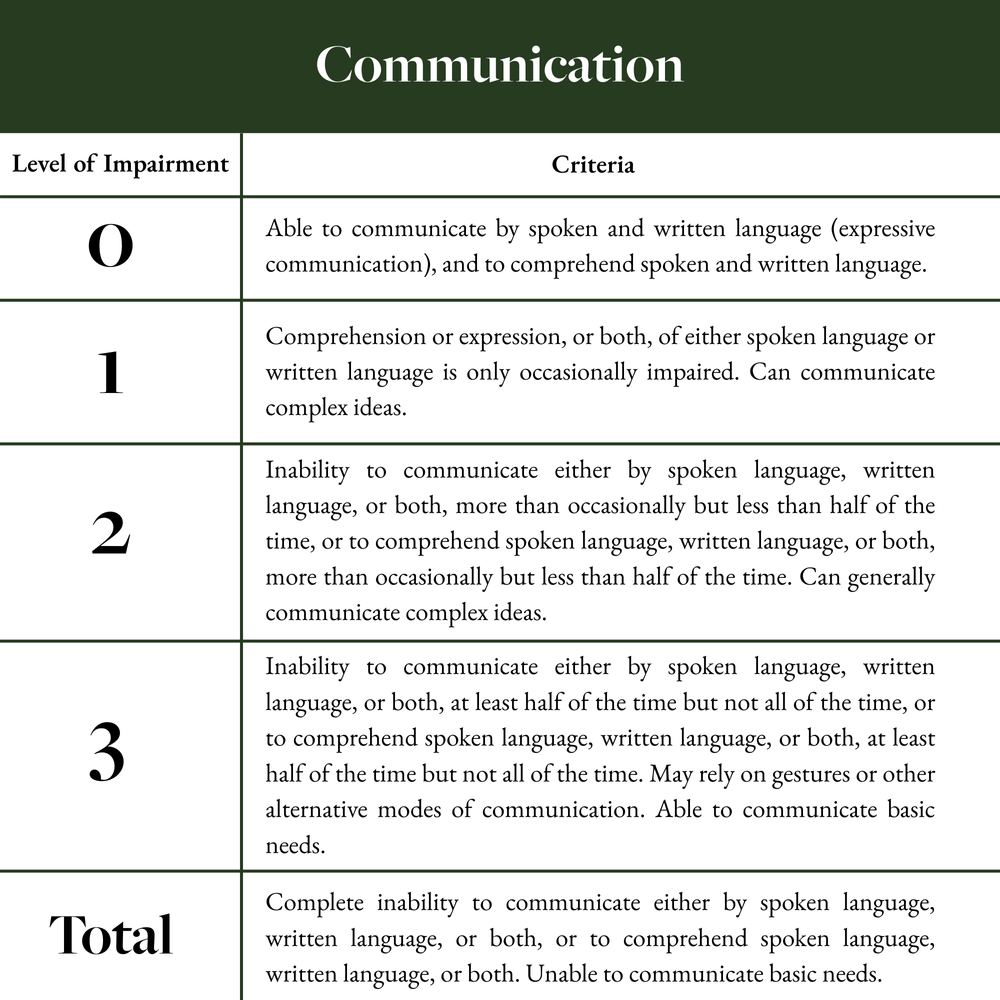
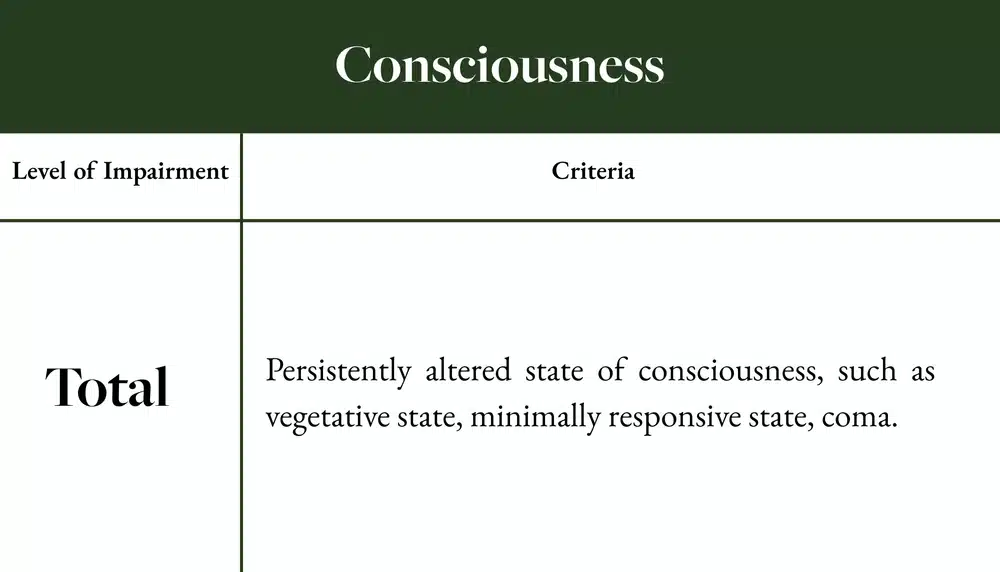
VA evaluates TBI residuals based on 10 facets. VA rates each individual facet, with the most severe rating of any facet determining the overall TBI rating to be assigned. The specific facets include impairment of the following:

Once each TBI facet is assigned a severity level, VA converts the highest level into the overall schedular evaluation. Levels 0, 1, 2, and 3 correspond to 0%, 10%, 40%, and 70% ratings, respectively, reflecting increasing degrees of functional impairment. A designation of “Total” is reserved for complete impairment within a facet—such as inability to communicate or persistent altered consciousness—and results in an automatic 100% evaluation. Because VA assigns the rating based on the single highest facet level rather than combining scores, the final percentage represents the maximum level of functional limitation caused by the Veteran’s TBI residuals.


The most common forms of evidence used by VA to rate TBI residuals include:

VA examiners review each of the 10 facets listed above, and must rate each one based on the Veteran’s reported functional status. VA examiners also review:

  • Additional subjective symptoms or any mental, physical, or neurological conditions/residuals attributable to the TBI. Further C&P exams may be completed for any additional conditions/residuals identified during examination.

  • Scars related to the TBI

  • Neuropsychological testing and/or imaging studies of record

  • Impact of the TBI residuals on a veteran’s ability to work

Examiners complete a Disability Benefits Questionnaire (DBQ) to document these findings.

A statement from a veteran detailing the symptoms they regularly experience, and the impact on their daily functioning, could also help to ensure TBI residuals are properly rated. Statements from friends and family who observe the veteran’s symptoms, or assist them with daily activities due to limitations from TBI residuals, are also important.

Private medical records or opinions that speak directly to the impairment of cognitive, emotional/behavioral, and physical functioning caused by a veteran’s TBI may also be helpful evidence. When rating TBI residuals, VA may look to private records from a physiatrist, psychiatrist, neurosurgeon, or neurologist.

Multiple TBI Ratings

Many TBI residual conditions result in overlapping symptoms. VA regulation provides that if the symptoms of two or more residuals cannot be clearly separated, a single evaluation must be assigned. However, if symptoms of residual conditions can be clearly separated, then a separate evaluation for each condition should be assigned.

TBIs and TDIU

TBI residuals may prevent substantially gainful employment due to the potential for severe physical and mental limitations. Accordingly, many veterans who cannot work as a result of their TBI may also qualify for VA’s unemployability benefit (TDIU). Generally speaking, veterans with a single 60%rating, or 70% combined rating with one disability rated at least 40%, may qualify for TDIU.

 
Special Monthly Compensation (SMC)

Severe TBIs and related residuals may trigger entitlement to SMC, including:

  • Housebound benefits when TBI is rated at 100% and additional disabilities are independently rated at 60%

  • SMC-L due to need for regular Aid & Attendance

  • SMC R-1, SMC R-2, or SMC-T due to a specific higher need for Aid & Attendance

How to Appeal or Increase a VA TBI Rating

Veterans may want to appeal or request an increase if:

  • VA underrated TBI and the resulting residuals

  • Symptoms worsened over time

  • Separate conditions warranting separate evaluations were not properly rated

  • VA failed to consider TDIU or SMC entitlement

Appeals can be filed through:

  • Higher-Level Review

  • Supplemental Claim with new and relevant evidence

  • Board Appeal

Denied or Underrated for TBI? Call Greene & Marusak LLC

TBI claims are medically and legally complex. If VA denied or underrated your TBI disability, Greene and Marusak LLC can help identify rating errors, develop evidence, and pursue the benefits you deserve.

Contact us for a free case evaluation today to speak with an experienced VA-accredited claims agent or attorney!