


Service Connection Explained
Service connection is the foundation of nearly all VA disability compensation claims. It is the legal determination that a veteran’s current disability was caused or aggravated by military service. Establishing service connection often requires navigating service records, medical evidence, and VA regulations. Because service connection determines eligibility for monthly compensation, healthcare, and other benefits, properly developing the claim is critical.
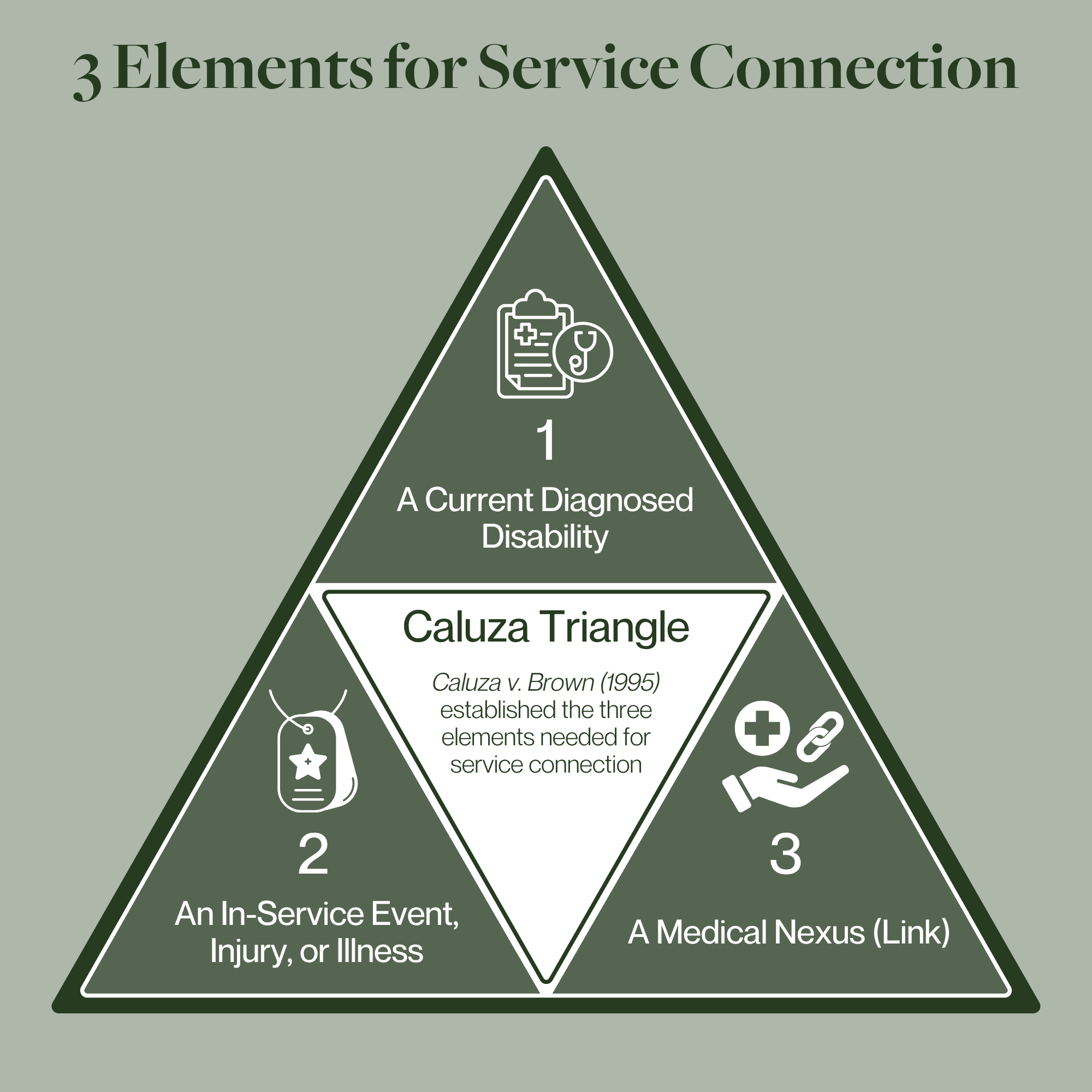
The most common type of service connection (direct service connection) requires three core elements: a current disability, an in-service event or exposure, and a medical nexus linking the two.
Medical records, nexus opinions, and credible lay evidence are often critical to establishing entitlement.
Important to Know: Service connection may be established through multiple legal theories, including direct, secondary, presumptive, or aggravation.
Bottom Line Up Front:
What is Service Connection?
Service connection is governed primarily by 38 U.S.C. §§ 1110, 1131 and 38 C.F.R. §§ 3.303–3.310. The most common path to service connection is direct service connection, which requires evidence of the following three elements:
A current diagnosed disability
An in-service event, injury, disease, or exposure
A nexus establishing the condition is “at least as likely as not” related to service
These three elements form the foundation of direct service connection claims. However, VA also recognizes alternative paths to service connection, such as secondary, presumptive, and aggravation-based theories.
VA claims are decided under the “benefit of the doubt” standard. When the evidence is in approximate balance, VA must resolve reasonable doubt in favor of the veteran.
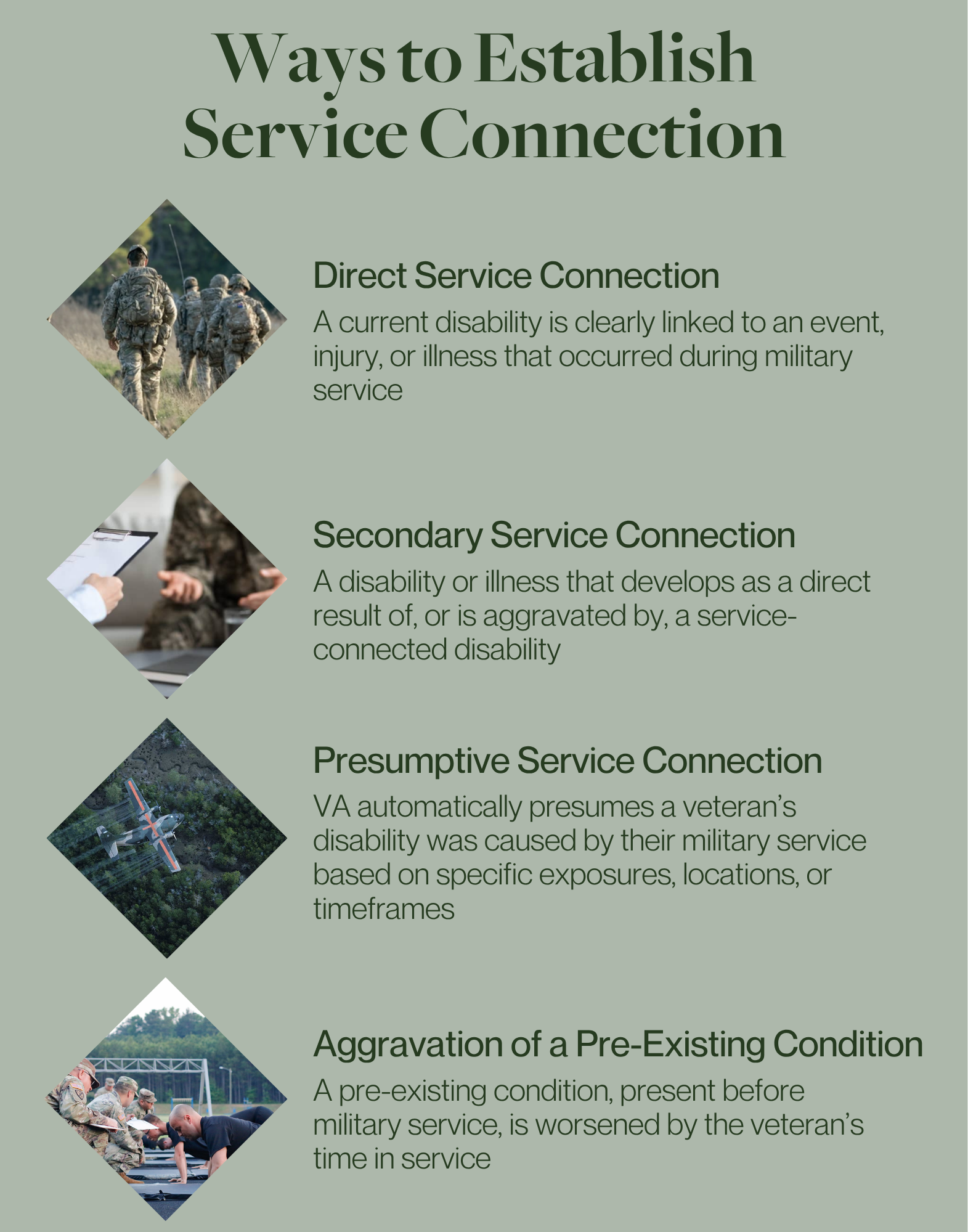
VA recognizes several paths to service connection, depending on how the condition is related to service:
The Ways to Establish Service Connection
Direct Service Connection (38 C.F.R. § 3.303)
The most common type of service connection. Under this type, a disability began during service or was directly caused by an in-service event, injury, or exposure. Evidence may include:
Service treatment records
Deployment or exposure records
VA or private medical evaluations
Nexus opinions linking the condition to service
Lay statements describing in-service events and resulting symptoms
Secondary Service Connection (38 C.F.R. § 3.310)
Sleep apnea secondary to PTSD
Radiculopathy secondary to a back condition
Depression secondary to chronic pain
Peripheral neuropathy secondary to diabetes mellitus
A disability is caused or aggravated by another service-connected condition. Examples include:
Presumptive Service Connection (38 C.F.R. §§ 3.307–3.309)
Agent Orange and herbicide exposure
Gulf War undiagnosed or chronic multi-symptom illnesses
Burn pit and toxic exposures under the PACT Act
Certain chronic conditions manifesting within one year of discharge
Certain conditions are presumed to be related to service based on specific exposures, locations, or timeframes. Common types include:
Aggravation of a Pre-Existing Condition (38 C.F.R. § 3.306)
If a veteran entered service with a pre-existing condition that permanently worsened beyond its natural progression during service, VA must grant service connection for the degree of aggravation. Examples include:
A veteran enters service with pre-existing asthma, which becomes significantly worse due to in-service environmental exposures
A veteran with a pre-existing knee condition experiences permanent worsening due to the physical demands of military training
A veteran with a pre-existing mental health condition that is permanently aggravated by traumatic in-service experiences
Evidence That Matters Most in Service Connection Claims
VA and private treatment records
VA examinations
Diagnostic testing
Independent medical examinations (IMEs) or nexus letters
Specialist evaluations linking the condition to service
Medical Evidence
Strong medical documentation is essential, including:
A well-reasoned nexus opinion applying the “at least as likely as not” standard is often the most important piece of evidence
Lay Evidence
In-service symptoms or events not documented in service records
Continuity of symptoms from service to the present
The functional impact of the condition
Lay statements from the veteran, family members, friends, or fellow service members can establish:
Lay evidence is especially important when records are incomplete or when symptoms were not formally documented during service.
Common Reasons VA Denies Service Connection
Lack of a current diagnosis
No documented in-service event or exposure
Inadequate or negative VA medical opinions
Lack of continuity of symptoms
Incomplete or missing service records
VA frequently denies claims based on:
Many claims are initially denied but later granted when stronger evidence is submitted on appeal.
How to Appeal a Denied Service Connection Claim
Supplemental Claim (with new and relevant evidence)
Higher-Level Review
Board of Veterans’ Appeals
If VA denies service connection, veterans may appeal through:
Because service connection claims often hinge on medical causation and proper application of VA regulations, professional representation can significantly improve outcomes.
Looking for More Information?
Check out our YouTube video where VA-Accredited Attorneys, Daniel Marusak and Courtney Ross, and VA-Accredited Claims Agent, Vittoria Marini, sit down to discuss the ins and outs of service connection for disabled veterans.
Denied Service Connection or Unsure If You Qualify? Call Greene & Marusak LLC
Service connection is the foundation of all VA disability benefits—but it is also one of the most frequently contested issues. Veterans are often denied due to incomplete evidence, inadequate medical opinions, or errors in applying the law.
If VA denied your service connection claim—or you need help developing the right medical and legal evidence—Greene & Marusak LLC can review your case and explain your options.
Contact us for a free case evaluation today to speak with an experienced VA-accredited claims agent or attorney.