

VA Rating Criteria for Scars Explained
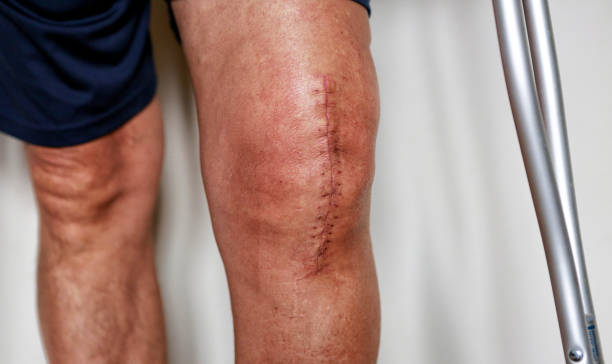
VA assigns a disability rating for scars based on factors such as location of the scar, size, whether it is painful or unstable, and how it affects function. Scar ratings are governed by specific diagnostic codes, and even small or superficial scars may be compensable for pain, instability, or functional limitation.
Because scars can worsen over time, becoming painful, unstable, or functionally limiting, it is critical a veteran’s claim or appeal fully documents both the scar’s physical characteristics and impact on daily life and employment.
VA rates scars under 38 C.F.R. § 4.118, using different diagnostic codes depending on whether the scar is painful, unstable, deep, nonlinear, affects the head/face/neck, or causes limitation of function.
Painful or unstable scars are compensable, even if they are small or otherwise appear minimal.
Scars that limit motion, strength, dexterity, or use of a body part may be rated based on functional impairment, in addition to or instead of a skin-based rating.
Veterans with severe functional limitations or multiple painful scars may qualify for TDIU or, in limited circumstances, Special Monthly Compensation (SMC).
Bottom Line Up Front:
How Does VA Assign Ratings for Scars?
Whether the scar is painful
Whether the scar is unstable (frequent loss of skin covering)
The size and depth of the scar
The location of the scar (head, face, neck vs. other areas)
Whether the scar causes functional limitation of the affected body part
VA does not rate scars based solely on appearance. Instead, VA evaluates:
A scar that looks minor on examination may still warrant compensation if it causes pain, tenderness, breakdown of skin, or interferes with normal use.
Common Evidence Used in Scar Claims
The number of scars
Exact measurements (length, width, and total surface area)
Whether scars are painful on examination
Whether scars are unstable
Whether scars are deep or associated with underlying soft tissue damage
Whether scars limit motion, strength, or function
Impact on employment and daily activities
VA examiners evaluate and document:
C&P Exams and Medical Records
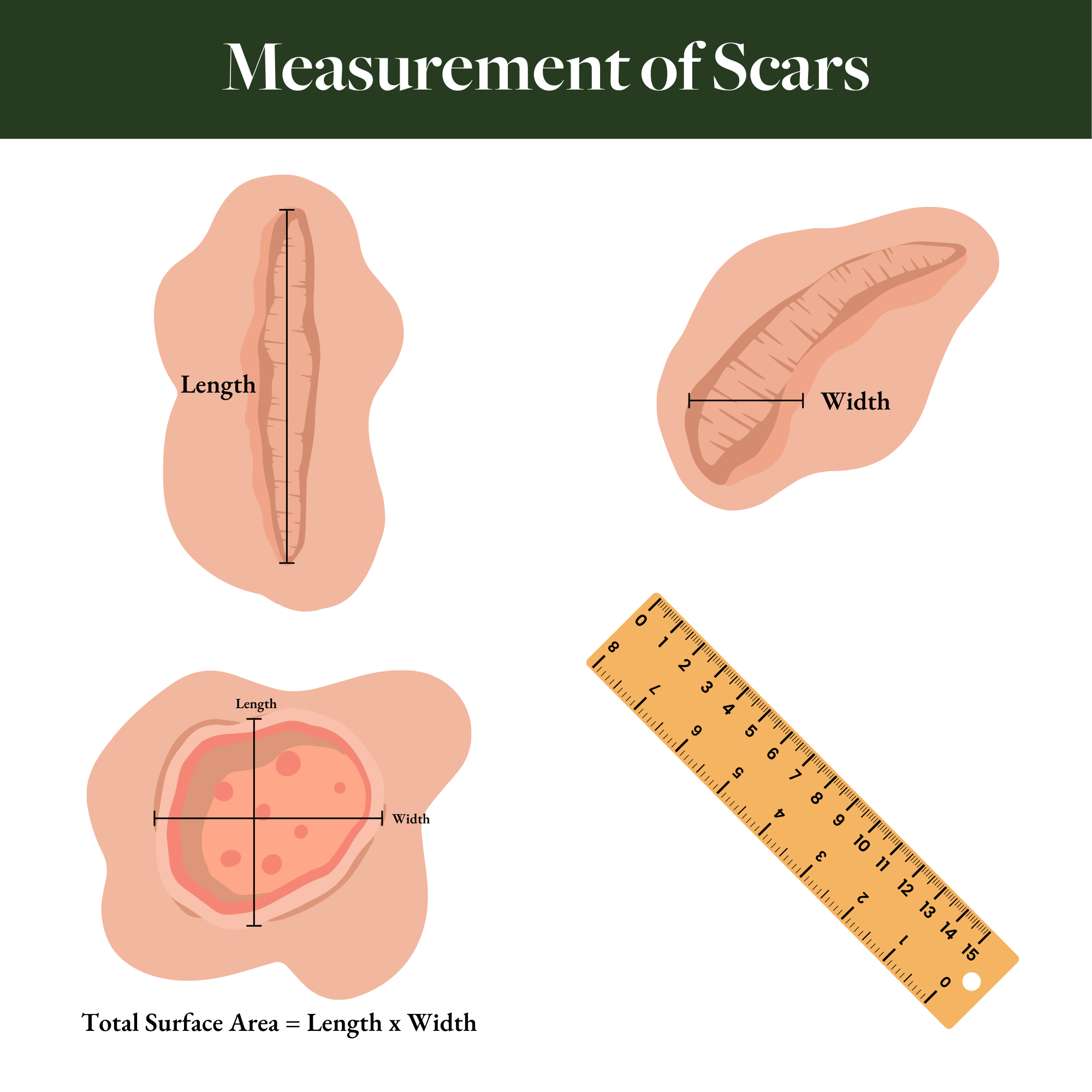
VA examiners typically complete a Scars Disability Benefits Questionnaires (DBQ) to record these findings.
Pain, tenderness, burning, or sensitivity
Skin breakdown, cracking, or reopening
Difficulty with movement, gripping, standing, or walking
Sensitivity to clothing, pressure, or weather
How scars interfere with work tasks or daily routines
Flare-ups of pain or instability not always present during exams
Lay statements are often critical in scar claims. Veterans and witnesses may describe:
Lay Evidence
Lay evidence helps show functional impact that may not be fully captured during a brief VA examination.
Chronic pain or nerve involvement related to scars
Recurrent infections or skin breakdown
Scar tissue adherence or reduced mobility
Surgical complications or worsening over time
Medical opinions linking scars to service injuries or surgeries
Private providers may document issues VA overlooks, including:
Private Medical Records
Private opinions can be especially valuable when VA minimizes pain, instability, or functional loss.
How VA Rates Scars Under 38 C.F.R § 4.118
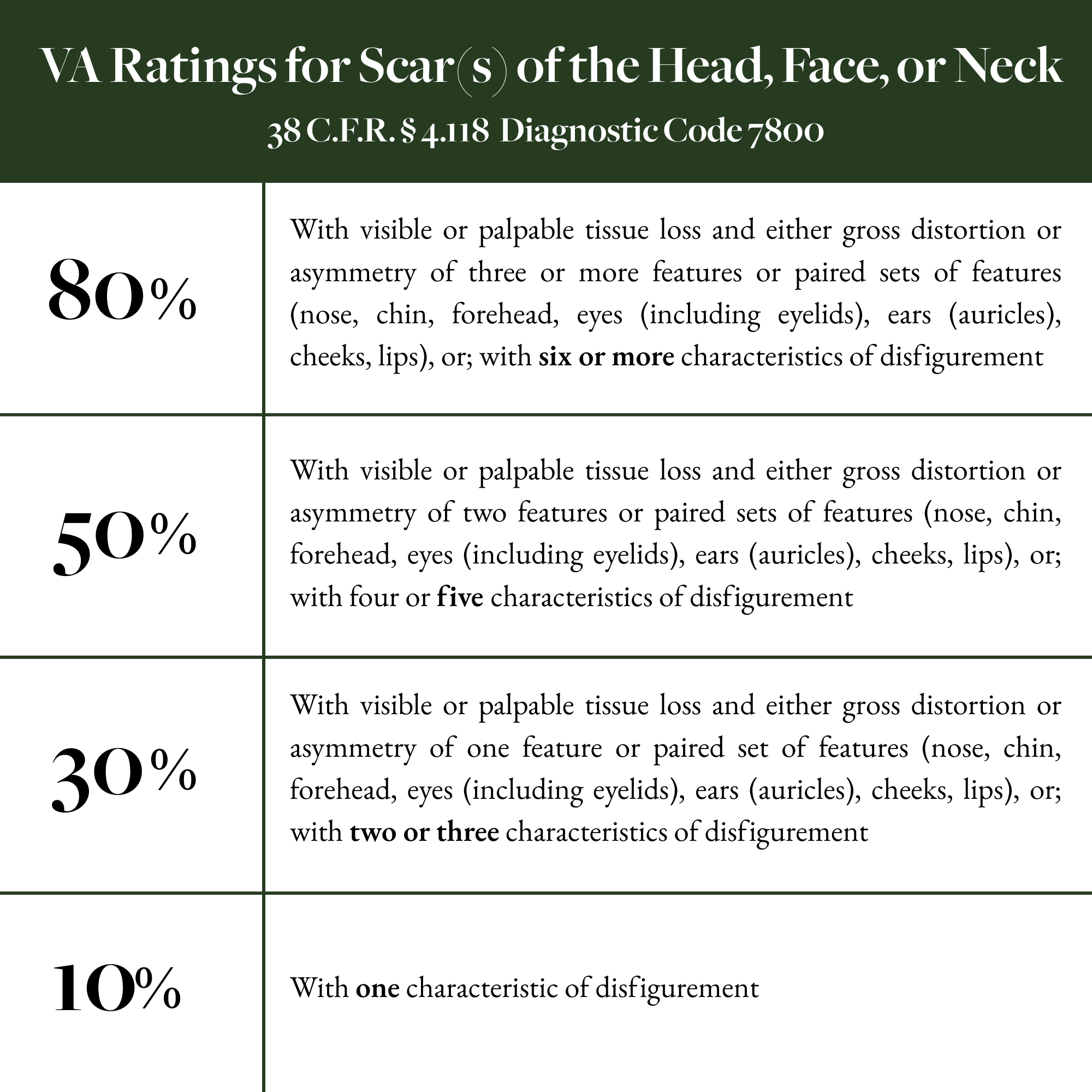
Scars of the Head, Face, or Neck
Length and width
Elevation or depression of surface contour
Adherence to underlying tissue
Skin texture abnormalities
Pigmentation changes
Tissue loss or asymmetry
Rated under diagnostic code 7800 based on disfigurement, including characteristics such as:
Ratings range from 10 percent to 80 percent, depending on severity.
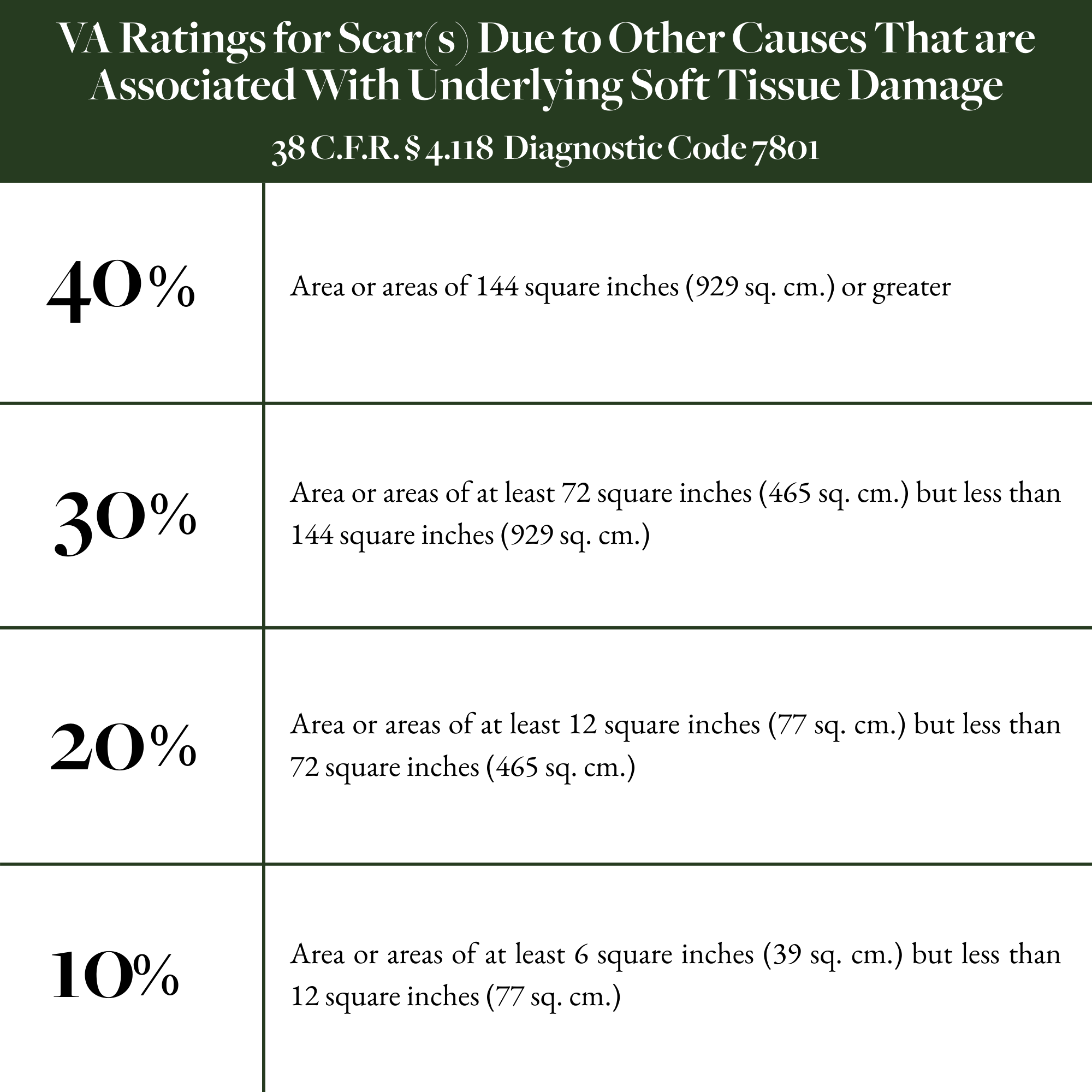
Deep & Nonlinear Scars (Other Than Head, Face, or Neck)
Rated under diagnostic code 7801 depending on the total area of deep scars associated with underlying soft tissue damage.
10% – Area or areas of at least 6 square inches but less than 12 square inches
20% – Area or areas of at least 12 square inches but less than 72 square inches
30% – Area or areas of at least 72 square inches but less than 144 square inches
40% – Area or areas of 144 square inches or greater
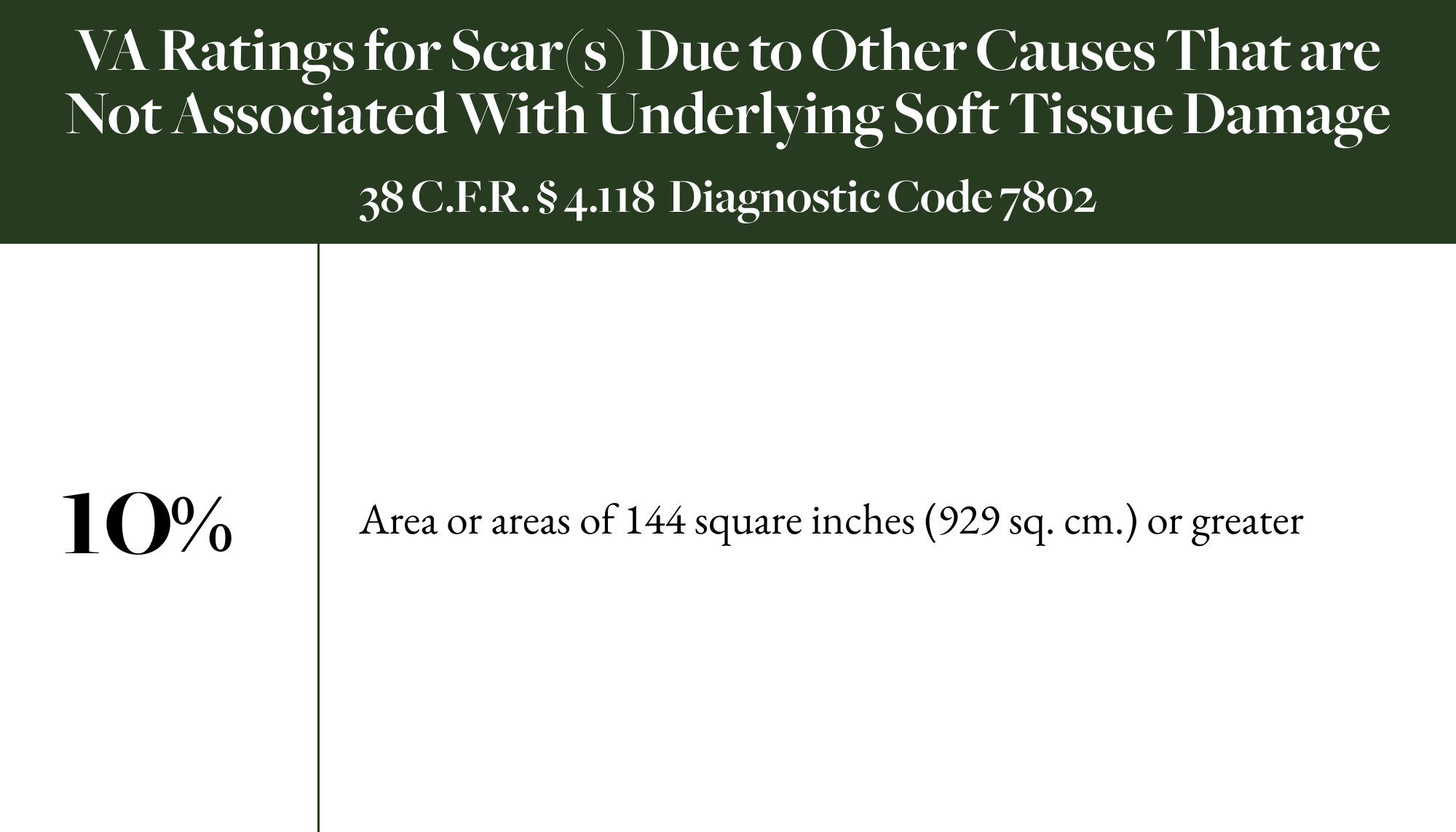
Superficial & Nonlinear Scars
10% – Area or areas of 144 square inches or greater
Rated under diagnostic code 7802. Applies to large surface-area scars that are superficial but not painful or unstable.
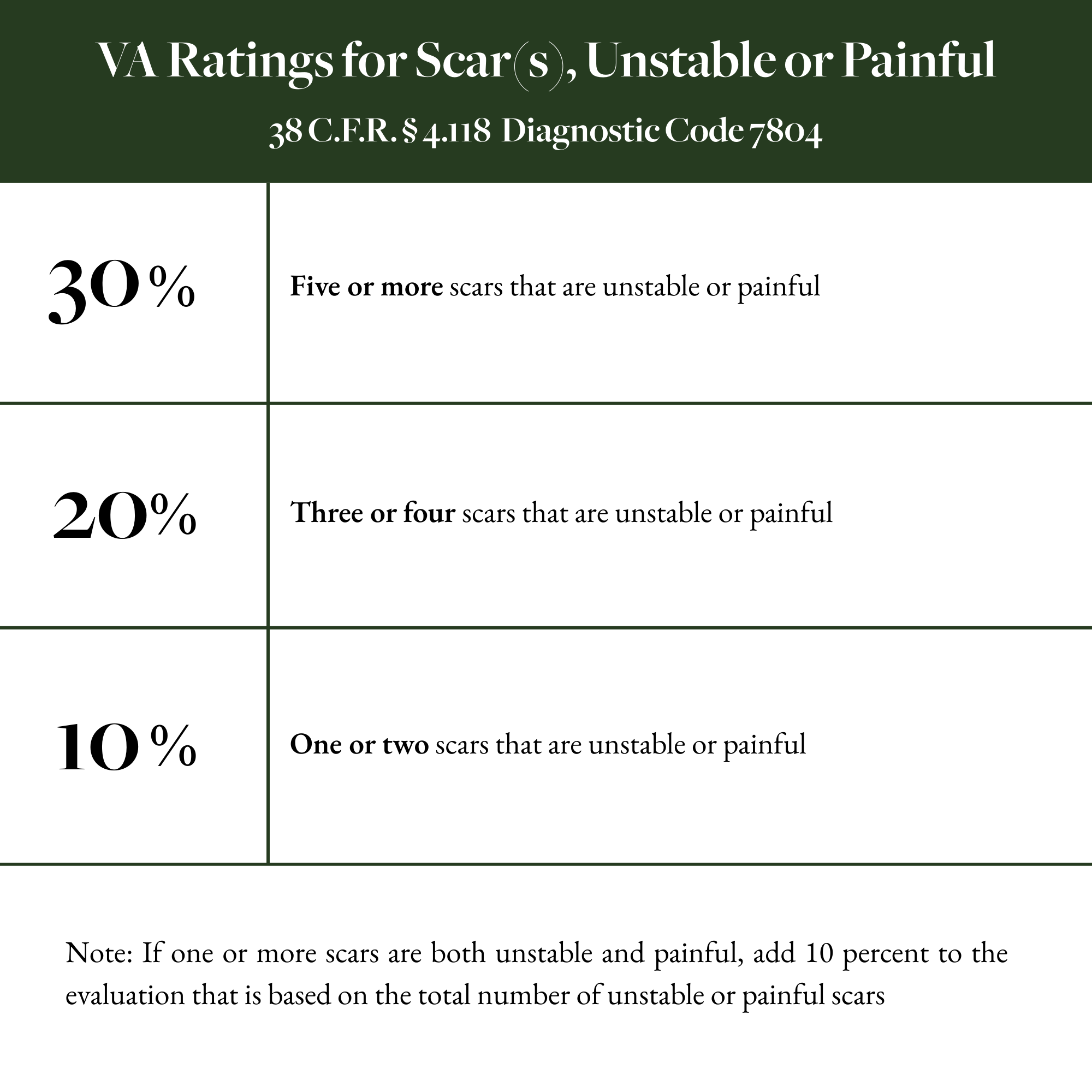
Painful or Unstable Scars
10% – One or two scars that are painful or unstable
20% – Three or four scars that are painful or unstable
30% – Five or more scars that are painful or unstable
Rated under diagnostic code 7804
An additional 10 percent may be added if a scar is both painful and unstable.
Reduced range of motion
Pain with use
Weakness or stiffness
Interference with gripping, walking, bending, or standing
Scars may be rated based on limitation of motion or function of the affected body part, such as:
Scars Causing Functional Limitation
These limitations are rated under the appropriate musculoskeletal or neurological criteria, not just the skin schedule.
Separately Ratable Conditions Related to Scars
VA must evaluate and separately rate all compensable conditions caused by scars when supported by evidence, including:
May involve numbness, tingling, burning, or shooting pain
Rated under the appropriate peripheral nerve diagnostic codes
(1) Nerve Damage
Reduced motion or strength caused by scar tissue
Rated under joint or muscle group criteria
(2) Musculoskeletal Impairment
Persistent pain associated with scar tissue
May support increased ratings or functional loss findings
(3) Chronic Pain Conditions
Anxiety, depression, or body-image issues caused by disfiguring or painful scars
Rated separately if service connected
(4) Psychological Impact
Scars, TDIU, and SMC
Chronic pain
Limited use of hands, arms, or legs
Difficulty standing, walking, or performing physical tasks
Combined effects with other service-connected conditions
Scars may support TDIU when they prevent substantially gainful employment due to:
Scars and TDIU
A single 60 percent rating, or
A 70 percent combined rating with one disability rated at least 40 percent, may qualify for Total Disability Based on Individual Unemployability (TDIU).
Veterans with:
Scar-related impairments may trigger SMC in limited situations, such as:
Special Monthly Compensation (SMC)
Loss of use of a body part due to functional limitation
Additional disabilities independently rated at 60 percent (housebound benefits)
VA failed to rate scars as painful or unstable
VA overlooked functional limitation
Scars worsened over time
Nerve or musculoskeletal effects were not separately rated
VA underestimated the number or severity of scars
Veterans may wish to appeal or seek an increased rating if:
How to Appeal or Increase a VA Scar Rating
Appeals may be filed through:
Higher-Level Review
Supplemental Claim with new and relevant evidence
Board Appeal
Denied or Underrated for Scars? Call Greene & Marusak LLC
Scar claims are frequently underrated or misapplied under VA regulations. If VA denied or underrated your service-connected scars, Greene & Marusak LLC can help identify errors, develop supporting evidence, and pursue the benefits you deserve.
Contact us for a free case evaluation today to speak with an experienced VA-accredited claims agent or attorney.