

VA Rating Criteria for Migraines & Headaches Explained

When VA grants service connection for migraines or other headache conditions, it assigns a disability rating based on the frequency, severity, and economic impact of headache episodes—particularly whether they result in prostrating attacks and interfere with a veteran’s ability to work. These ratings determine monthly compensation and eligibility for additional benefits. Because migraines often worsen over time and can significantly impair occupational functioning, it is critical that a veteran’s claim or appeal fully documents both the severity of the headaches and their impact on employment.
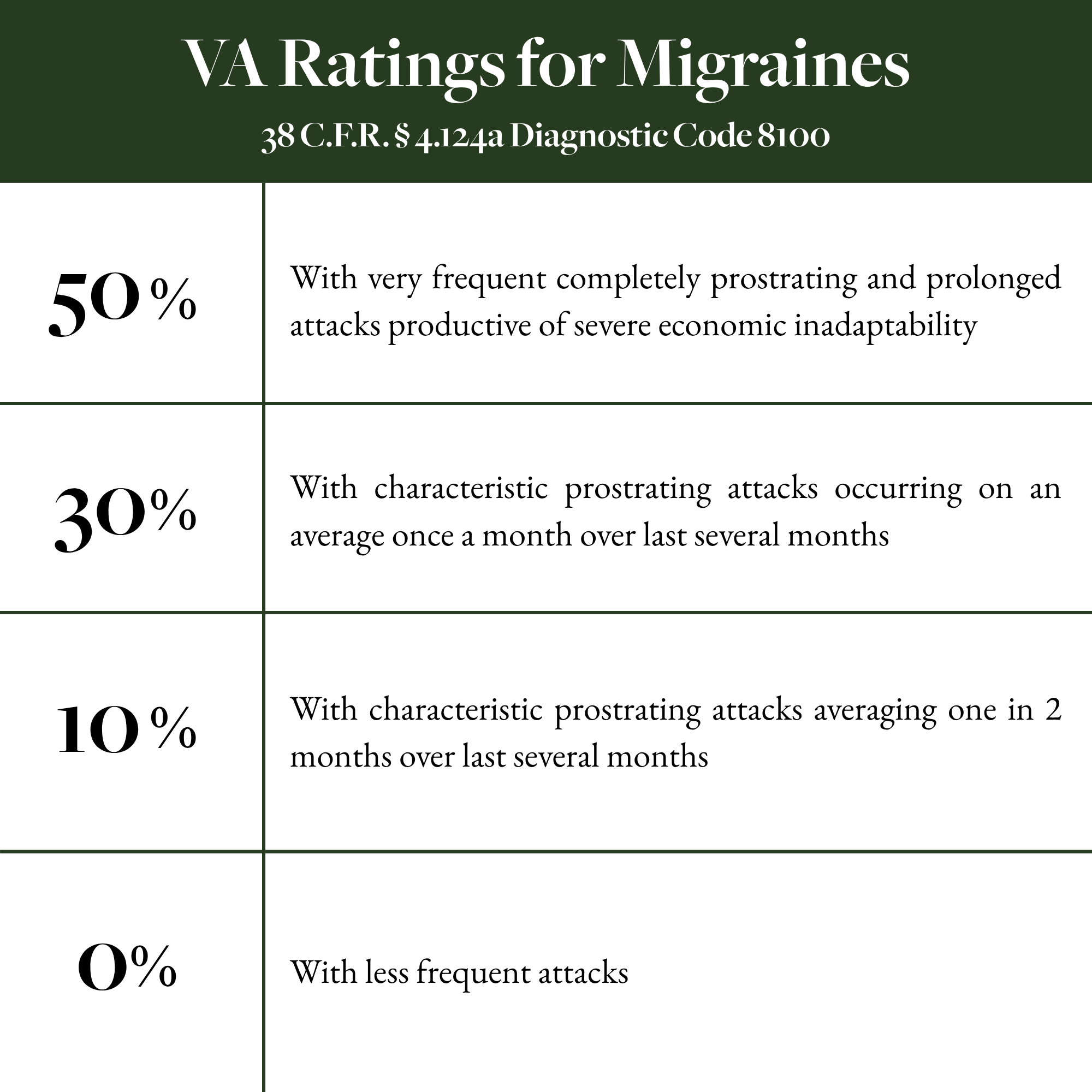
VA rates migraines under 38 C.F.R. § 4.124a, Diagnostic Code 8100, based primarily on the frequency and severity of prostrating attacks and whether they produce severe economic inadaptability. Ratings are typically 0, 10, 30, or 50 percent.
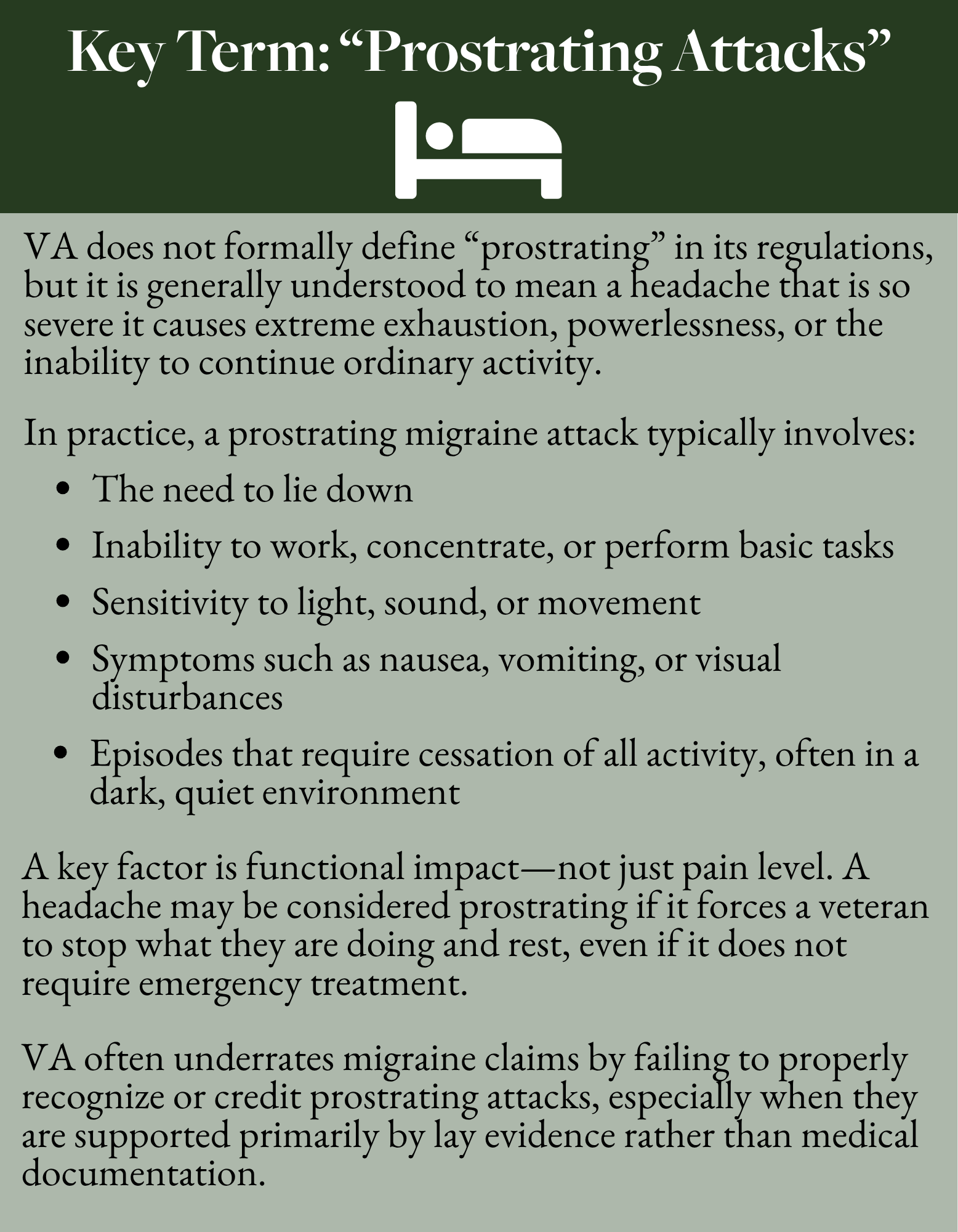
The term “prostrating” generally refers to headache attacks that are so severe they require the veteran to lie down or cease all activity.
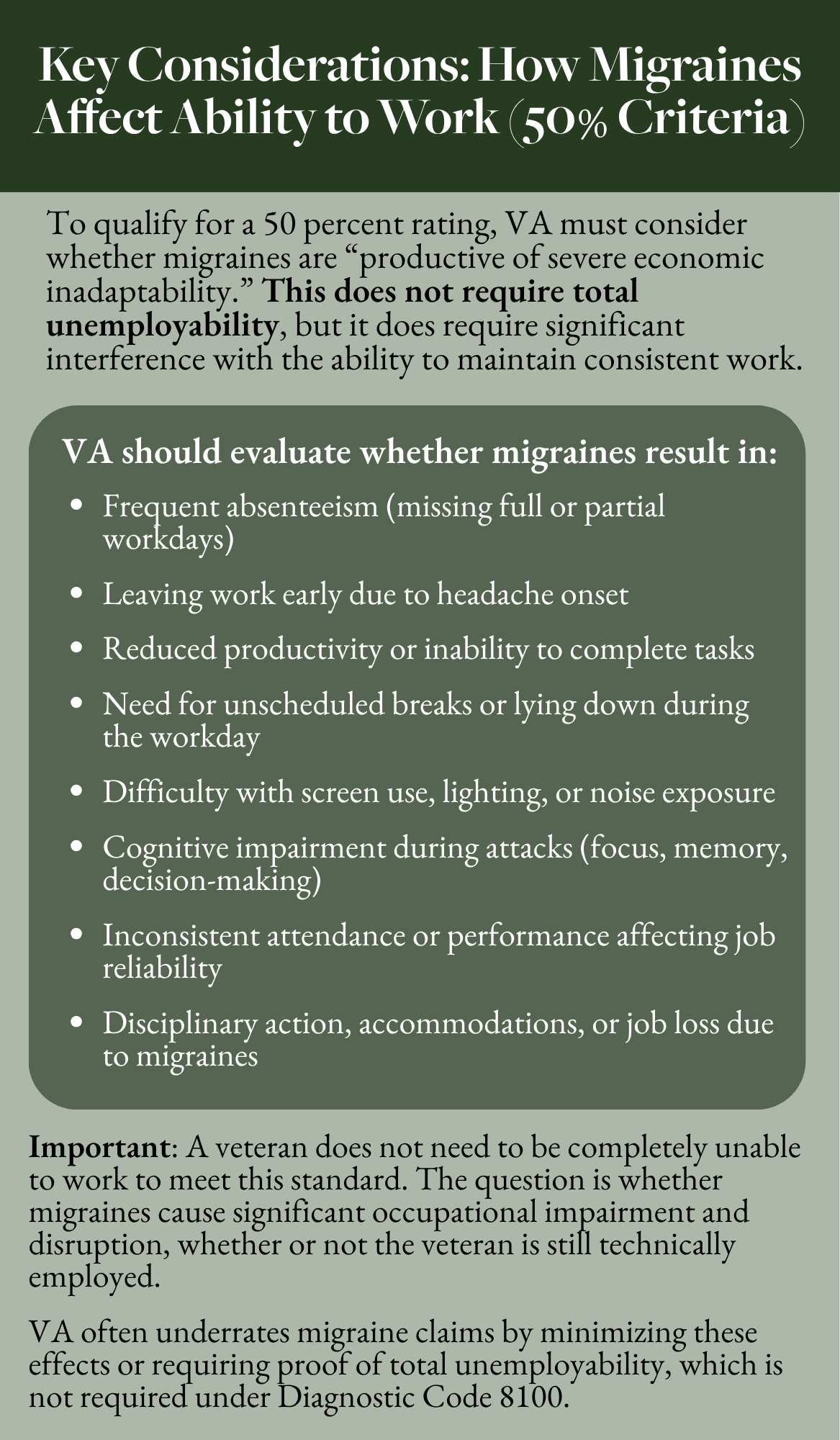
The 50 percent rating—the highest available under DC 8100—depends heavily on whether migraines interfere with occupational ability.
Veterans with severe migraines may qualify for Total Disability Based on Individual Unemployability (TDIU) or, in certain circumstances, Special Monthly Compensation (SMC).
Bottom Line Up Front:
How Does VA Assign Ratings for Migraines?
VA evaluates migraines based on how often they occur, how severe they are, and how they affect a veteran’s ability to function. Unlike many other conditions, diagnostic imaging or objective testing is often limited, so credibility and consistency of reported symptoms are critical.
The most common evidence sources include:
C&P Exams and Medical Records
Frequency of headache episodes (daily, weekly, monthly)
Whether headaches are prostrating and require rest in a dark room or cessation of activity
Duration of attacks (hours to days)
Associated symptoms such as nausea, vomiting, sensitivity to light or sound, and visual disturbances
Impact on ability to work, including missed time or reduced productivity
Use of medications and effectiveness of treatment
VA examiners review:
Examiners complete a Headaches (Including Migraine Headaches) Disability Benefits Questionnaire (DBQ) to document these findings.
Having to lie down during headache attacks
Missing work or leaving early due to migraines
Inability to concentrate, tolerate light, or perform tasks during episodes
Frequency and duration of attacks not fully documented in medical records
The real-world impact on employment and daily functioning
Lay statements are often critical in migraine claims. Veterans and witnesses may describe:
Lay Evidence
Because migraines are largely subjective, lay evidence often carries significant weight in establishing severity.
Diagnosis of migraine or chronic headache disorder
Prescription medications (preventative and abortive treatments)
Emergency visits for severe migraine episodes
Documentation of work limitations or disability status
Medical opinions describing functional impairment or inability to work
Neurologists and treating physicians often document symptoms VA overlooks. Records may include:
Private Medical Records
Private medical opinions can be especially important when VA minimizes the severity of symptoms.
How VA Rates Migraines (38 C.F.R. § 4.124a, Diagnostic Code 8100)
50 Percent Rating for Migraines
A 50 percent rating is warranted when migraines involve:
Very frequent completely prostrating and prolonged attacks
Attacks that are productive of severe economic inadaptability
This is the highest schedular rating available and reflects migraines that significantly interfere with the ability to maintain employment. VA often underapplies this standard by requiring complete unemployability, which is not required under the law.
30 Percent Rating for Migraines
A 30 percent rating is assigned when migraines involve:
Characteristic prostrating attacks occurring on average once per month over several months
This rating applies when migraines are severe and recurring, but not at the level of near-continuous or work-preclusive impairment.
10 Percent Rating for Migraines
A 10 percent rating is warranted when migraines involve:
Characteristic prostrating attacks averaging one in two months over several months
This level reflects less frequent but still disabling episodes.
Ø (zero) (“Non-Compensable”) Rating for Migraines
A zero percent rating may be assigned when migraines are diagnosed but:
Do not involve prostrating attacks, or
Do not significantly impair occupational or daily functioning
Even a non-compensable rating is important because it establishes service connection and allows for future increases if the condition worsens.
Common VA Errors in Migraine Ratings
Failing to properly define or recognize prostrating attacks
Ignoring credible lay evidence regarding frequency and severity
Requiring objective medical documentation for every episode
Misinterpreting “severe economic inadaptability” as total unemployability
Overlooking the cumulative impact of migraines on work performance
VA frequently underrates migraine claims by:
These errors are common grounds for appeal.
Migraines, TDIU, and SMC
Frequent absenteeism
Reduced productivity or inability to complete tasks
Need to lie down during work hours
Sensitivity to light, sound, or screen exposure
Cognitive impairment during or between attacks
Migraines may prevent substantially gainful employment due to:
Migraines and TDIU
A single 60 percent rating, or
A 70 percent combined rating, to include a single disability rated at least at 40 percent
Veterans with:
may qualify for Total Disability Based on Individual Unemployability (TDIU).
Special Monthly Compensation (SMC)
While migraines alone rarely trigger SMC, entitlement may arise when:
Migraines combine with other disabilities to meet housebound criteria, or
The overall disability picture results in the need for aid and attendance
How to Appeal or Increase a VA Migraine Rating
VA underrated the frequency or severity of migraines
VA failed to recognize prostrating attacks
VA denied a 50 percent rating despite significant work impairment
Symptoms worsened over time
VA failed to consider the impact on employment
Veterans may want to appeal or request an increase if:
Higher-Level Review
Supplemental Claim with new and relevant evidence
Board Appeal
Appeals can be filed through:
Because migraine ratings often depend heavily on subjective evidence and legal interpretation, experienced representation can make a meaningful difference.
Denied or Underrated for Migraines? Call Greene & Marusak LLC
Migraine claims are often underrated due to misunderstanding of the rating criteria and failure to properly evaluate functional impairment. If VA denied or underrated your migraine condition, Greene and Marusak LLC can help identify errors, develop supporting evidence, and pursue the benefits you deserve.
Contact us for a free case evaluation today to speak with an experienced VA-accredited claims agent or attorney!