

VA Rating Criteria for Digestive Conditions Explained

When VA grants service connection for a digestive condition, it assigns a disability rating considering the severity, frequency, and intensity of symptoms like nausea, vomiting, diarrhea, constipation, or weight loss; the impact these symptoms have on your daily life; and whether the condition leads to complications, like ulcers, bleeding, or scar tissue. These ratings determine a veteran’s monthly compensation and eligibility for additional benefits. Because digestive conditions often fluctuate or worsen over time, it is essential that a veteran’s claim or appeal clearly documents the full extent of their symptoms.
VA rates digestive conditions under 38 C.F.R. § 4.114, considering the severity, frequency, and intensity of symptoms like nausea, vomiting, diarrhea, constipation, and weight loss. There is an array of ratings depending on the specifically diagnosed condition.
A veteran’s C&P exam, treatment notes, and lay statements are all critical forms of evidence when seeking higher ratings for digestive conditions or related disorders.
Veterans with severe digestive conditions may qualify for additional benefits, including Total Disability Based on Individual Unemployability (TDIU), or Special Monthly Compensation (SMC).
Bottom Line Up Front:
How Does VA Assign Ratings for Digestive Conditions?
VA evaluates digestive conditions using a combination of objective medical testing and documented symptoms.
The most common evidence sources include:
The examiners consider information like medication taken, abdominal pain/abnormalities, changes in stool, whether surgery has been required, and other symptoms/treatments. The examiners also consider whether a physician has prescribed regulation of activities, meaning avoidance of strenuous occupational or recreational activity.
VA examiners complete either an Intestinal Conditions Disability Benefits Questionnaire (DBQ) or Esophageal Conditions DBQ to standardize the evaluation, whichever is most applicable.
C&P Exams and Medical Records
The presentation of symptoms (frequency, severity, descriptions)
Whether symptoms limit exertion, exercise, or work
The impact on ability to function through everyday activities
Lay statements can be extremely useful in digestive condition claims. Veterans and witnesses can describe:
Lay Evidence
Digestive symptoms fluctuate, and a specific C&P exam might not fully reflect a veteran’s profile of symptoms. Lay testimony can help bridge any gaps.
Records may include:
Private Medical Records
Evidence of treatment/symptom management
Evidence of a diagnosis if VA cannot provide one
Examples of Common Digestive Conditions and Their VA Ratings
Gastroesophageal Reflux Disease (GERD) - 38 C.F.R. § 4.114 Diagnostic Code 7206
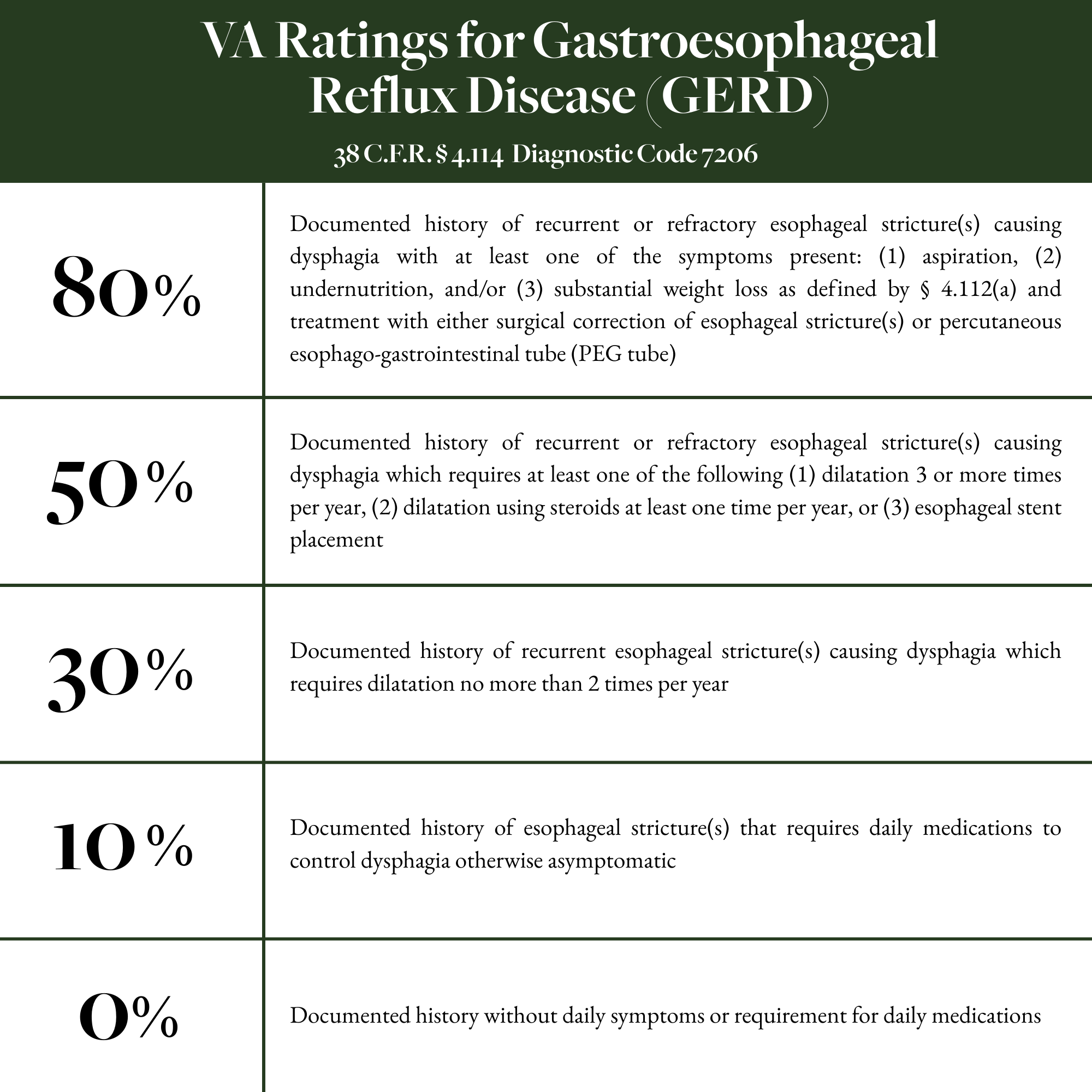
Aspiration;
Undernutrition; and/or
Substantial weight loss (as defined by the regulations) and treatment with either surgical correction of esophageal stricture(s) or percutaneous esophago-gastrointestinal tube (PEG tube).
80% Rating (Maximum rating) - History of recurrent or refractory esophageal stricture(s) causing dysphagia with at least one of the symptoms present:
50% Rating - History of recurrent or refractory esophageal structures causing dysphagia which requires at least 1 of the following:
Dilation 3 or more times per year; or
Dilation using steroids at least once per year; or
Esophageal stent placement.
30% Rating - Veteran has a documented history of recurrent esophageal structures causing dysphagia which requires dilation no more than 2 times per year.
10% Rating - Veteran has a history of esophageal structure(s) that require daily medications to control dysphagia, but is otherwise asymptomatic.
Ø% (zero) Rating - Veteran has a history of GERD, but no daily symptoms or medications required.
Irritable Bowel Syndrome (IBS) - 38 C.F.R. § 4.114 Diagnostic Code 7319
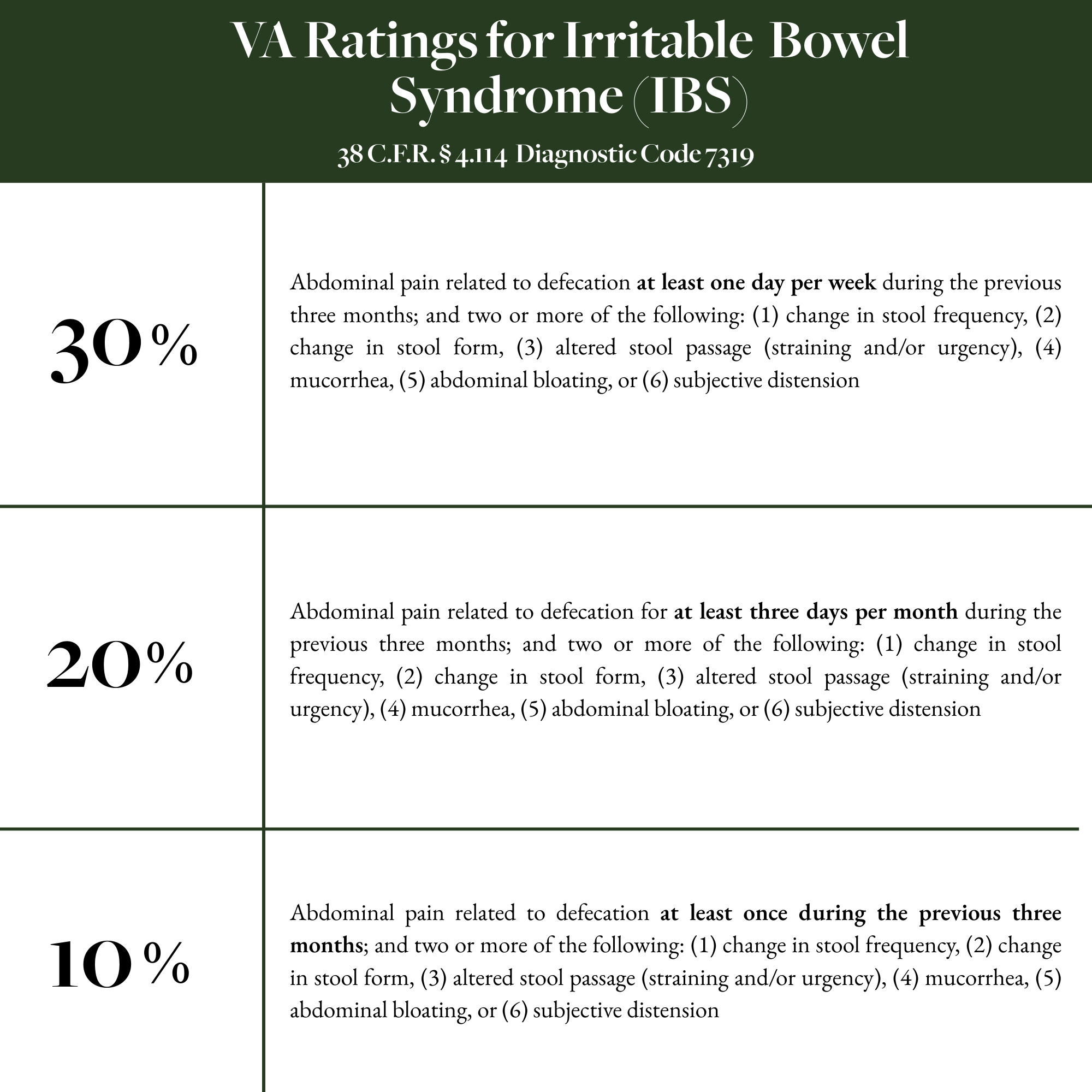
Change in stool frequency;
Change in stool form;
Altered stool passage (straining and/or urgency);
Mucorrhea;
Abdominal bloating; or
Subjective distension.
30% Rating (Maximum rating) - Abdominal pain related to defecation at least one day per week during the previous three months; and two or more of the following:
20% Rating - Abdominal pain related to defecation for at least three days per month during the previous three months; and two or more of the following:
Change in stool frequency;
Change in stool form;
Altered stool passage (straining and/or urgency);
Mucorrhea;
Abdominal bloating; or
Subjective distension.
10% Rating - Abdominal pain related to defecation at least once during the past 3 months; and 2 or more of the following symptoms:
Change in stool frequency;
Change in stool form;
Altered stool passage (straining and/or urgency);
Mucorrhea;
Abdominal bloating; or
Subjective distension.
How to Appeal or Increase a VA Digestive Condition Rating
Veterans may want to appeal or request an increase if:
VA denied service connection
VA underrated their condition
Symptoms have worsened over time
Appeals can be filed through:
Higher-Level Review
Supplemental Claim with new and relevant evidence
Board Appeal
Because digestive ratings rely heavily on technical medical data, many veterans benefit from professional representation during appeals.
Denied or Underrated for a Digestive Condition? Call Greene & Marusak LLC
Digestive claims are complex and often require detailed medical evidence, expert opinions, and strategic argument. If VA denied or underrated your digestive condition, Greene & Marusak LLC can help.
Contact us for a free case evaluation today to speak with an experienced VA-accredited claims agent or attorney!