


Dependency and Indemnity Compensation (DIC) Explained
Dependency and Indemnity Compensation (DIC) is a tax-free monthly benefit paid by VA to eligible surviving spouses, children, and sometimes parents of veterans whose death was caused by or related to service. DIC claims often involve complex legal and medical questions, including cause of death, service connection, and VA’s duty to properly apply the law. Because these cases arise after a veteran has passed away, clear evidence and strategic advocacy are especially important.
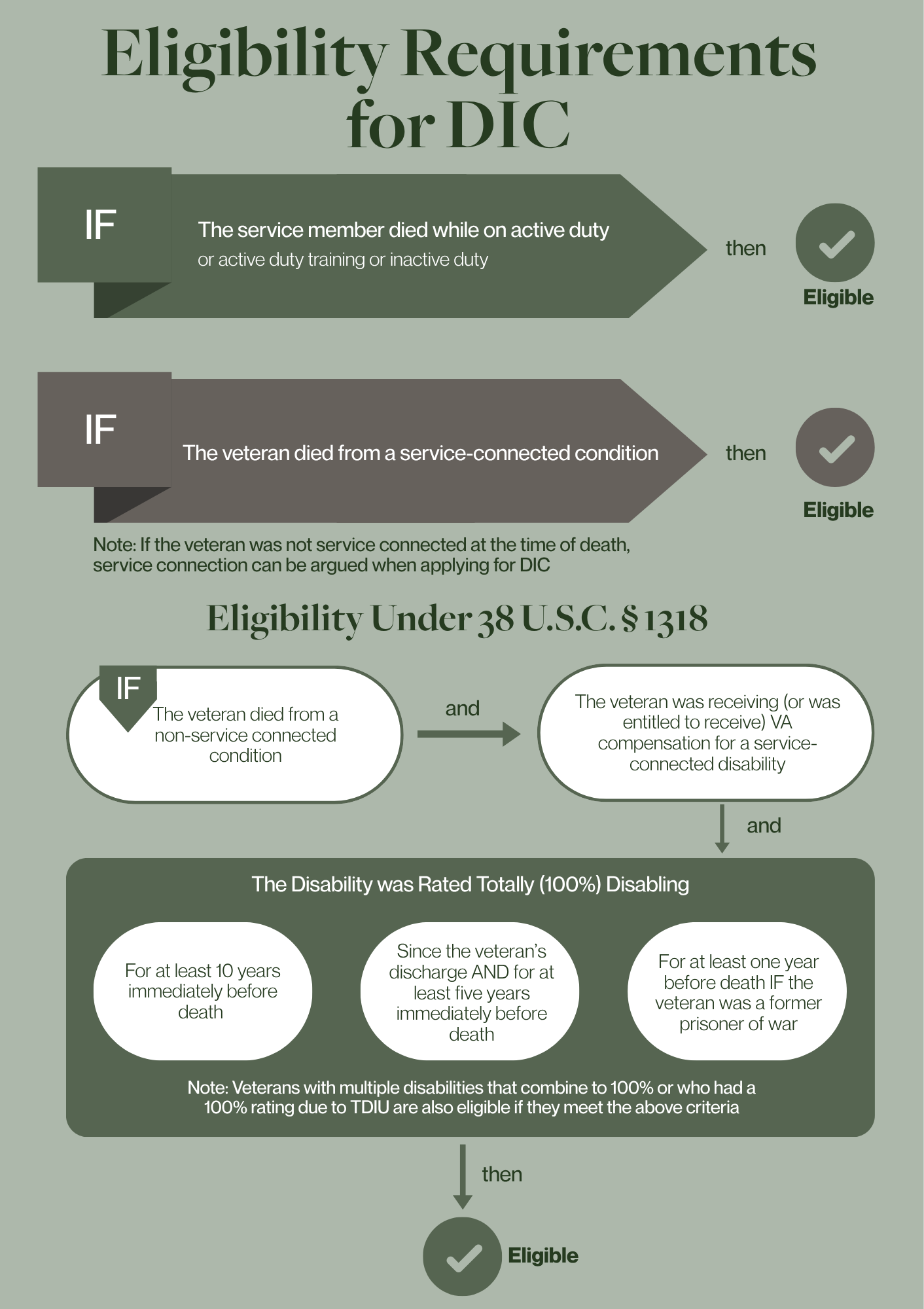
DIC is payable when a veteran’s death was caused by a service-connected condition or when the veteran was rated totally disabled for a qualifying period before death.
Medical records, death certificates, nexus opinions, and lay evidence can be critical to establishing entitlement to DIC.
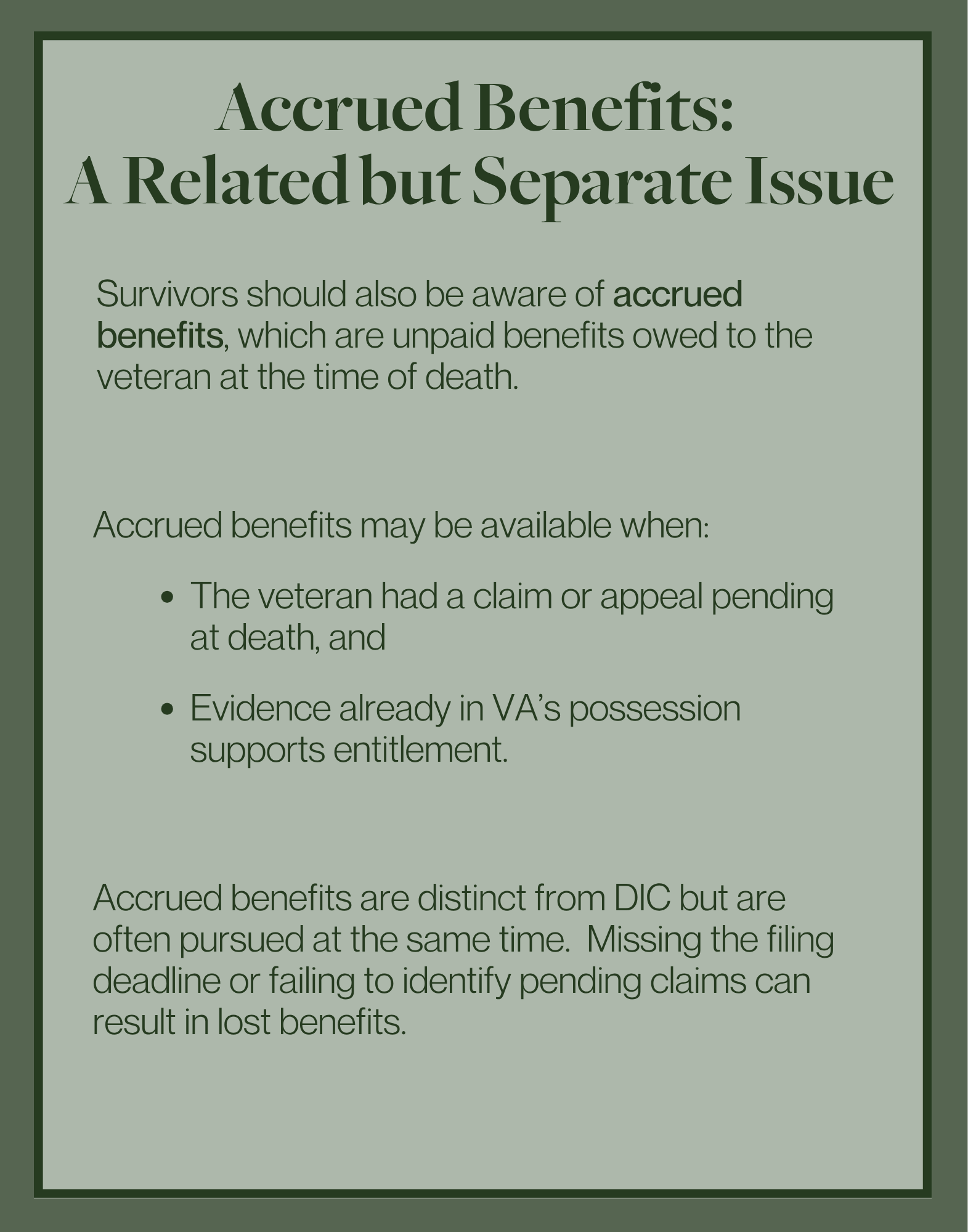
Survivors may also be entitled to accrued benefits for claims or appeals pending at the time of the veteran’s death.
Bottom Line Up Front:
A veteran died from a service-connected disability, or
A service-connected disability contributed to death, or
The veteran was rated 100 percent disabled (including TDIU) for a required period prior to death, even if the cause of death itself was not service-connected.
DIC is governed primarily by 38 U.S.C. §§ 1310 and 1318 and provides monthly compensation to eligible survivors when:
What is Dependency and Indemnity Compensation?
Unlike disability compensation, DIC is a fixed monthly benefit and does not increase or decrease based on symptom severity. Instead, qualification depends on meeting specific legal requirements and establishing a connection between service, disability, and death. Increases may only happen on an annual basis based on federal cost of living adjustments (COLA).
Who is Eligible for Dependency and Indemnity Compensation?
Surviving Spouses
They were married to the veteran at the time of death, and
They lived continuously with the veteran (with limited exceptions), and
They did not remarry before age 57 (with certain statutory exceptions).
A surviving spouse may qualify if:
Children
Under age 18,
Between 18–23 and attending school, or
Permanently incapable of self-support before age 18.
Unmarried children may qualify if they are:
In limited cases, dependent parents may qualify based on financial need.
Parents
How VA Determines Entitlement to DIC
(1) Death Caused by a Service-Connected Condition (38 U.S.C. § 1310)
A service-connected disability was the principal cause of death, or
A service-connected condition contributed substantially or materially to death.
The most common basis for DIC is when:
Death certificates
Terminal hospital records
Autopsy reports
Treating physician opinions
VA and private medical records
Lay statements describing symptoms, decline, or complications prior to death
Evidence VA considers includes:
A condition does not need to be the sole cause of death. It is enough if it accelerated death, worsened a fatal condition, or rendered the veteran less able to resist the primary cause.
Was rated 100 percent disabled (including TDIU) for 10 continuous years immediately before death, or
Was rated 100 percent for at least 5 years from discharge, or
Was a former prisoner of war rated totally disabled for at least one year before death.
Even if the veteran’s death was not directly service-connected, survivors may qualify for DIC if the veteran:
(2) DIC Based on Total Disability Prior to Death (38 U.S.C. § 1318)
These cases often hinge on whether VA properly rated the veteran during their lifetime.
Evidence That Matters Most in DIC Claims
VA and private treatment records
Final hospitalization or hospice records
Medical opinions explaining how service-connected conditions contributed to death
Strong medical documentation is essential, including:
Medical Evidence
In many cases, a private nexus opinion is needed to rebut an unfavorable VA medical opinion.
Symptom progression prior to death
Functional decline related to service-connected disabilities
The veteran’s limitations, complications, or need for care
Lay statements from surviving spouses or family members can establish:
Lay Evidence
Lay testimony is especially important when medical records are incomplete or do not fully capture the veteran’s decline.
How to Appeal a Denied DIC Claim
Supplemental Claim (with new and relevant evidence)
Higher-Level Review
Board of Veterans’ Appeals
If VA denies DIC, survivors may appeal through:
Because DIC claims involve statutory interpretation, medical causation, and survivor-specific rules, professional representation can significantly improve outcomes.
Check out our YouTube video where VA-Accredited Attorney Courtney Ross and VA-Accredited Claims Agent John Kent sit down to discuss eligibility for Dependency and Indemnity Compensation (DIC).
Looking for More Information?
Denied DIC or Unsure If You Qualify? Call Greene & Marusak LLC
DIC claims are among the most complex areas of VA law. Survivors often face denials that overlook critical evidence or misapply the law.
If VA denied your DIC claim—or you are unsure whether you qualify—Greene & Marusak LLC can review your case and explain your options.
Contact us for a free case evaluation today to speak with an experienced VA-accredited claims agent or attorney.