

VA Rating Criteria for Back Conditions & Radiculopathy Explained

When VA grants service connection for a back condition (such as a lumbar or cervical spine disability), it assigns a disability rating based on range of motion, functional loss, and the presence of associated symptoms, including neurological impairments like radiculopathy. These ratings determine a veteran’s monthly compensation and eligibility for additional benefits. Because spine conditions frequently cause nerve involvement affecting the extremities, VA is required to consider and separately evaluate associated neurological abnormalities as part of the claim.
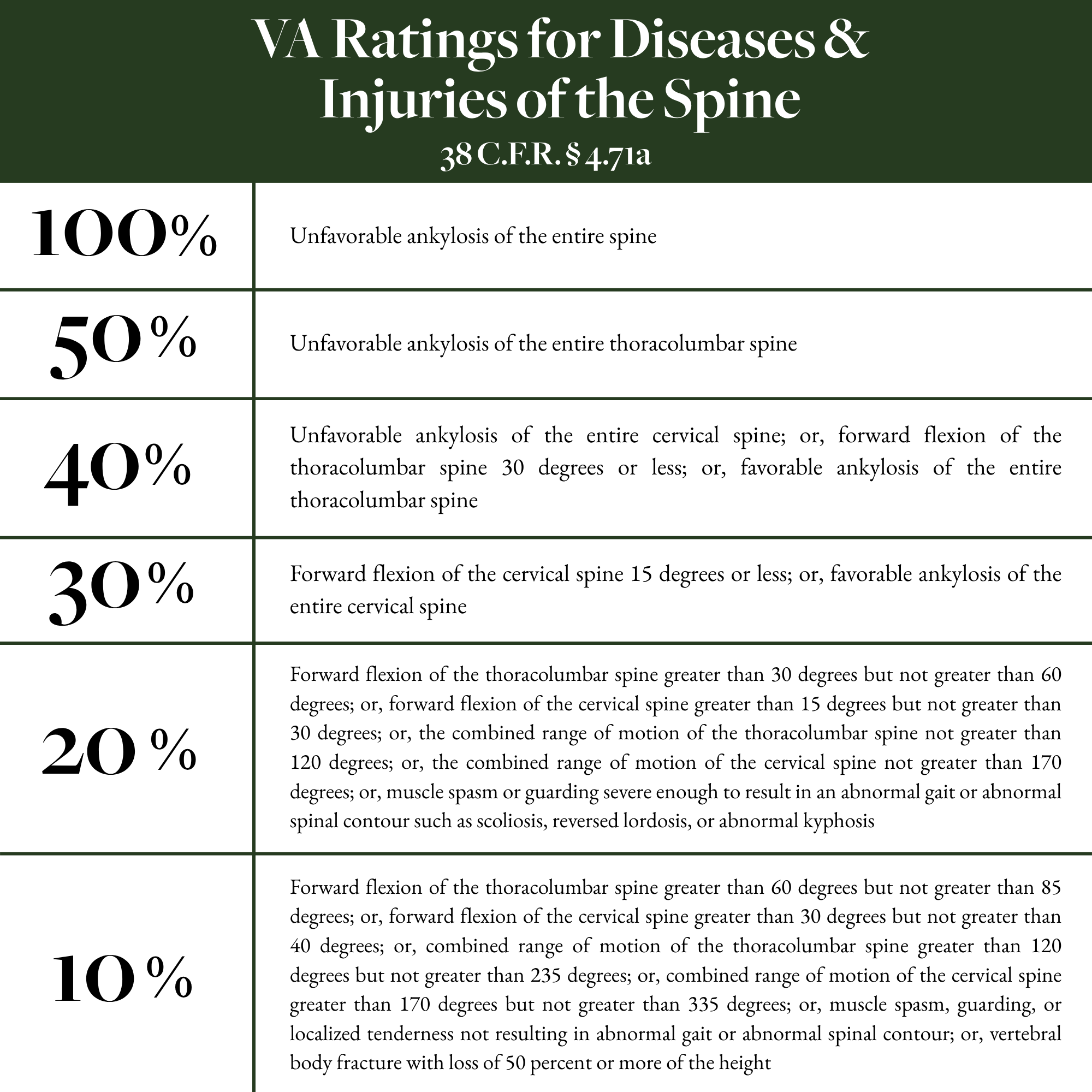
VA rates spine conditions under 38 C.F.R. § 4.71a using the General Rating Formula for Diseases and Injuries of the Spine, based primarily on range of motion and functional loss.
VA must consider pain, flare-ups, and functional limitations when assigning a rating.
“Functional Loss” refers to limitations in motion due to weakness, fatigue, incoordination, and/or pain during movement.
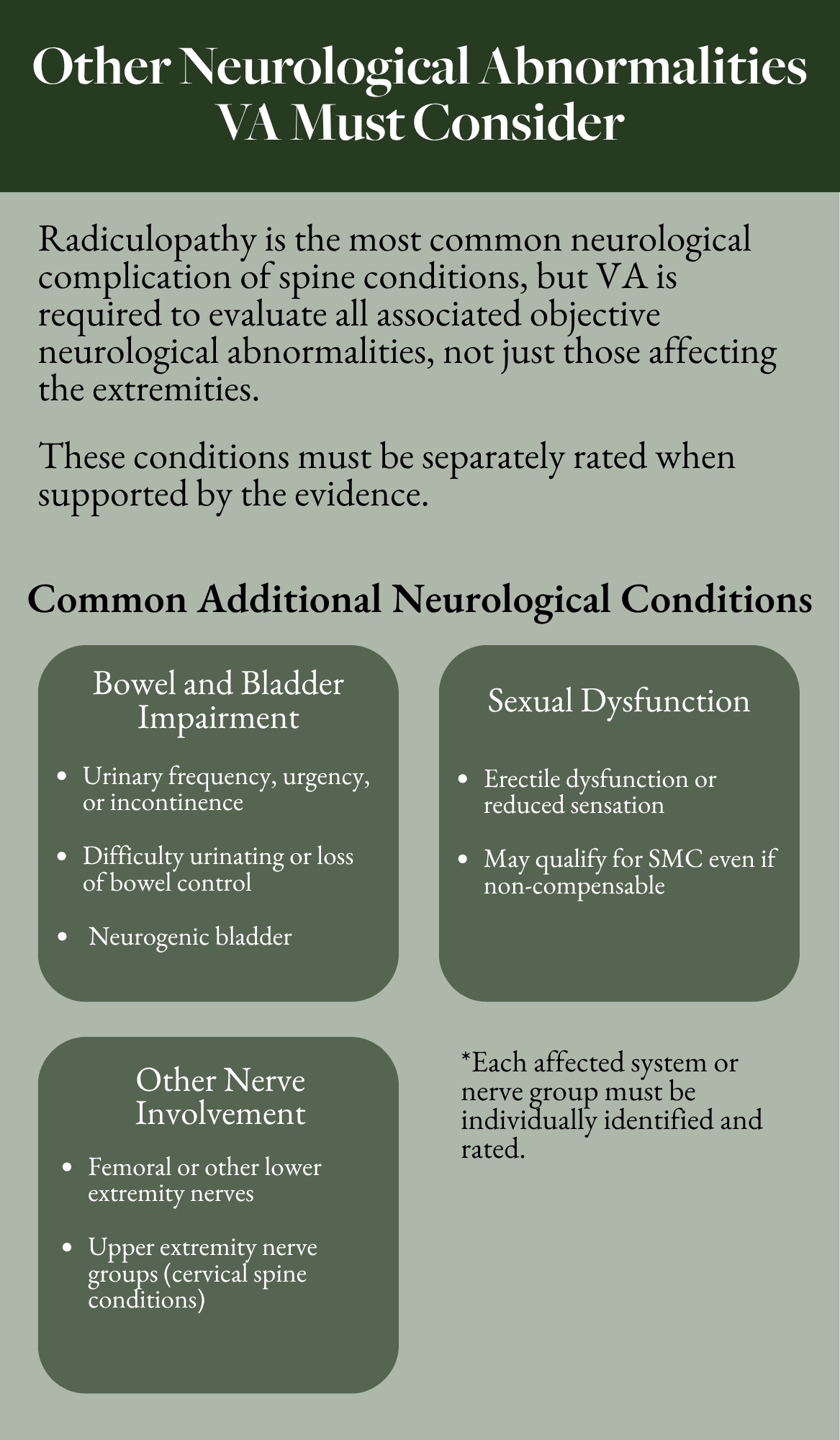
Radiculopathy and other neurological abnormalities must be separately rated when present, under the appropriate nerve diagnostic codes.
Failure to assign or properly evaluate radiculopathy is one of the most common VA errors in spine claims.
Veterans with severe spine conditions and radiculopathy may qualify for Total Disability Based on Individual Unemployability (TDIU) or Special Monthly Compensation (SMC).
Bottom Line Up Front:
How Does VA Assign Ratings for Back Conditions?
VA evaluates spine conditions based on measurable limitation of motion, but also must consider how pain and functional loss affect real-world movement and ability to work.
The most common evidence sources include:
C&P Exams and Medical Records
Forward flexion, extension, and combined range of motion
Whether pain begins before the end of measured motion
Functional loss during repetitive use and flare-ups
Muscle spasms or guarding affecting gait or spinal contour
Presence of ankylosis (fixation of the spine)
Signs of intervertebral disc syndrome (IVDS) and incapacitating episodes
Evidence of radiculopathy or nerve involvement
VA examiners evaluate:
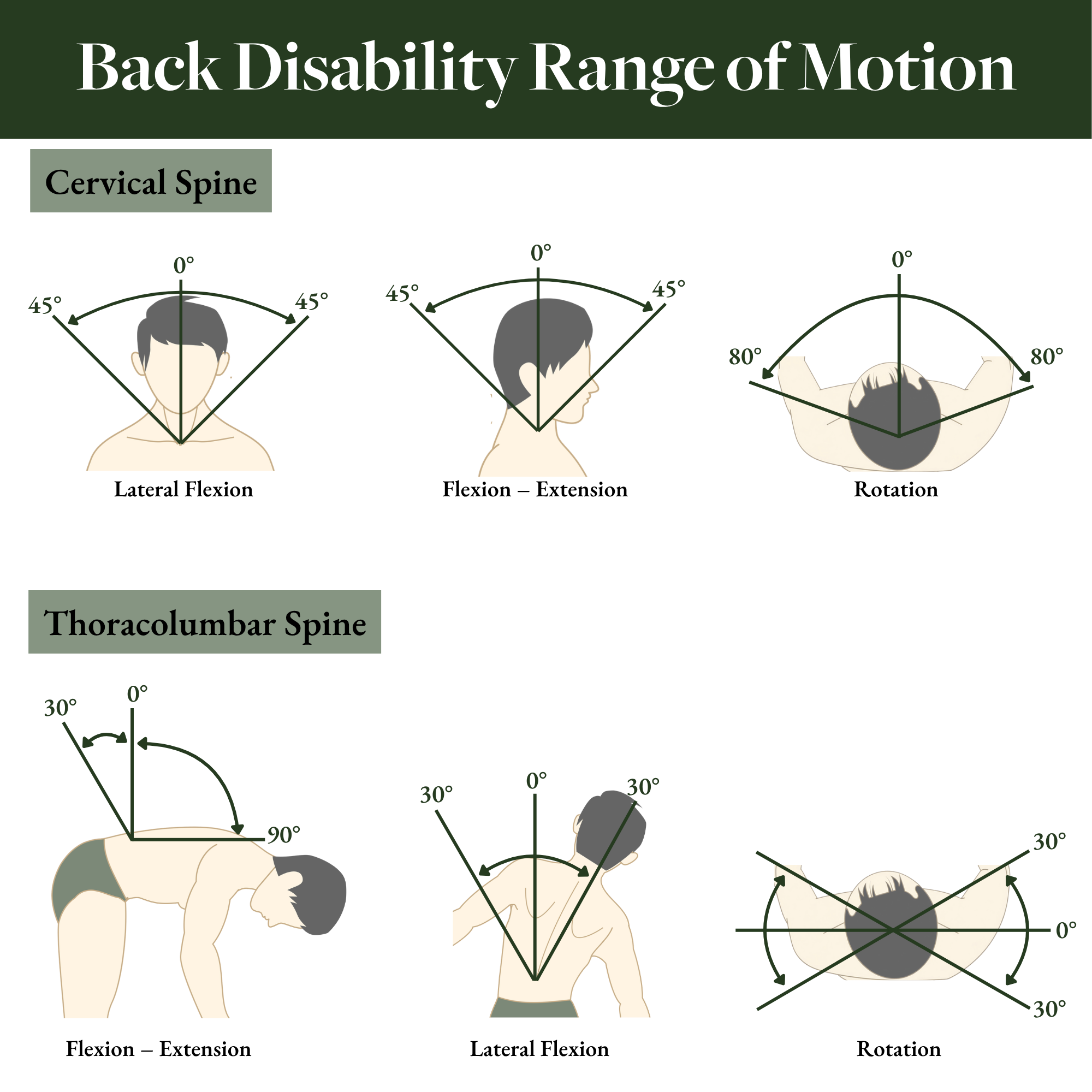
VA examiners complete a Back (Thoracolumbar or Cervical Spine) Disability Benefits Questionnaire (DBQ) to document these factors.
Pain with bending, lifting, sitting, or standing
Flare-ups that significantly limit movement or activity
Difficulty walking, standing for long periods, or performing physical tasks
Radiating pain, numbness, or tingling into the arms or legs
Impact on work, including missed time or modified duties
Lay statements are critical in spine claims, particularly for flare-ups and functional loss. Veterans may describe:
Lay Evidence
VA must consider functional loss beyond what is shown on a single exam.
MRI or imaging showing disc herniation or nerve compression
Diagnosis of radiculopathy affecting specific nerve roots
Reduced strength, reflex changes, or sensory deficits
Prescribed physical therapy, injections, or surgical intervention
Medical opinions linking nerve symptoms to the spine condition
Orthopedic specialists, neurologists, and treating physicians may document:
Private Medical Records
Private records often capture neurological involvement VA exams underreport.
How VA Rates Spine Conditions (38 C.F.R. § 4.71a)
100 Percent Rating for Spine Conditions
A 100 percent rating is warranted when there is:
Unfavorable ankylosis of the entire spine
This reflects complete immobility of the spine in a fixed, non-functional position.
50 Percent Rating for Spine Conditions
Unfavorable ankylosis of the entire thoracolumbar spine
A 50 percent rating is assigned for:
40 Percent Rating for Spine Conditions
Forward flexion of the thoracolumbar spine is 30 degrees or less, OR
Favorable ankylosis of the entire thoracolumbar spine
A 40 percent rating is warranted when:
This is a common maximum rating based on limitation of motion alone.
20 Percent Rating for Spine Conditions
Forward flexion is greater than 30 degrees but not greater than 60 degrees, OR
Combined range of motion is 120 degrees or less, OR
Muscle spasm or guarding results in abnormal gait or spinal contour
A 20 percent rating applies when:
10 Percent Rating for Spine Conditions
There is limited motion, but not to a compensable degree under higher criteria, OR
Painful motion is present
A 10 percent rating is assigned when:
Alternative Rating: Intervertebral Disc Syndrome (IVDS)
60% – Incapacitating episodes totaling at least 6 weeks in the past 12 months
40% – At least 4 weeks
20% – At least 2 weeks
10% – At least 1 week
VA may alternatively rate spine conditions based on incapacitating episodes under IVDS:
Important: An “incapacitating episode” requires physician-prescribed bed rest, which is rarely documented. As a result, this method is often less favorable.
Separately Ratable Neurological Conditions
VA is required to evaluate and assign separate ratings for neurological abnormalities associated with spine conditions, including radiculopathy. The most common type is radiculopathy.
What is Radiculopathy?
Radiculopathy occurs when spinal nerve roots are compressed or irritated, causing symptoms that radiate into the extremities.
Common symptoms include:
Radiating pain down the arms or legs
Numbness or tingling
Muscle weakness
Reduced reflexes
How VA Rates Radiculopathy
Radiculopathy is rated under 38 C.F.R. § 4.124a based on the affected nerve group and severity.
For lower extremities (most common), this often involves the sciatic nerve:
80% – Complete paralysis
60% – Severe with marked muscular atrophy
40% – Moderately severe
20% – Moderate
10% – Mild
Upper extremities are rated based on different nerve groups depending on the location of involvement.
Common VA Errors with Radiculopathy
Fails to assign a separate rating despite documented symptoms
Assigns a rating that is too low (e.g., “mild” instead of “moderate”)
Does not identify the correct nerve group
Ignores bilateral involvement (both extremities should be rated separately)
VA frequently:
Failure to properly evaluate radiculopathy can significantly reduce or underrate a veteran’s combined rating.
Back Conditions, Radiculopathy, TDIU, and SMC
Inability to sit or stand for prolonged periods
Limited lifting, bending, or physical activity
Chronic pain affecting concentration and productivity
Nerve-related weakness or loss of function in the extremities
Back conditions and radiculopathy may prevent substantially gainful employment due to:
Spine Conditions and TDIU
A single 60 percent rating, or
A 70 percent combined rating, to include a single disability rated at least at 40 percent
Veterans with:
may qualify for Total Disability Based on Individual Unemployability (TDIU).
Special Monthly Compensation (SMC)
Severe spine and neurological conditions may result in SMC when:
There is loss of use of extremities
Combined ratings meet housebound criteria
The veteran requires aid and attendance
How to Appeal or Increase a VA Back or Radiculopathy Rating
VA underrated limitation of motion or functional loss
VA failed to properly consider flare-ups
VA did not assign or underrated radiculopathy
Symptoms worsened over time
VA relied on an inadequate C&P exam
Veterans may want to appeal or request an increase if:
Higher-Level Review
Supplemental Claim with new and relevant evidence
Board Appeal
Appeals can be filed through:
Because spine claims often involve both orthopedic and neurological components, proper development and argument are critical.
Denied or Underrated for a Back Condition or Radiculopathy? Call Greene & Marusak LLC
Back and radiculopathy claims are frequently underrated due to failure to properly evaluate functional loss and neurological involvement. If VA denied or underrated your condition, Greene and Marusak LLC can help identify errors, develop supporting evidence, and pursue the benefits you deserve.
Contact us for a free case evaluation today to speak with an experienced VA-accredited claims agent or attorney!