


Special Monthly Compensation Based on Aid & Attendance (A&A) Explained
The general rating criteria for VA disability evaluations range from 0-percent to 100-percent. However, VA recognizes that even a 100-percent disability evaluation may not fully capture a veteran’s disability picture. As a result, veterans may be entitled to compensation at levels in excess of 100-percent, called Special Monthly Compensation (SMC). One of these levels of SMC is based on a veteran’s regular need for aid and attendance as a result of the veteran’s service connected disabilities.
Entitlement to SMC based on aid and attendance is granted when VA establishes a veteran is in regular need of aid and attendance from another person due to their service-connected disabilities
VA Form 21-2680, Examination for Housebound Status or Permanent Need for Regular Aid and Attendance, can provide VA with the medical evidence necessary to support a claim for A&A.
Important to Know: The standard is regular aid and attendance. It does not require constant, round-the-clock care. It also does not require a professional healthcare provider. The A&A can be provided by a spouse, other family member, friend, or hired help, etc.
Bottom Line Up Front:
What is Special Monthly Compensation based on Aid and Attendance?
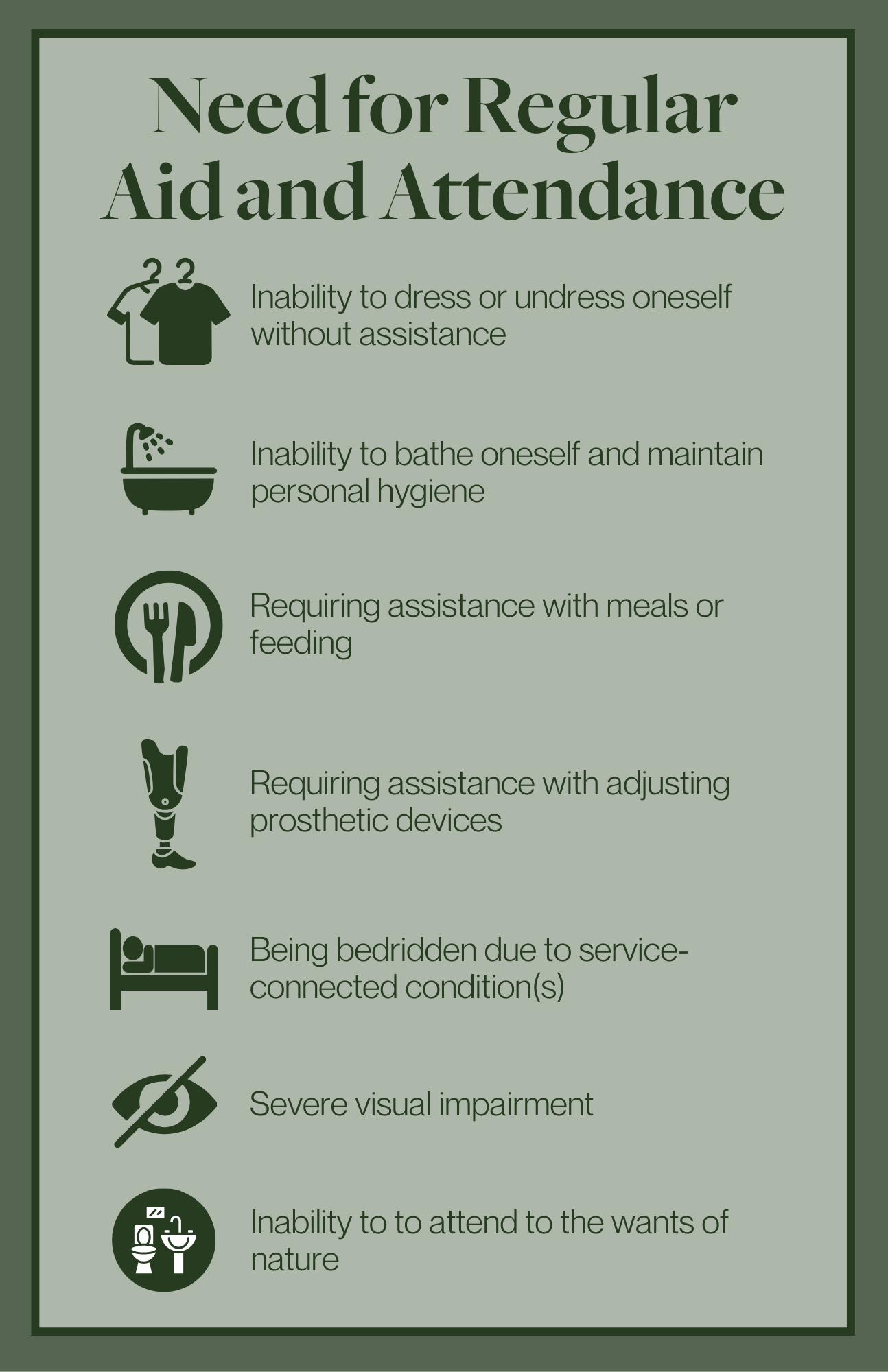
A&A is governed under 38 C.F.R § 3.352(a). The following will be accorded consideration in determining the need for regular aid and attendance:
inability of claimant to dress or undress himself (herself), or to keep himself (herself) ordinarily clean and presentable;
frequent need of adjustment of any special prosthetic or orthopedic appliances which by reason of the particular disability cannot be done without aid (this will not include the adjustment of appliances which normal persons would be unable to adjust without aid, such as supports, belts, lacing at the back, etc.);
inability of claimant to feed himself (herself) through loss of coordination of upper extremities or through extreme weakness;
inability to attend to the wants of nature;
or incapacity, physical or mental, which requires care or assistance on a regular basis to protect the claimant from hazards or dangers incident to his or her daily environment.
Developing A&A Claims
VA Form 21-2680, Examination for Housebound Status or Permanent Need for Regular Aid and Attendance.
The form includes Section VI, Examination Information, which must be filled out by an examiner (i.e. a medical professional).
It addresses which disabilities are permanent in nature and require regular aid and attendance.
It asks which service-connected disabilities the patient requires assistance with, e.g. bathing/showering, eating, dressing, tending to hygiene needs, etc.
It also asks questions regarding the patient’s competency and ability to leave the house.
Lay statements can be helpful evidence because they can speak to firsthand knowledge of the veteran’s daily requirements for assistance.
Helpful lay statements would be obtained by family members, caretakers, and friends who can speak to witnessing a veteran’s need for aid and attendance, or even assisting them firsthand.
They can discuss the chores and assistance friends, family, and caretakers provide for the veteran.
The statements can also speak to the frequency of people assisting the Veteran on a daily, weekly, or monthly basis.
Lay Statements
How to Appeal a Denied A&A Claim
Supplemental Claim (with new and relevant evidence)
Higher-Level Review
Board of Veterans’ Appeals
If VA denies entitlement to Special Monthly Compensation (SMC) based on aid and attendance, veterans may appeal through:
Because SMC claims involve statutory interpretation, medical causation, and specific rules, professional representation can significantly improve outcomes.
Check out our YouTube video where VA-Accredited Claims Agents Vittoria Marini and John Kent sit down with VA-Accredited Attorney Courtney Ross to break down Special Monthly Compensation based on the need for Aid & Attendance.
Looking for More Information?
Denied A&A or Unsure If You Qualify? Call Greene & Marusak LLC
A&A claims are among the most complex areas of VA law. Veterans often face denials that overlook critical evidence or misapply the law.
If VA denied your A&A claim—or you are unsure whether you qualify—Greene & Marusak LLC can review your case and explain your options.
Contact us for a free case evaluation today to speak with an experienced VA-accredited claims agent or attorney.